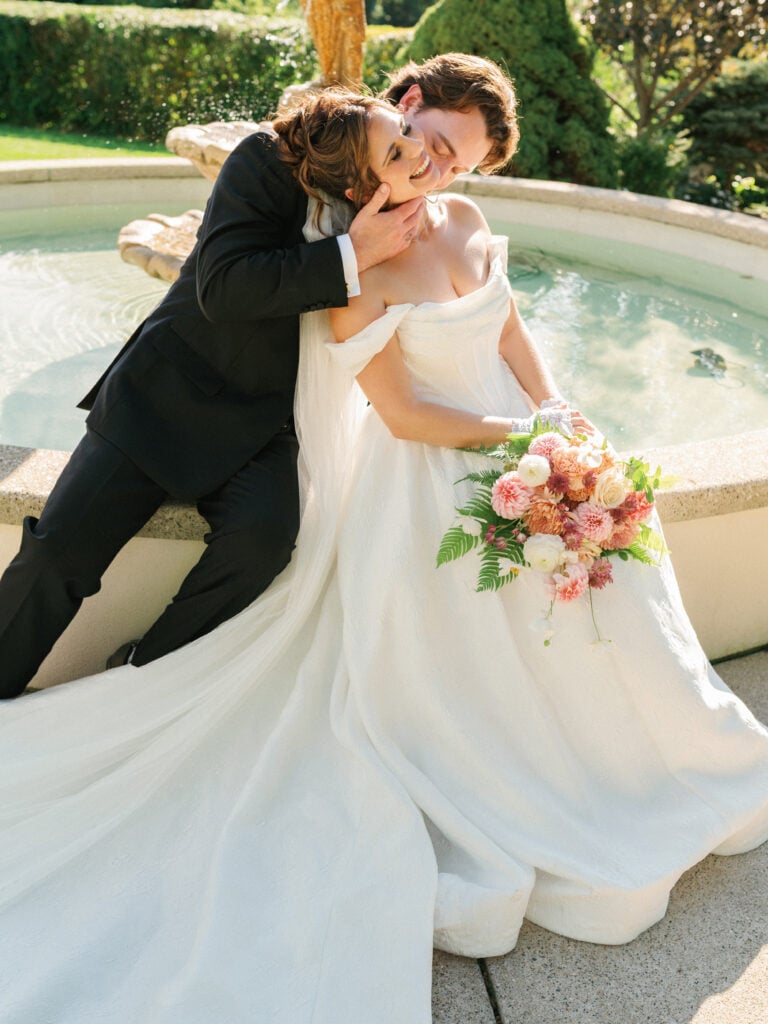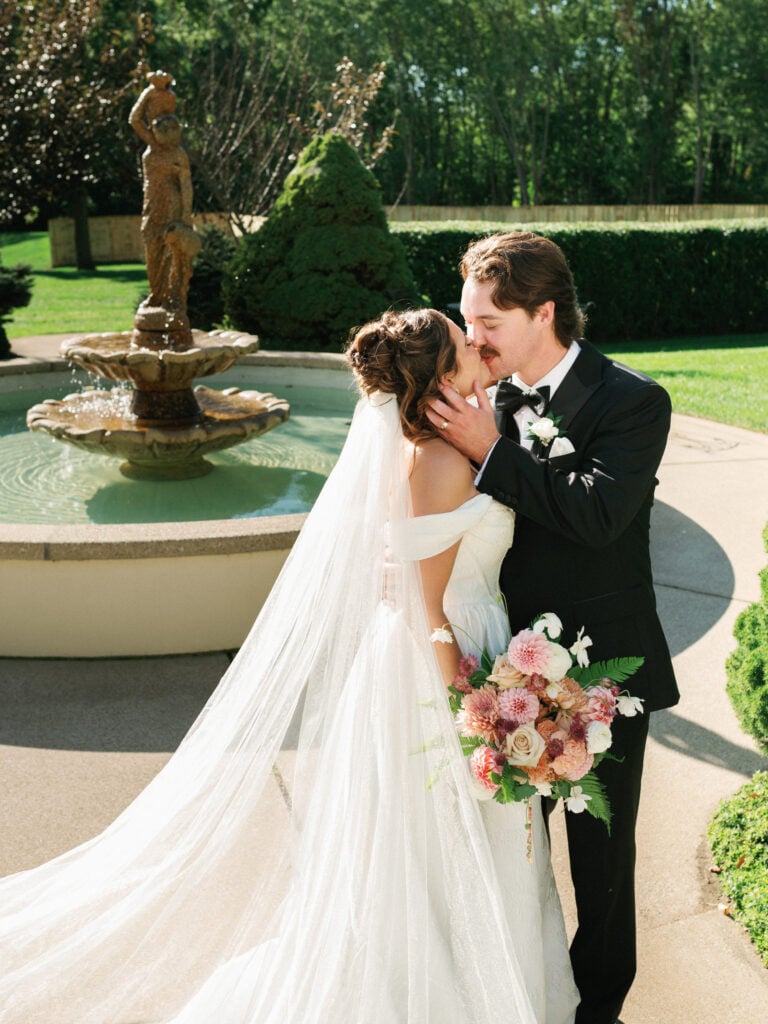
A wedding dress train can is an important detail of a bridal look. It adds movement to the gown, creates an elegant silhouette, and makes a beautiful feature in ceremony and portrait photographs. Once the formal part of the day is over, however, a long train can become difficult to manage. Walking between tables, greeting guests, sitting down for dinner, and joining the dance floor are all easier when the fabric is secured.
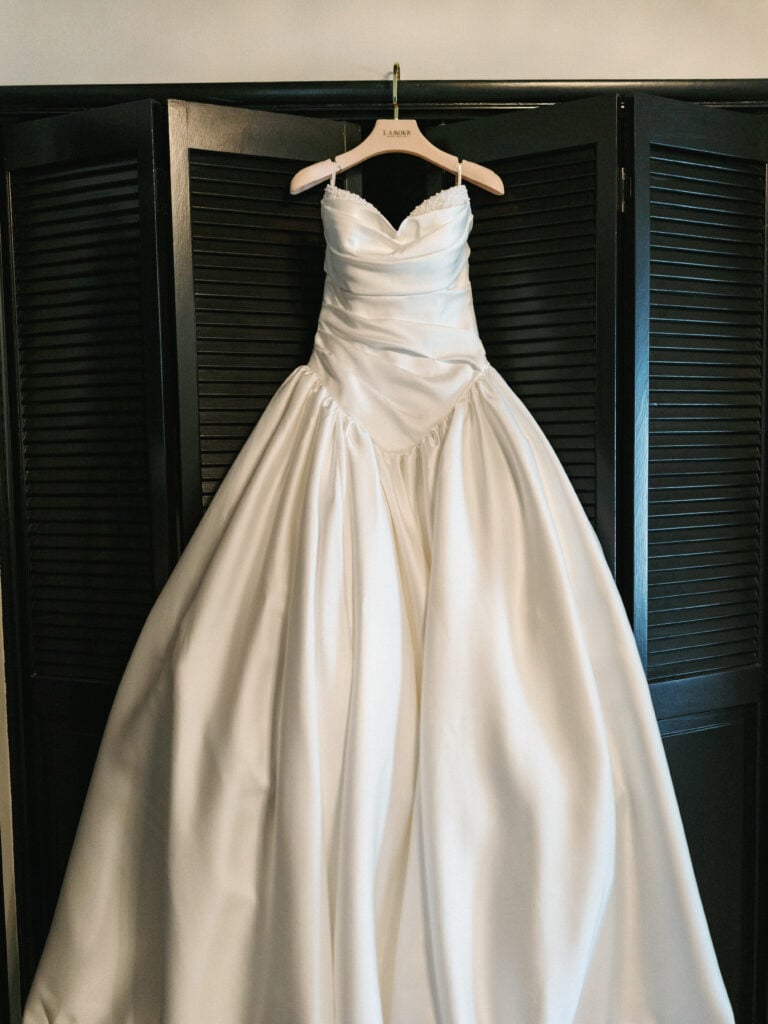
A wedding dress bustle lifts the train and fastens it against the skirt, making the gown more practical to wear during the reception. The right arrangement depends on the dress, and the process usually requires help from someone who has practised with the gown before the wedding. Knowing how the bustle works, who should assist, and when to secure the train can make this transition much more comfortable.
For planning the transition into the evening once attire is ready, see our reception entrance ideas guide.
What a Wedding Dress Bustle Does
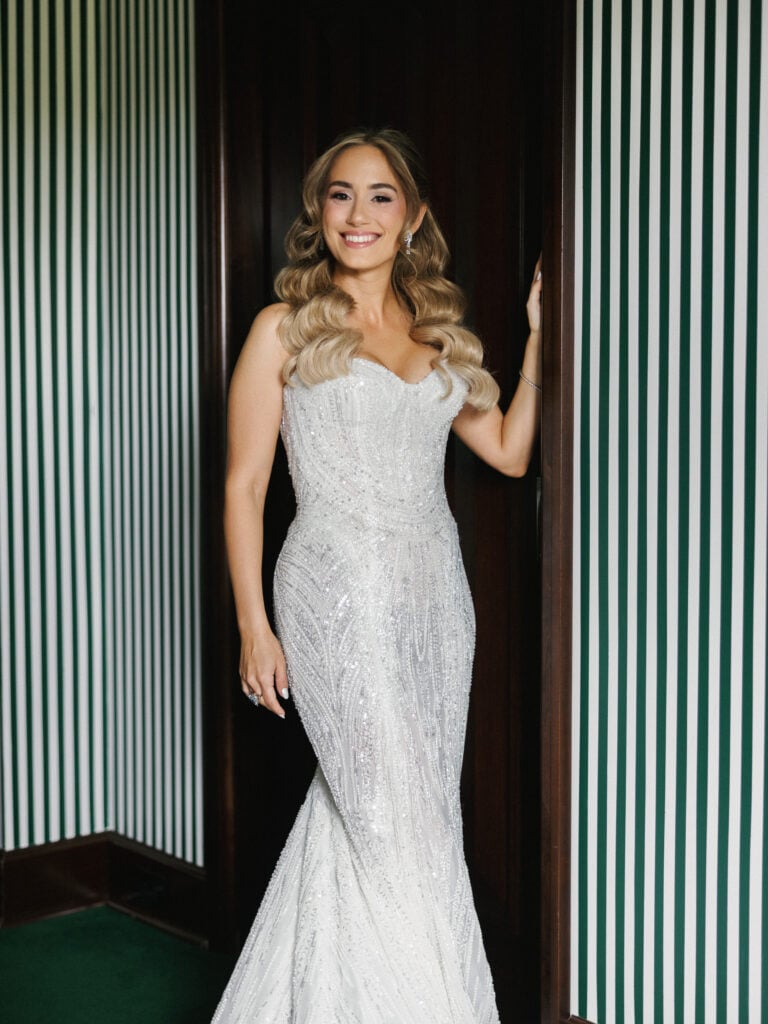
A bustle is a fastening arrangement that lifts the train off the floor and attaches it to the back of the gown. Depending on the design, the fabric may be gathered over the skirt or secured underneath it. The result is a shorter silhouette that makes it easier to move without carrying the train or worrying about it trailing behind.
This is particularly useful during the reception. A long train can catch under shoes, become trapped beneath a chair, or make it awkward to move through a crowded room. Securing it gives the wearer more freedom to walk, sit, greet guests, and dance while keeping the overall shape of the gown.
A bustle is different from a wrist loop. A wrist loop is a small strap attached to the train that the wearer holds while walking. It keeps some of the fabric off the floor temporarily, but the train is still being carried by hand. A bustle fastens the train to the gown, leaving both hands free. It is also different from changing into a second dress: the original gown remains in place, with the train arranged differently.
Not every wedding dress needs a bustle. A gown without a train, or with a short and lightweight sweep train, may be comfortable enough to wear throughout the day without additional fastenings. A longer or heavier train is more likely to need a solution, particularly if the wearer plans to dance or move around the reception. The decision depends on the gown’s construction, fabric, weight, and intended use. A bridal fitter can assess these details and explain which options are suitable.
It is worth discussing the question during alterations rather than leaving it until the final fitting. The bustle is part of how the finished gown will function on the wedding day, and its appearance can affect the silhouette from the back. Seeing the dress both with the train down and secured gives the wearer a clearer idea of how it will look throughout the celebration.
Choosing a Bustle With Your Bridal Fitter
Bustle arrangements vary, and the names used to describe them do not always tell the whole story. An over bustle generally brings the train up and secures it over the skirt, while an under bustle attaches it beneath the skirt. Some gowns use several fastening points to distribute the weight of the fabric; others require a simpler arrangement. The appropriate design depends on the individual dress, so a bustle should never be chosen by name alone.
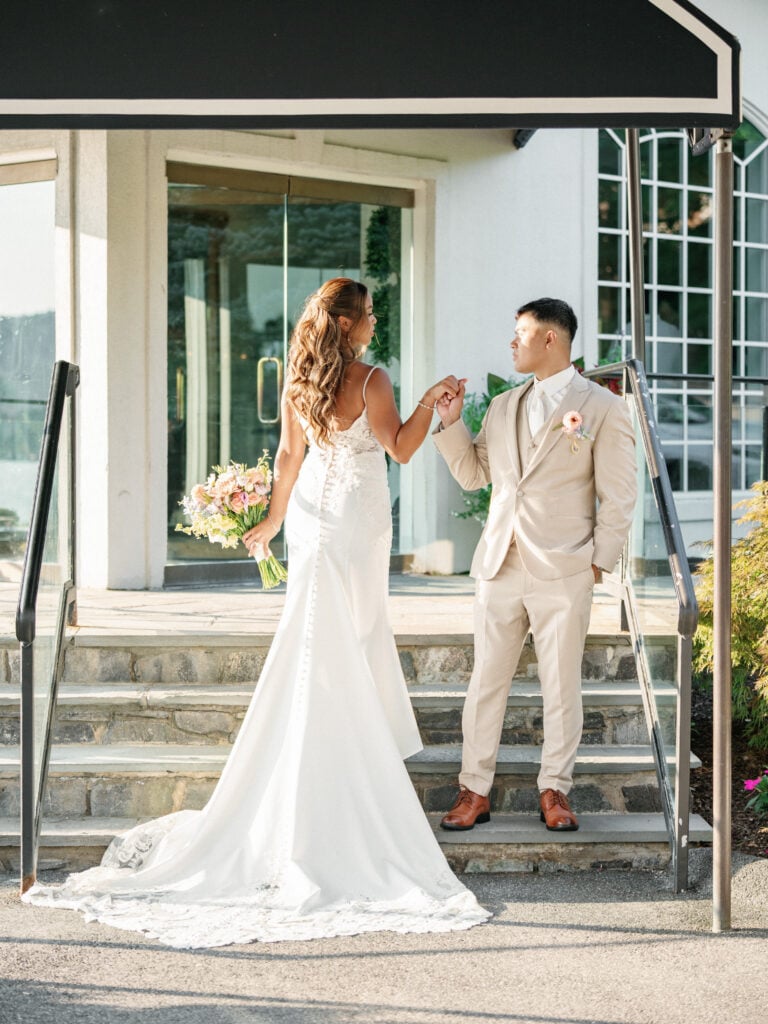
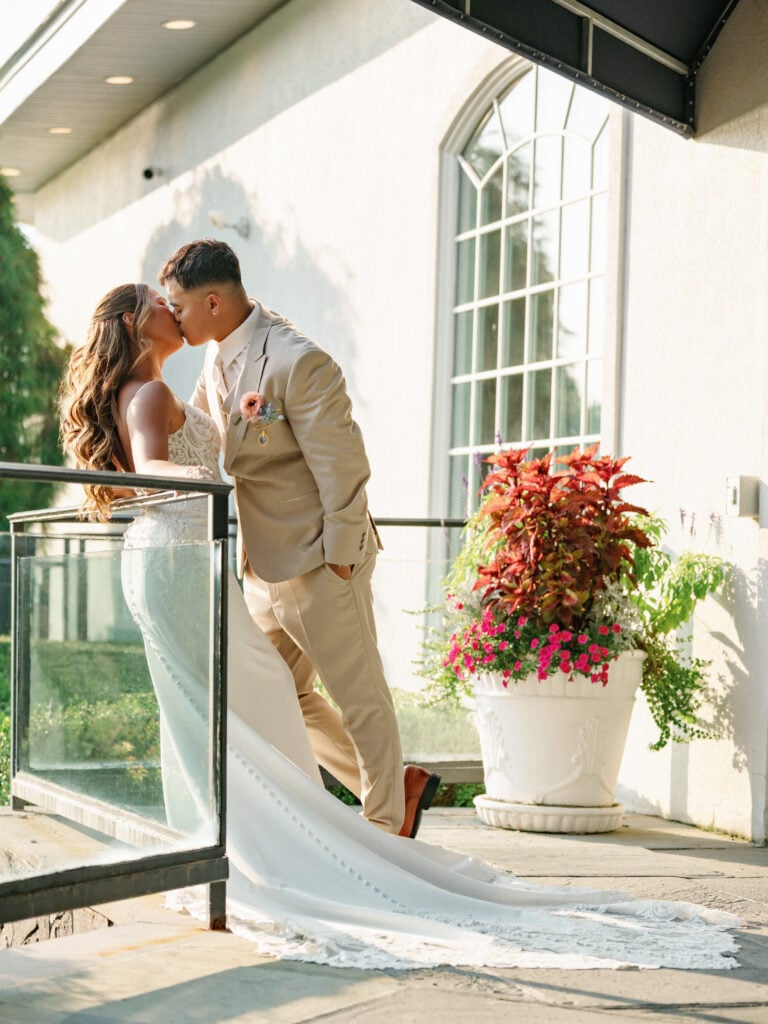
During the fitting, ask the bridal fitter to show you how the back of the gown looks once the train is secured. Pay attention to the overall shape, the placement of the fabric, and whether the gathered material sits comfortably. A bustle can create visible folds or change the way the skirt falls. That is normal, but you should know what to expect before the wedding day.
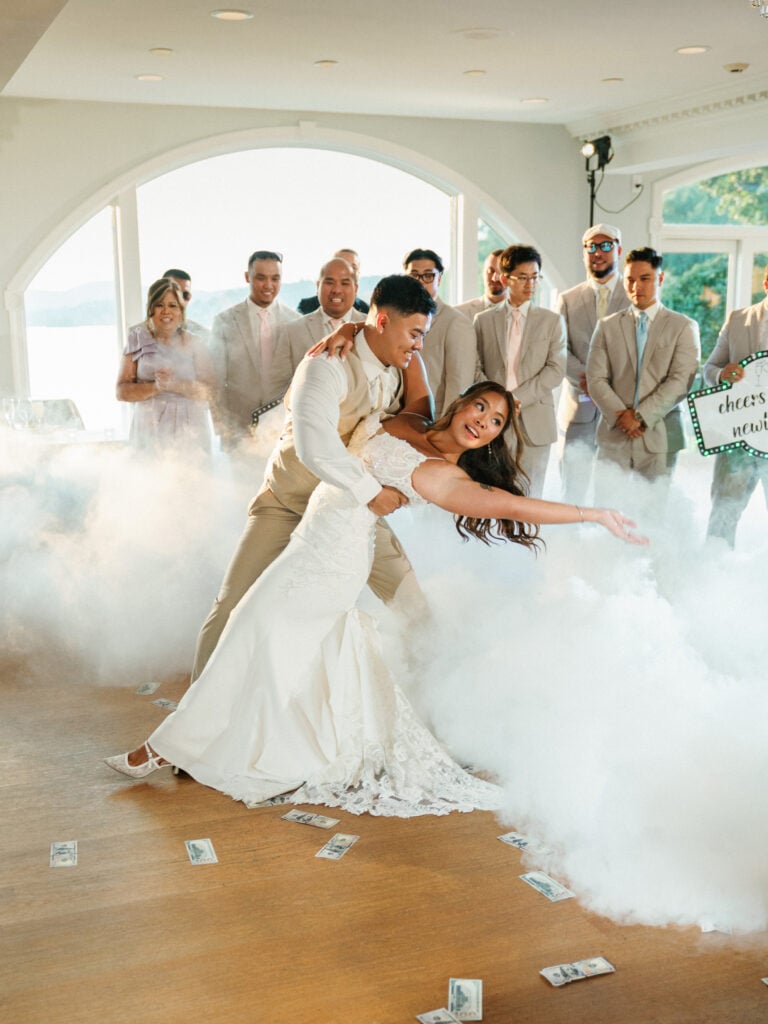
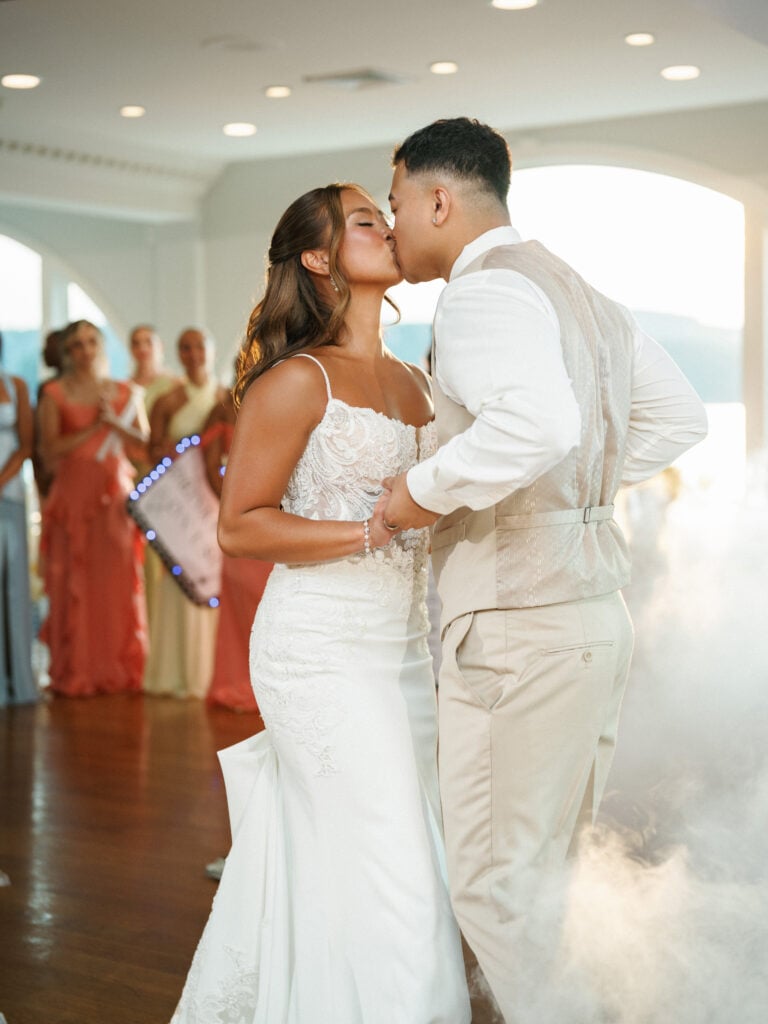
Comfort and movement matter as much as appearance. Try walking, sitting, and turning with the bustle fastened. If you plan to dance in the gown, ask whether the arrangement is suitable for that kind of movement. The train should feel secure without pulling uncomfortably on the skirt or making the wearer feel restricted. If the dress is particularly heavy, ask how its weight is distributed across the fastening points.

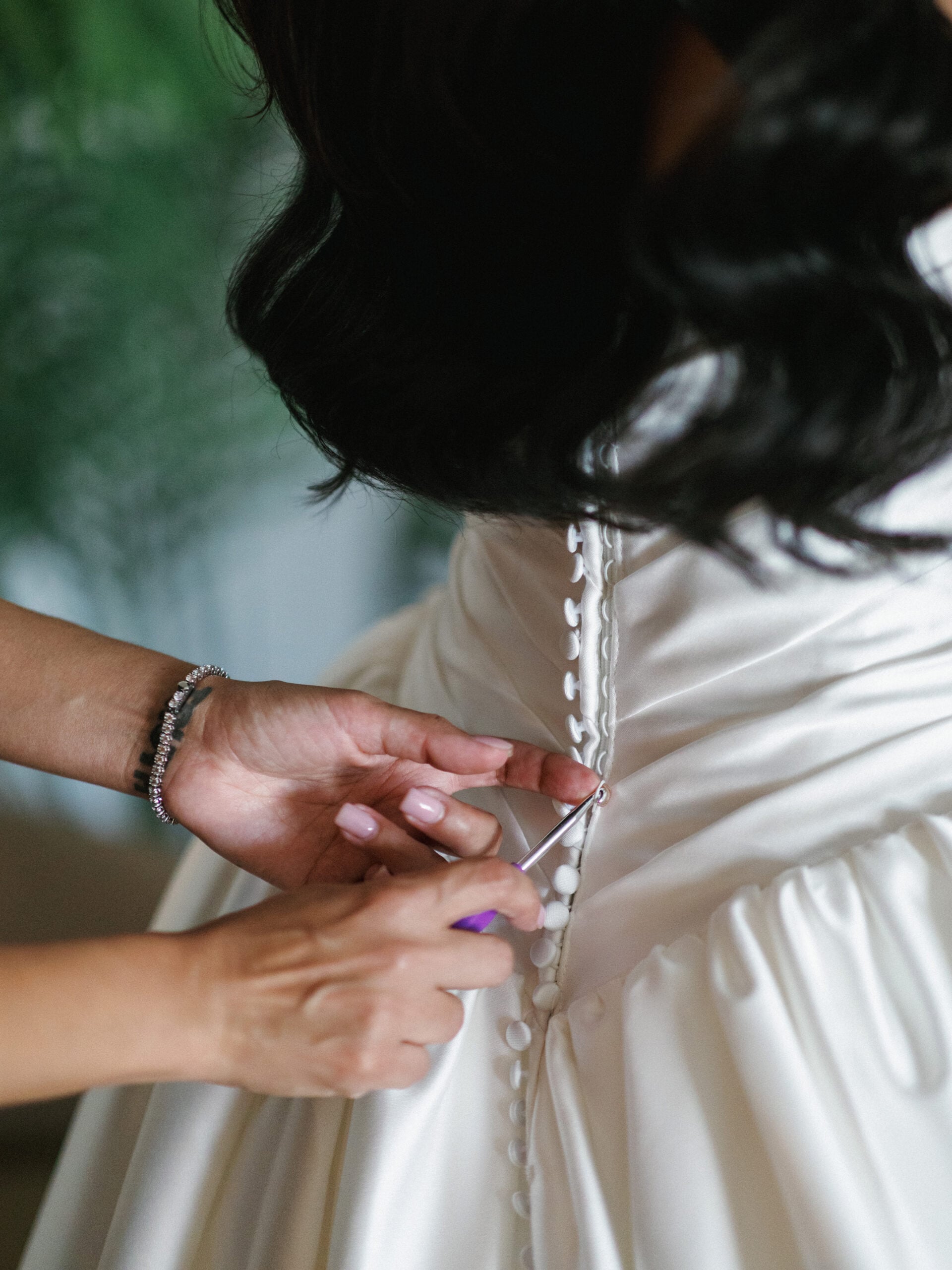
It is also important to understand exactly how the arrangement works. Depending on the gown, it may use hooks, buttons, loops, ties, or a combination of fastenings. Ask the fitter to identify each attachment point and demonstrate the correct order. Two dresses with similar silhouettes may have entirely different bustle systems, so general instructions from another bride or an online tutorial are not a reliable substitute for guidance on your own gown.
Try the arrangement while wearing the shoes you intend to use on the wedding day. Heel height affects how the hem and train fall, and the dress may sit differently when you switch from fitting shoes to your actual footwear. If you expect to change shoes later, mention that to the fitter as well.
Before the final fitting is over, make sure you understand how the bustle should look when correctly fastened. Ask the fitter to show you the back and sides of the gown, explain how to recognise the attachment points, and clarify what to do if one of them comes loose. These details will be useful not only to you, but also to the person who will help you on the day.
Who Should Help With the Bustle?
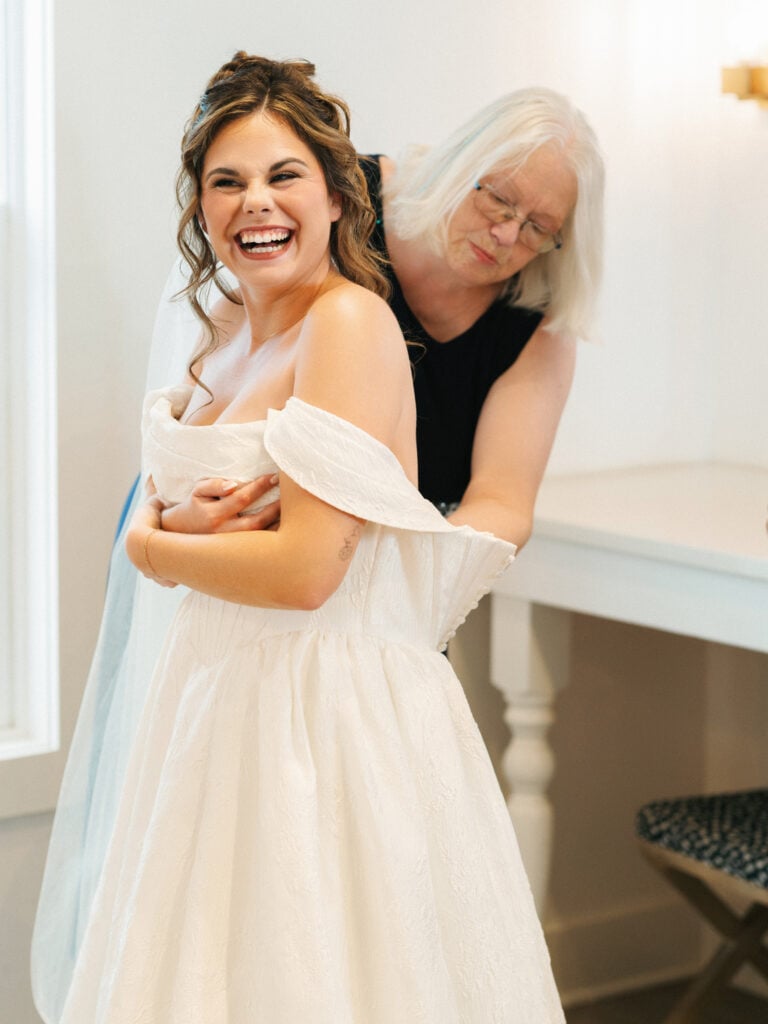
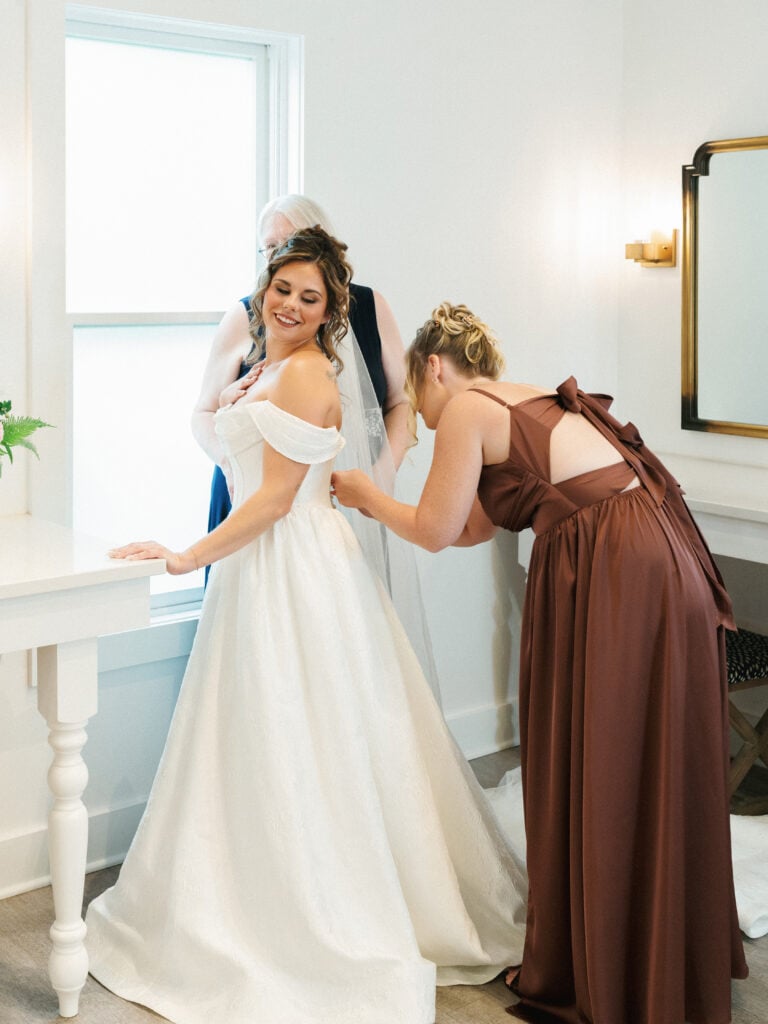
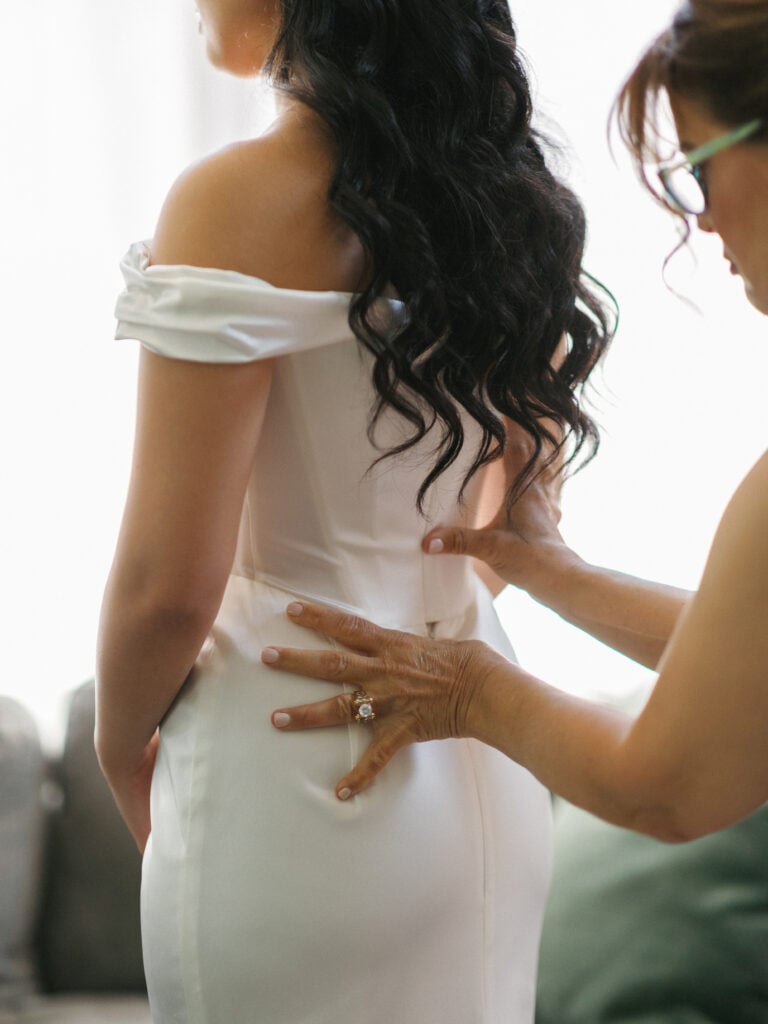
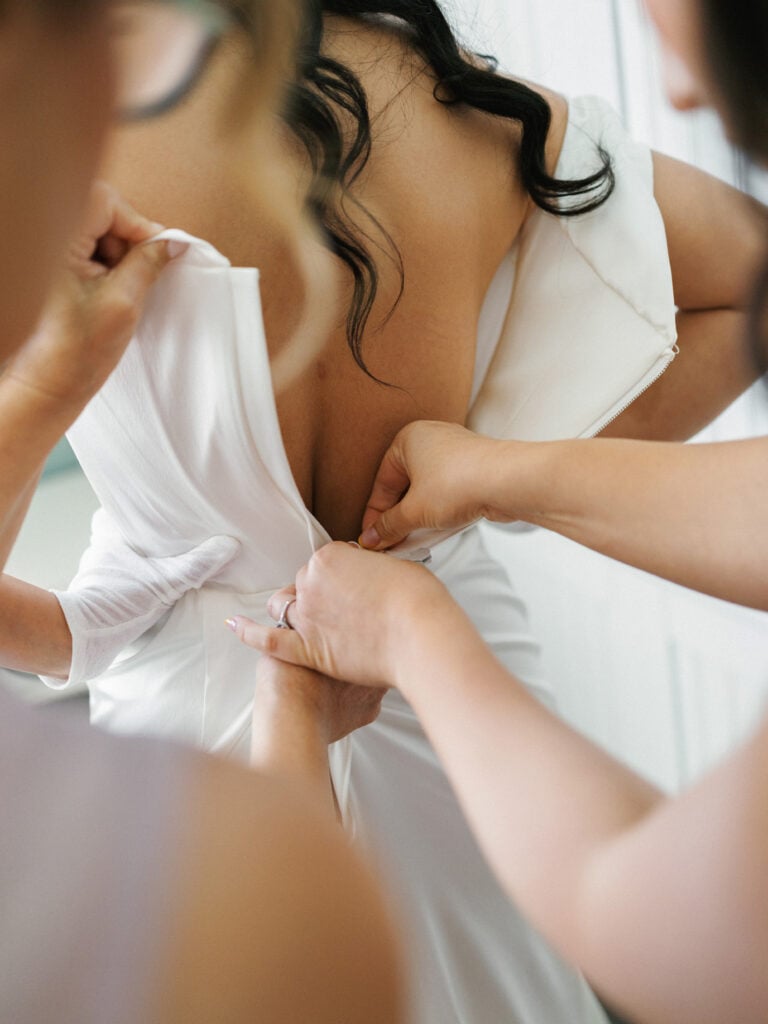
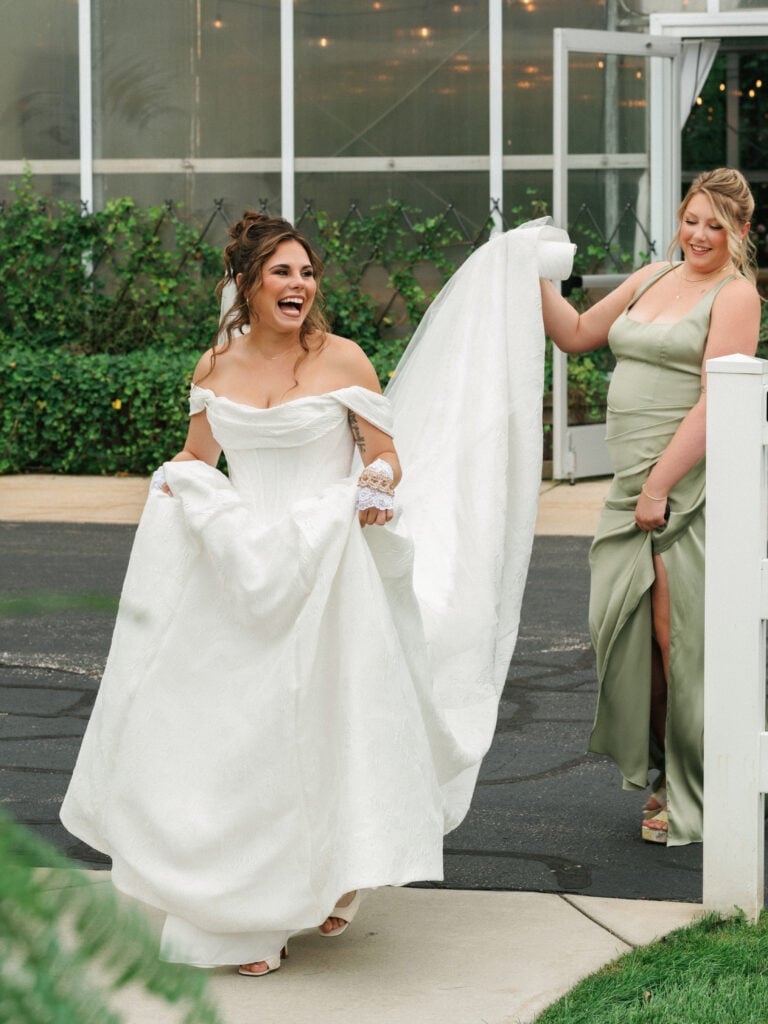
In many cases, the wearer cannot comfortably secure the bustle alone. The fastening points are usually at the back of the gown, and arranging several layers of fabric while wearing the dress can be awkward. A designated helper makes the process easier and reduces the risk of pulling on delicate material or missing an attachment.
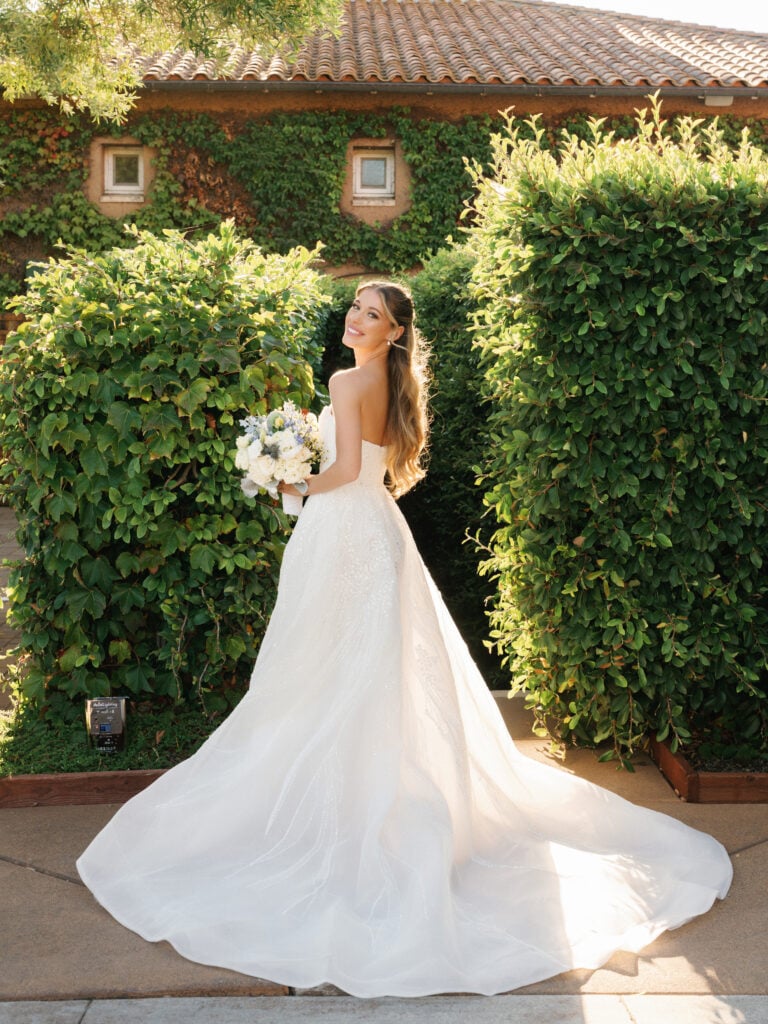
Choose someone who will be present when the train needs to be secured and who feels comfortable handling the gown. This could be a bridesmaid, a family member, or a close friend. The most important consideration is availability and familiarity with the dress, not the person’s title or role in the wedding party. If you already know when the bustle is likely to be needed, make sure your chosen helper will be nearby at that point.
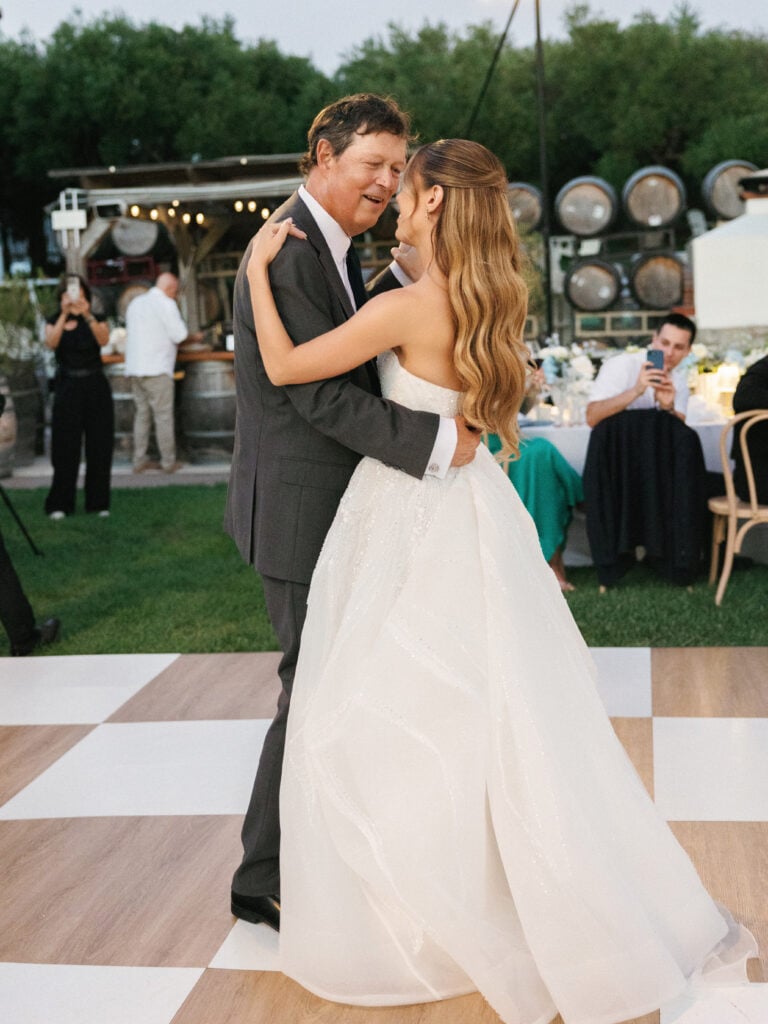
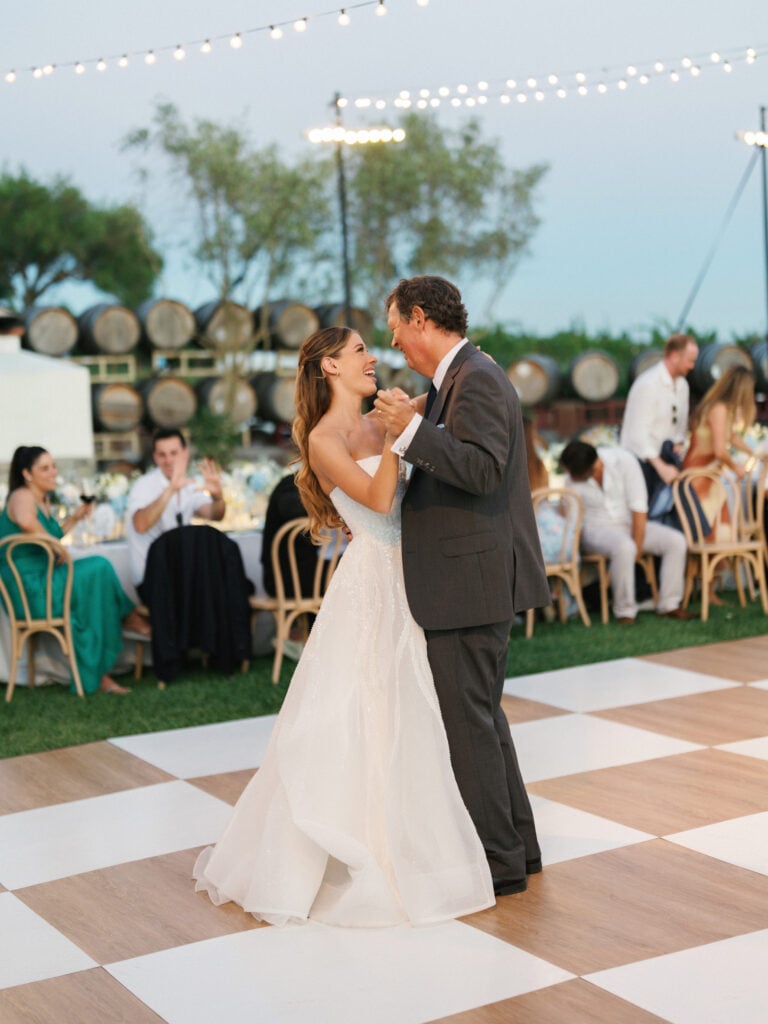
Ideally, bring this person to one of the fittings. The bridal fitter can demonstrate the arrangement on the actual gown, explain the sequence, and supervise while the helper tries it. Watching the process once is rarely enough to remember every fastening. Ask them to repeat it until they can identify the attachment points and arrange the fabric without guessing.
Some bustle systems are straightforward, while others involve several hooks or loops that need to be connected in a particular order. The helper should understand how the finished train is meant to sit, not simply which pieces attach to one another. If the fabric is folded incorrectly or a fastening is missed, the gown may hang unevenly or place too much strain on one point.
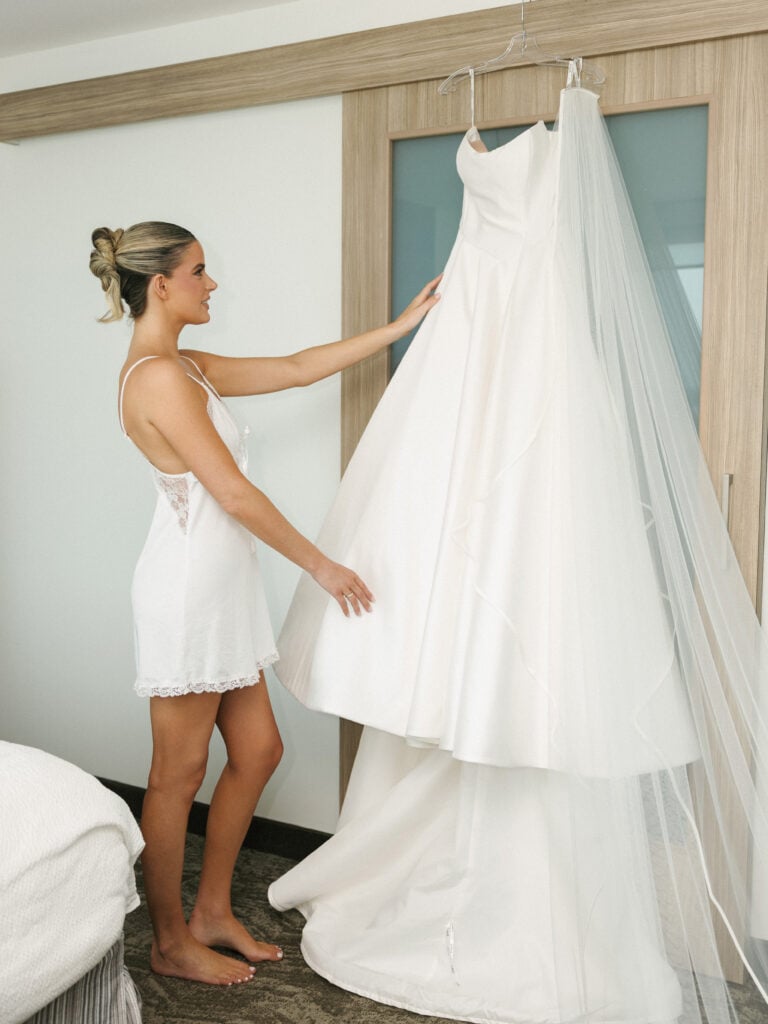
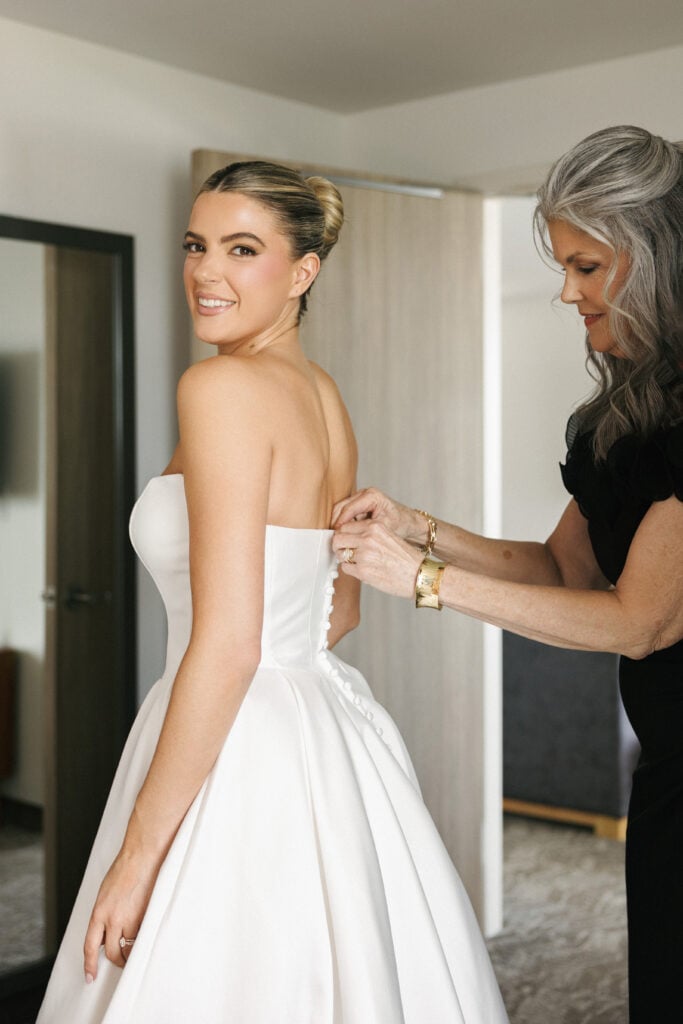
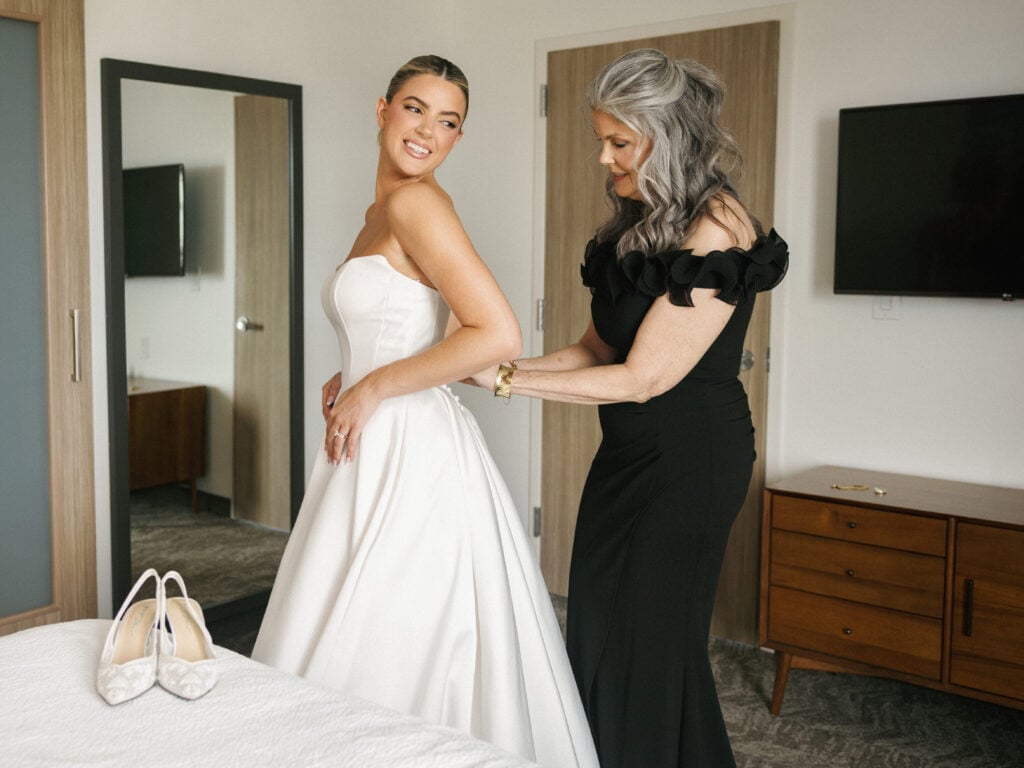
Reference photos or a short video can make the instructions easier to follow later. Ask the fitter whether you may record the demonstration, and make sure the images clearly show the attachment points and the finished arrangement. A photograph of the back of the gown once it is correctly bustled can be particularly useful as a visual reference. Share the material with the helper and keep a copy accessible on the wedding day.
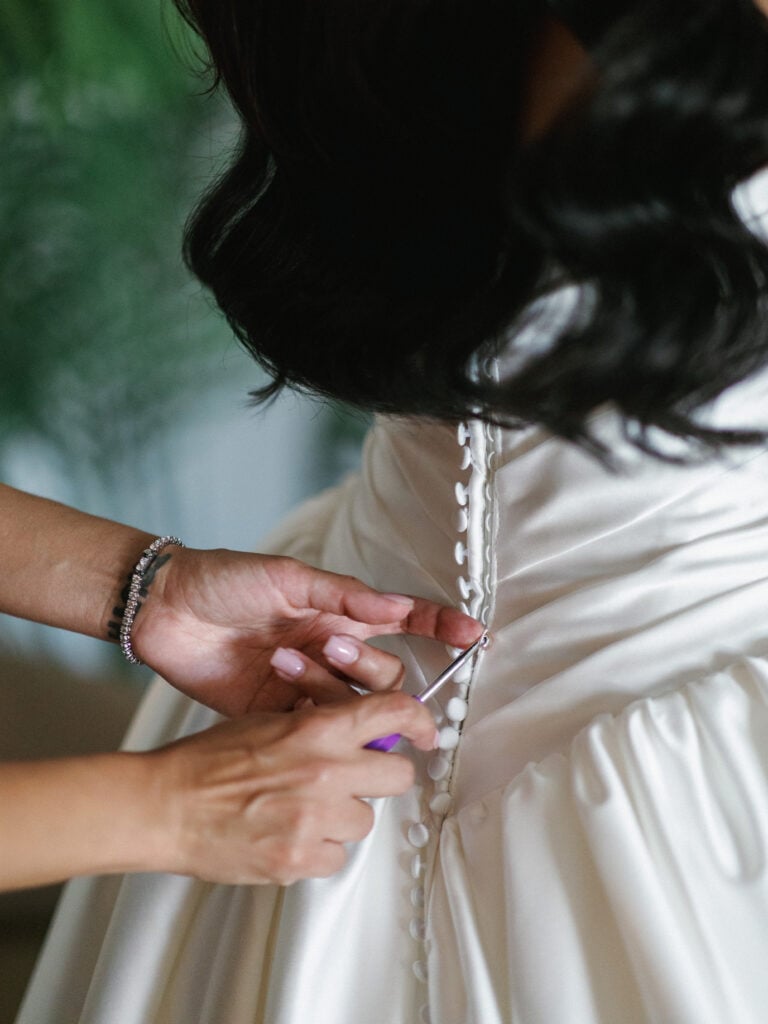
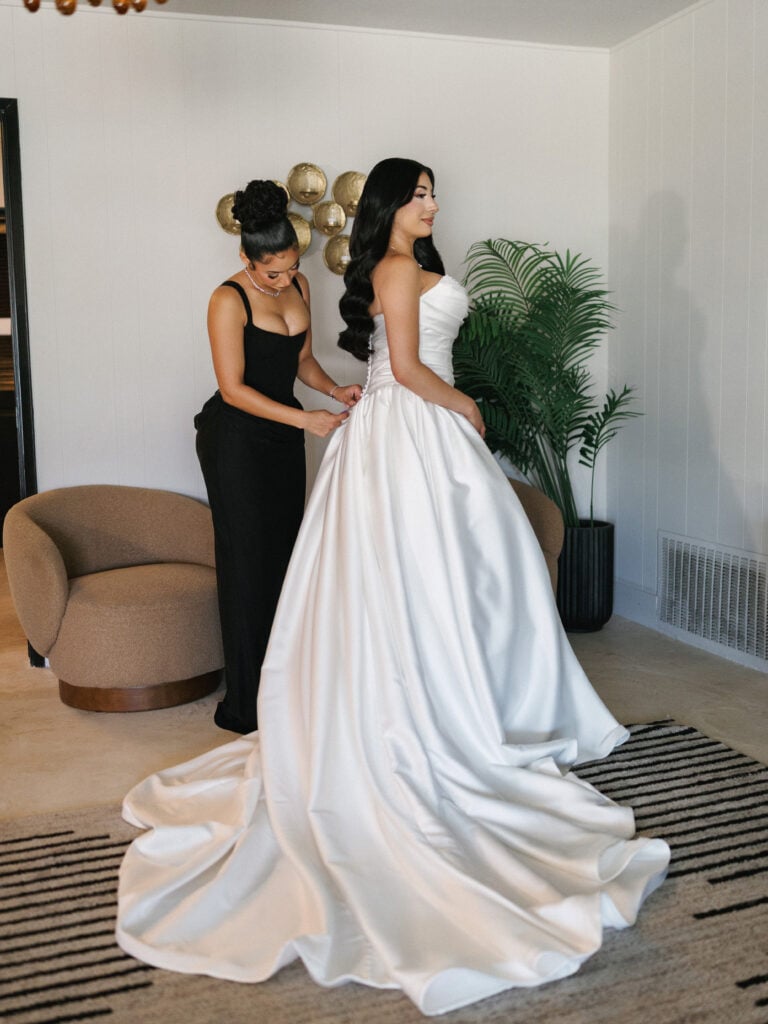
The fitting is also the right time to discuss what happens if a fastening loosens. Ask the fitter whether the helper can safely reattach it, which supplies are appropriate for the specific gown, and when professional assistance would be needed. Avoid relying on safety pins, adhesive products, or improvised repairs unless the fitter has confirmed they are suitable. Delicate fabrics and embellishments can be damaged by an unsuitable fix.
When to Bustle the Dress
The best time to secure the train is after its final planned use. For many couples, this means keeping it down through the ceremony and the portraits that feature the full gown, then arranging the bustle before the wearer spends more time moving around the reception.
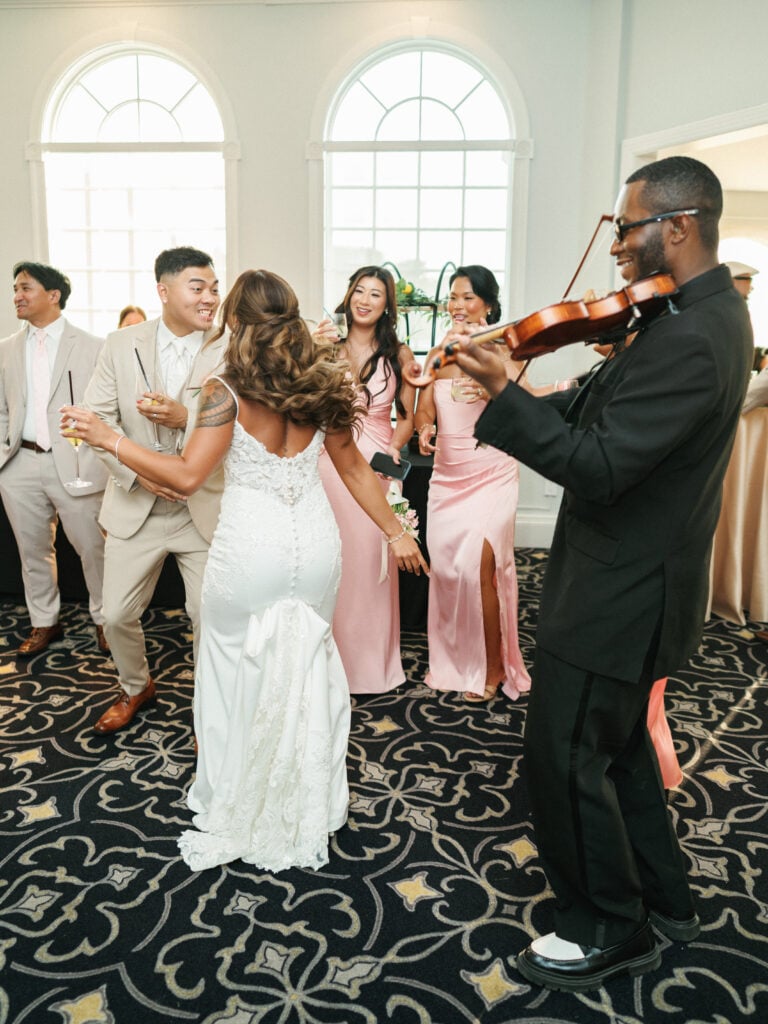
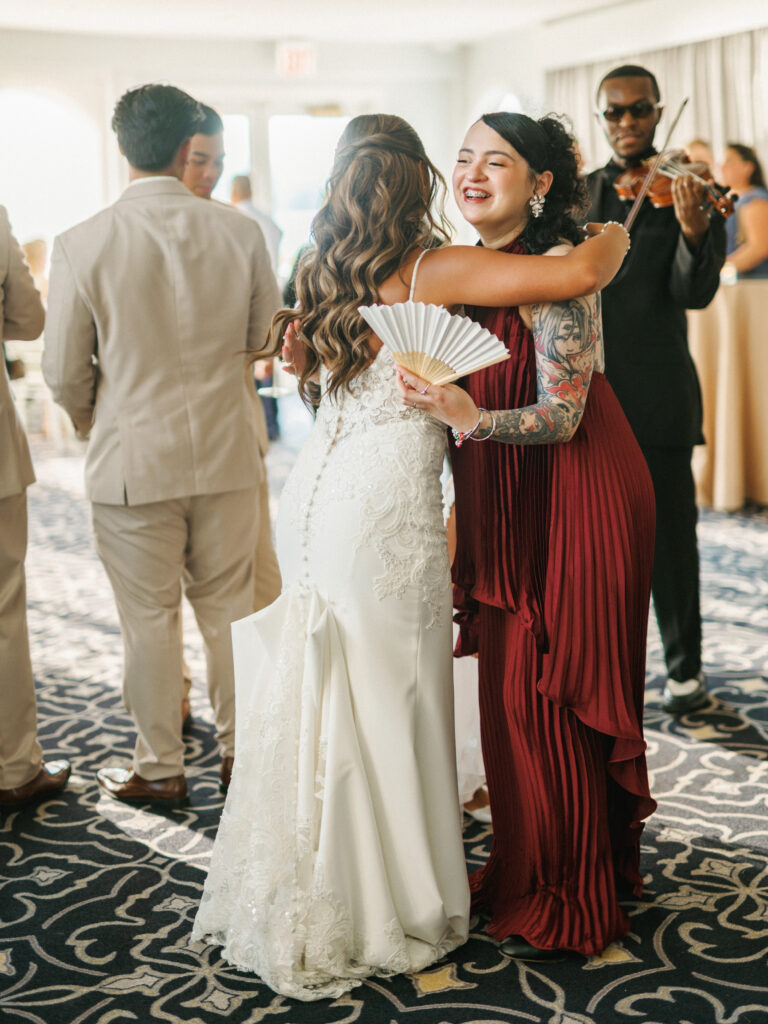
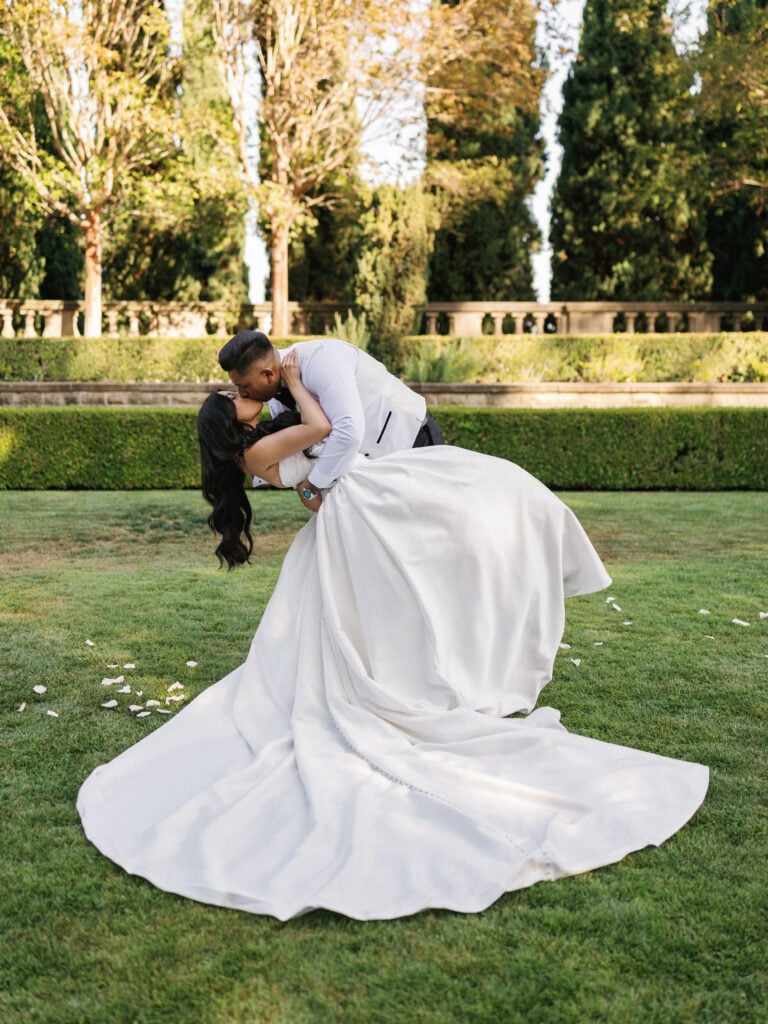
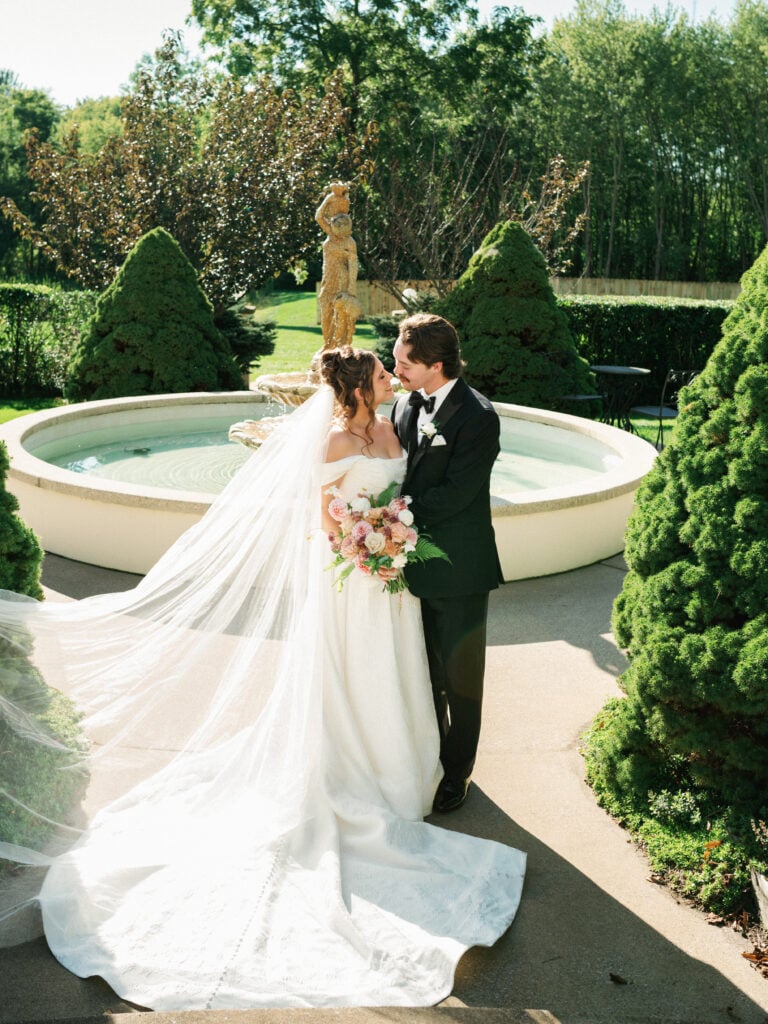
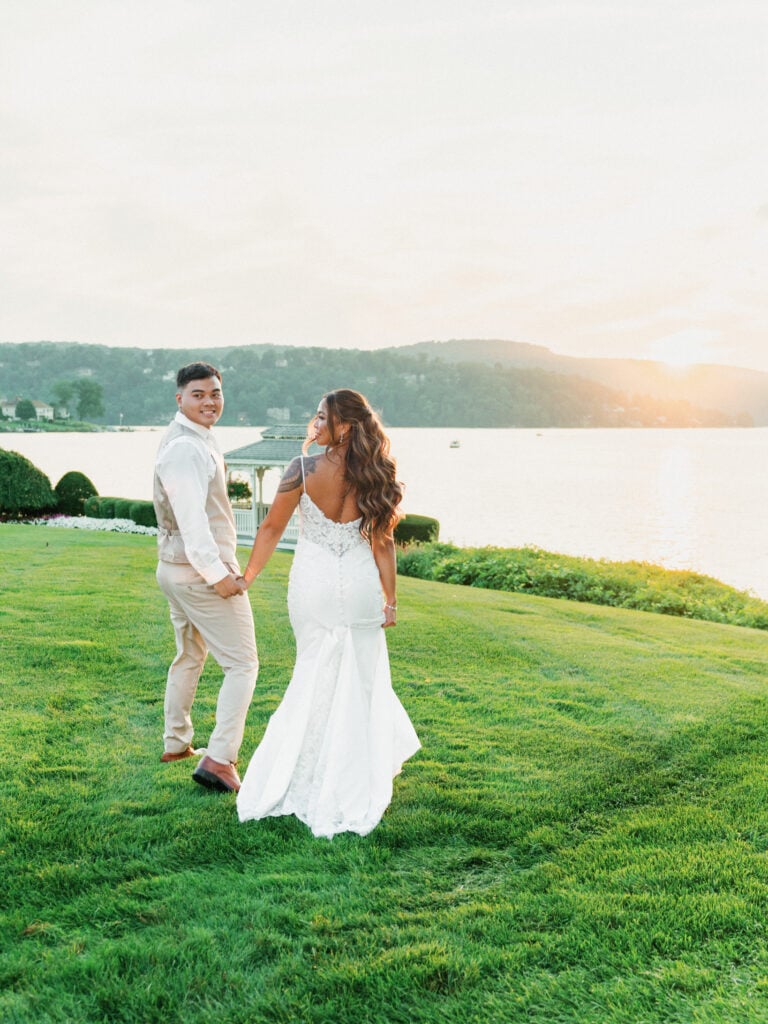
Think about the photographs you would like before deciding when that moment should happen. If you want portraits with the train spread across a staircase, along a garden path, or behind you during a couple’s portrait, those images need to happen while the train is still down. The same applies to close details that show the fabric, embroidery, lace, or overall shape of the train. Once the bustle is fastened, the back of the dress will look different.
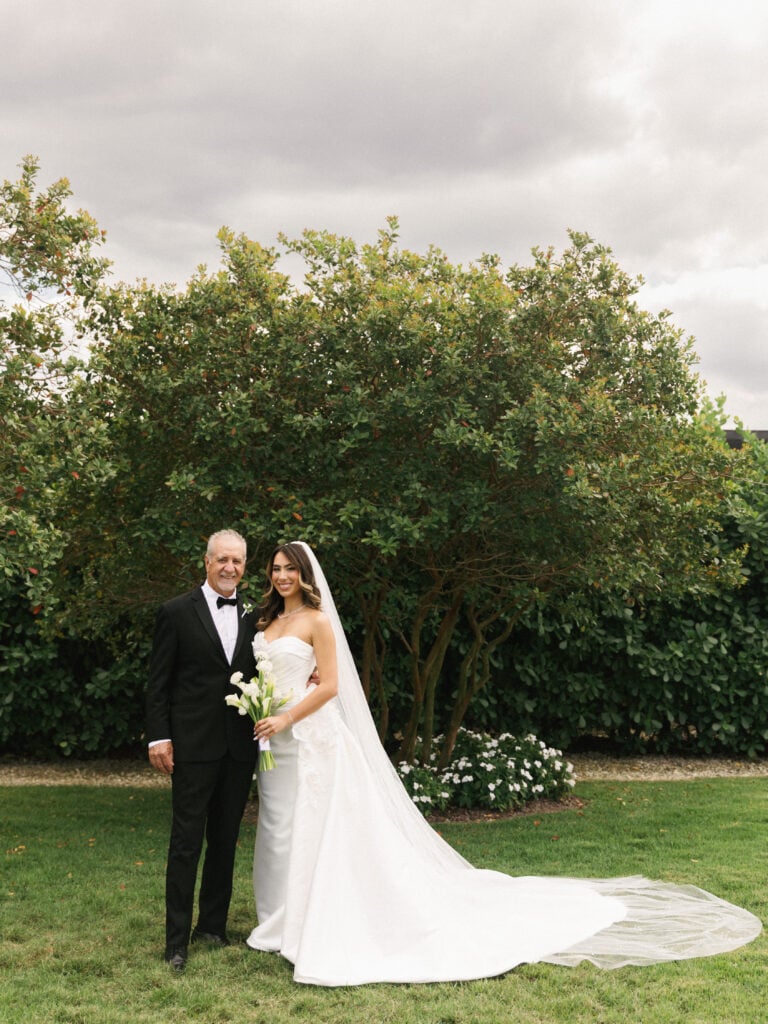
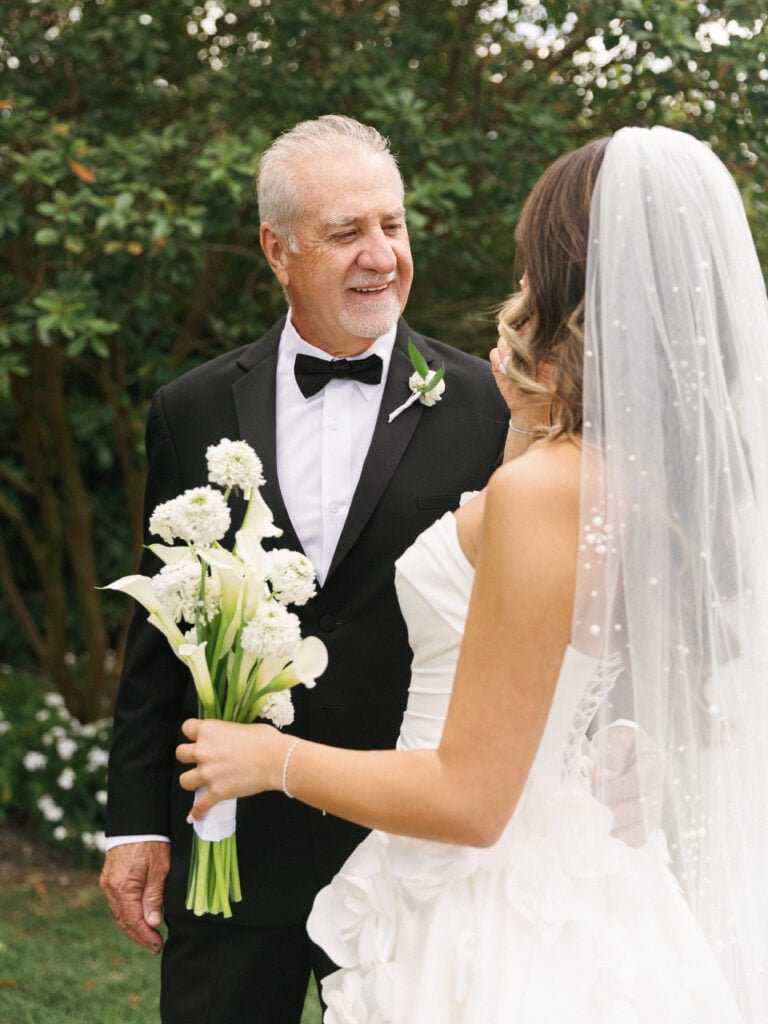
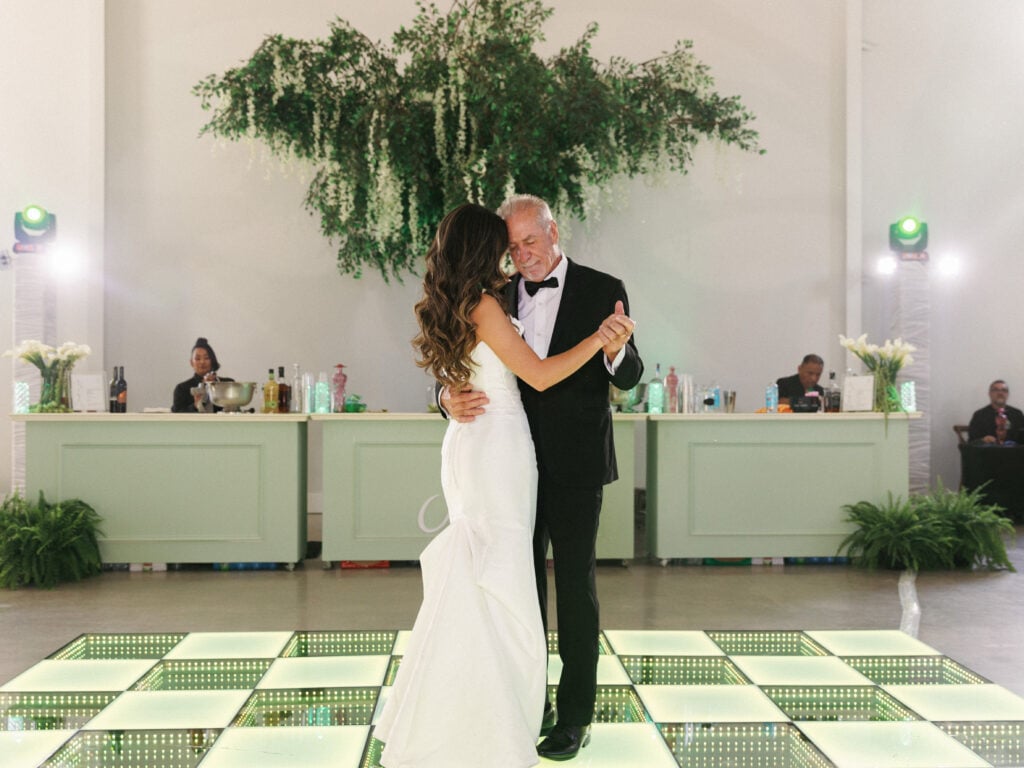
This is one reason to tell your photography and film team about the planned bustle. They can take the train into account when discussing the coverage of your portraits and make sure there is an opportunity to capture it before it is secured. If you would also like images of the finished bustle, mention that preference. The gathered fabric and changed silhouette can create a different set of details later in the day.
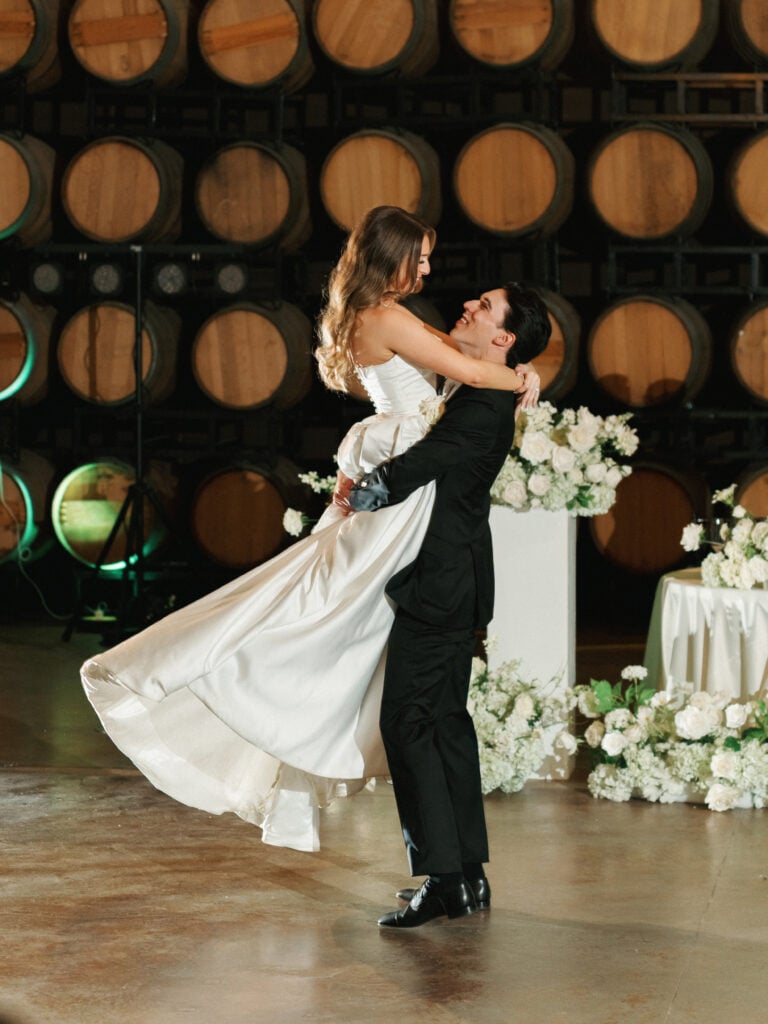
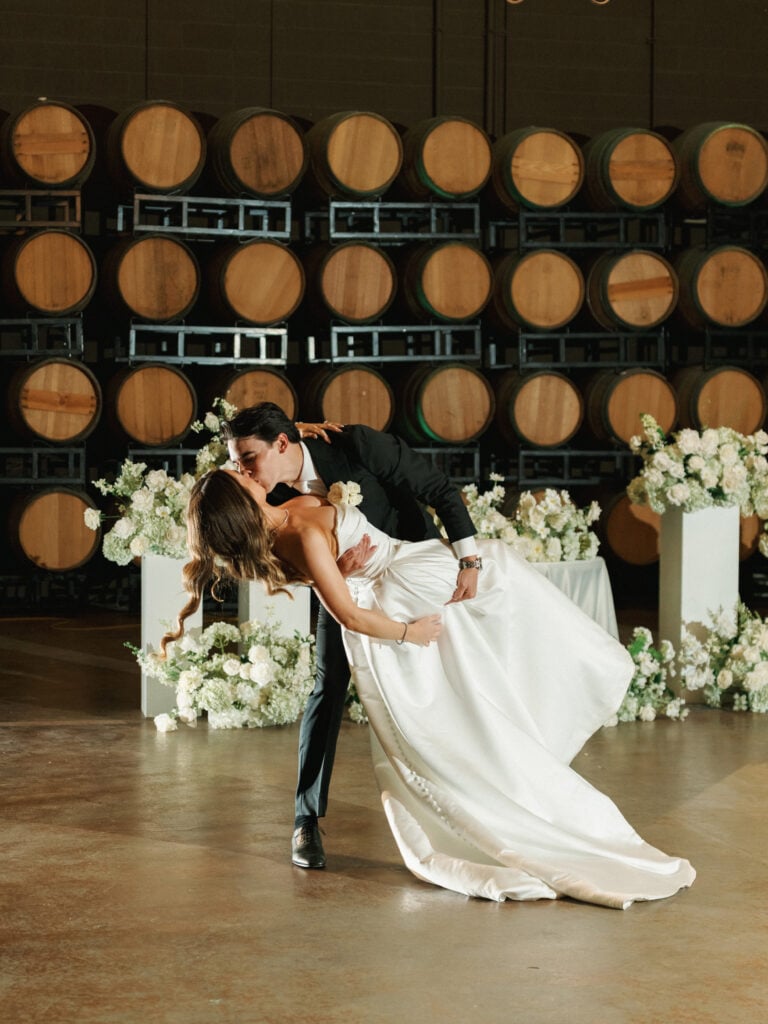
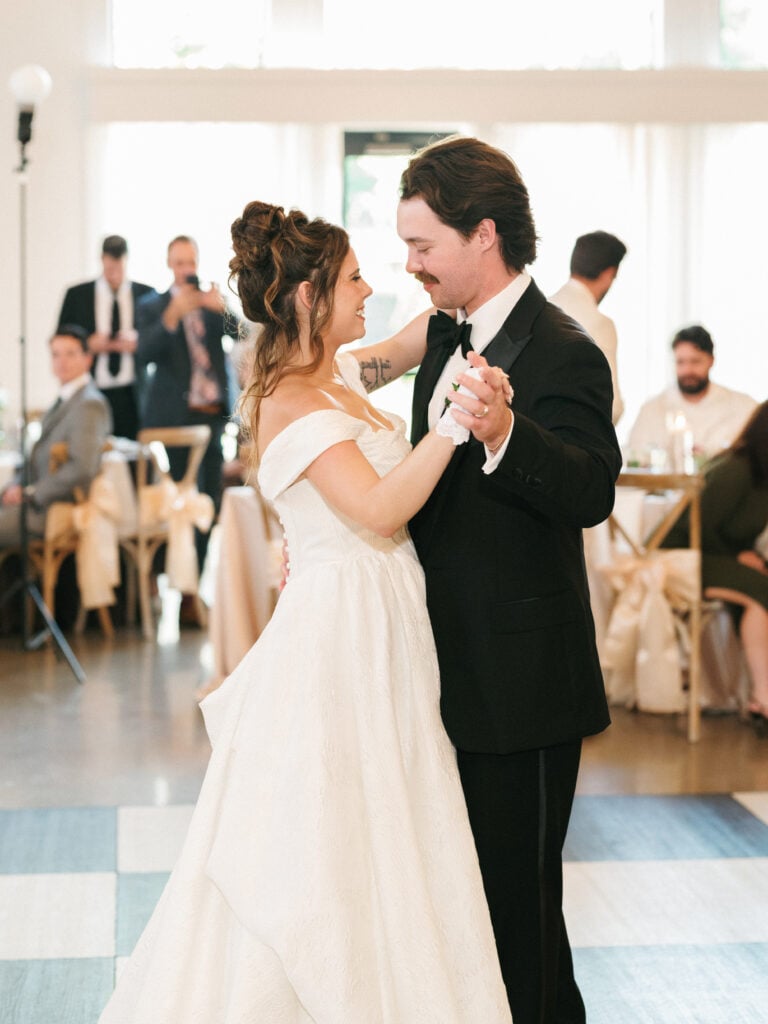
The timing itself depends on the way you want to experience the reception. Some wearers prefer to bustle the gown before making their entrance, so they can greet guests and move around comfortably from the beginning. Others keep the train down for a little longer, perhaps for the reception entrance or a planned first dance, and secure it afterward. There is no single moment that works for every dress or celebration.
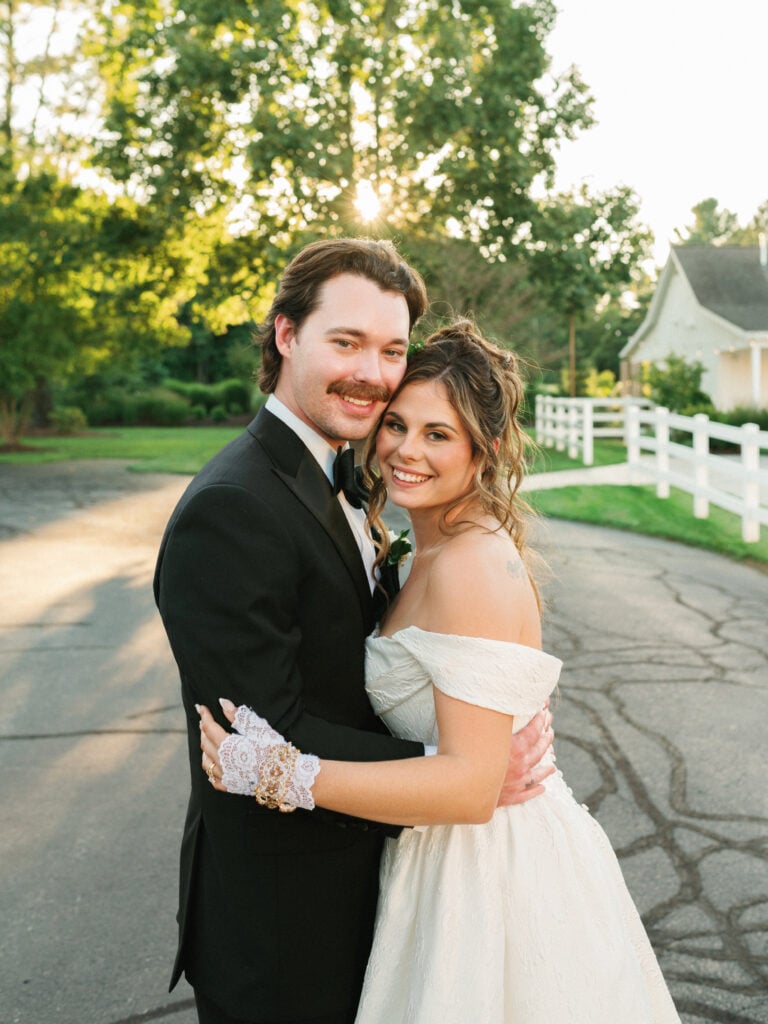
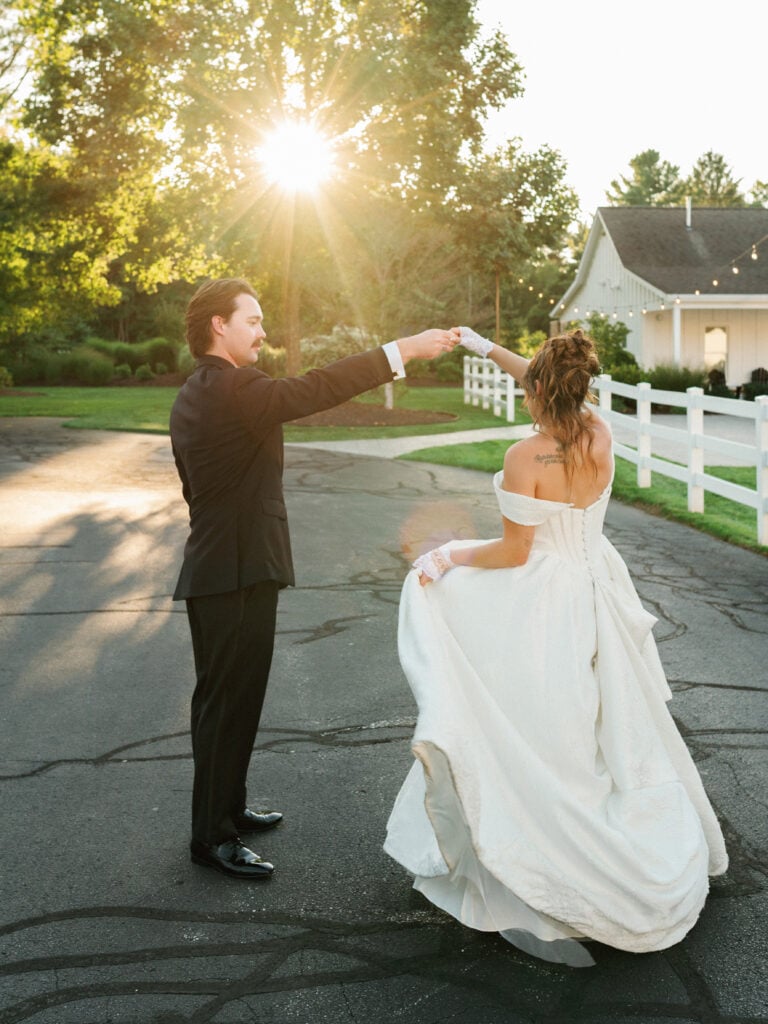
Consider the practical setting, too. A train worn outdoors may collect dirt or moisture, while a crowded reception space can make it difficult to move with the fabric trailing behind. These details may influence how long you want to keep the train down, but the decision should still reflect the moments you most want to preserve in the gown’s original shape.
Your helper should know when the bustle is expected and where the change can take place. A quiet room with enough space, a mirror, and somewhere to sit can make the process easier. The fitter can give a realistic estimate of how long the arrangement takes, particularly if it has several fastening points. Avoid assuming that it will be instantaneous or leaving the helper to work it out during a busy transition.
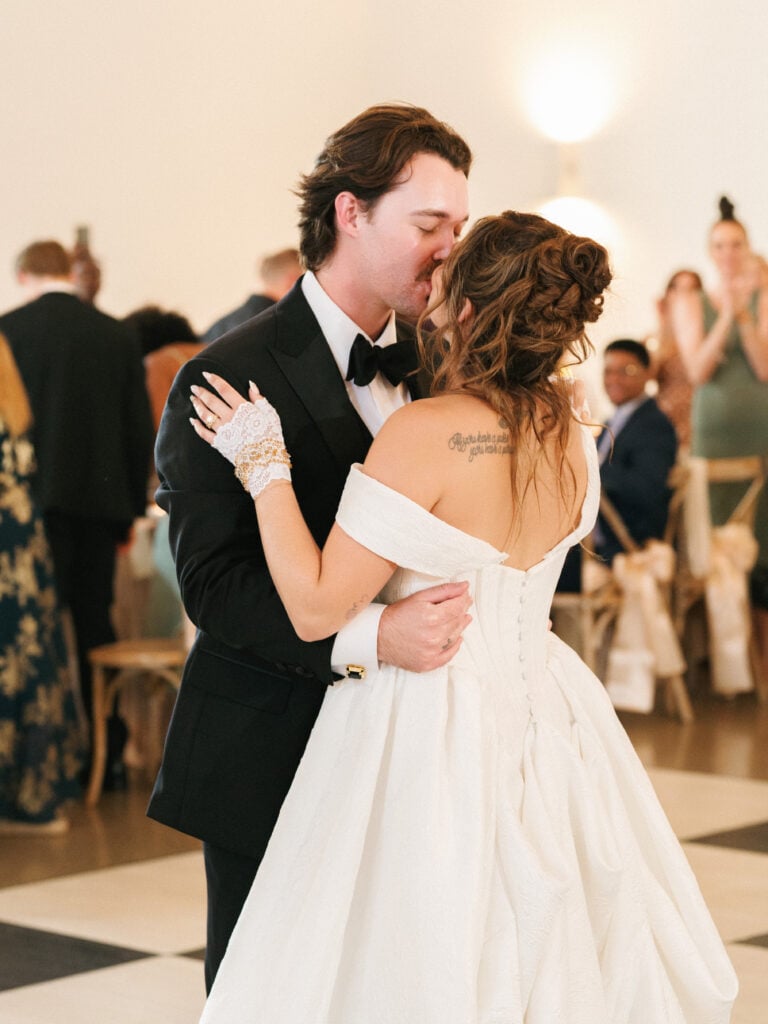
The change may also be a moment you would prefer to keep private. Let your photography and film team know if you do not want the process documented. If you are comfortable with it being photographed, you can discuss whether you would prefer a few candid images or simply a photograph of the completed bustle. The choice is entirely yours.
Frequently asked questions
Does every wedding dress with a train need a bustle?
No. A short train may move easily without one, and a long or heavy train often calls for a plan. The fitter can say what suits the dress at the alterations appointment, and a wrist loop or a different arrangement may be the choice for some gowns.
Can the person wearing the dress bustle it alone?
Usually a helper is needed, since the fastening points sit at the back of the skirt. The wearer and the fitter can discuss whether a particular arrangement can be managed without help, and a helper who practiced on the dress makes the change quick and comfortable.
Should the train stay down for some portraits?
Yes, when the couple wants images of the train spread out, such as on a staircase or a lawn. Portraits with the train down are usually completed before the bustle, and the couple can tell the photo and film team when the change is planned.
What should we ask the fitter if a fastening comes loose?
The wearer can ask what to do, which supplies are appropriate to carry, and whom to contact for help. The answers go into the handoff note for the helper, with the fitter’s contact saved on a phone.
How long does it take to bustle a wedding dress?
The time depends on the dress and the helper’s practice. The fitter can give an estimate during the practice appointment, and a window of about ten minutes leaves room for arranging layers and checking the result.
Will the bustle show in photographs from behind?
Yes. The gathered fabric forms folds at the back of the skirt, and the fitter can describe how the finished bustle looks. Photographers record the back of the dress as a detail, and the wearer can mention whether those images are wanted.
CONTACT ASTER FILMS
Tell us about your wedding
We would be happy to discuss your wedding photography and film plans, answer any questions you may have, and talk through the coverage options available for your day.