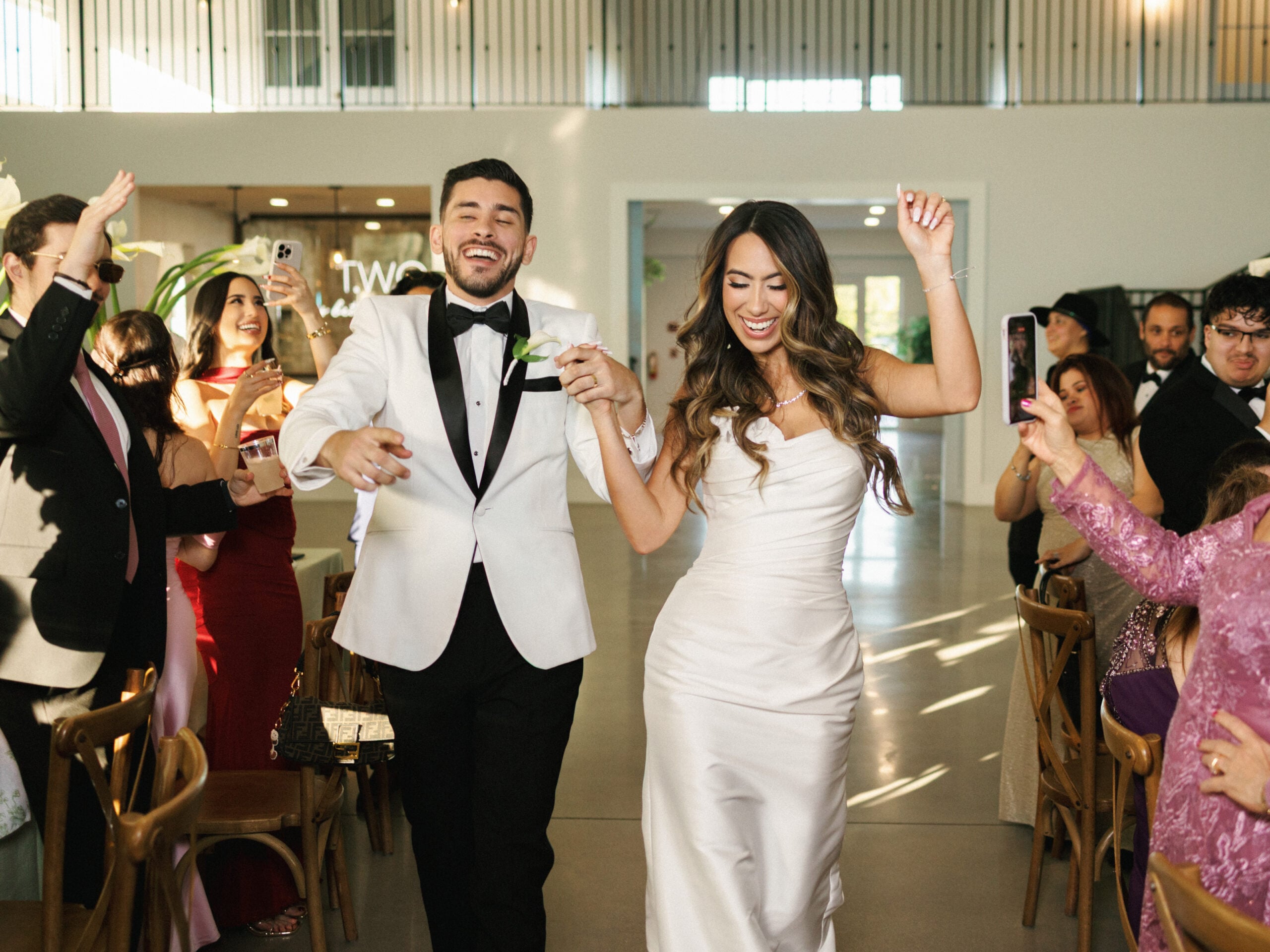
The reception entrance brings the couple into the celebration and gives guests a chance to welcome them into the evening. Some couples enjoy a lively introduction with music and their wedding party, while others prefer a quieter arrival that feels more natural to them. An announced walk, a short dance, a group entrance, or a quiet arrival without introductions each brings a different atmosphere and asks something different of the couple and the people beside them.
To plan the other end of the reception timeline, consider our guide to private last dance planning.
Choosing the Style of Your Reception Entrance
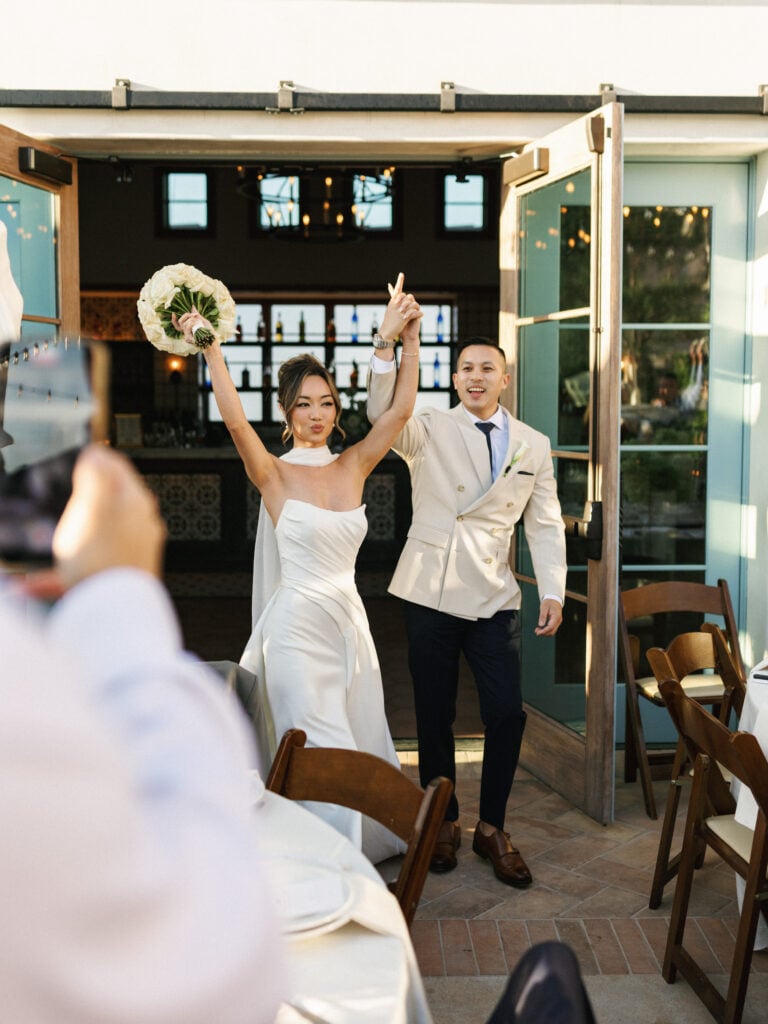
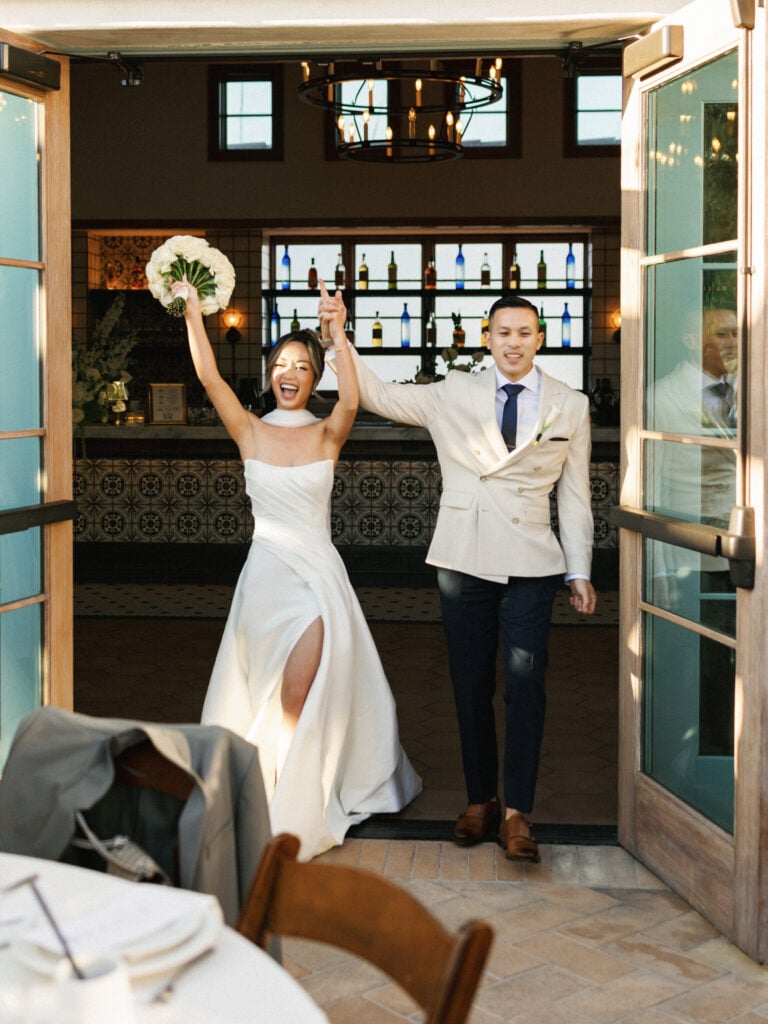
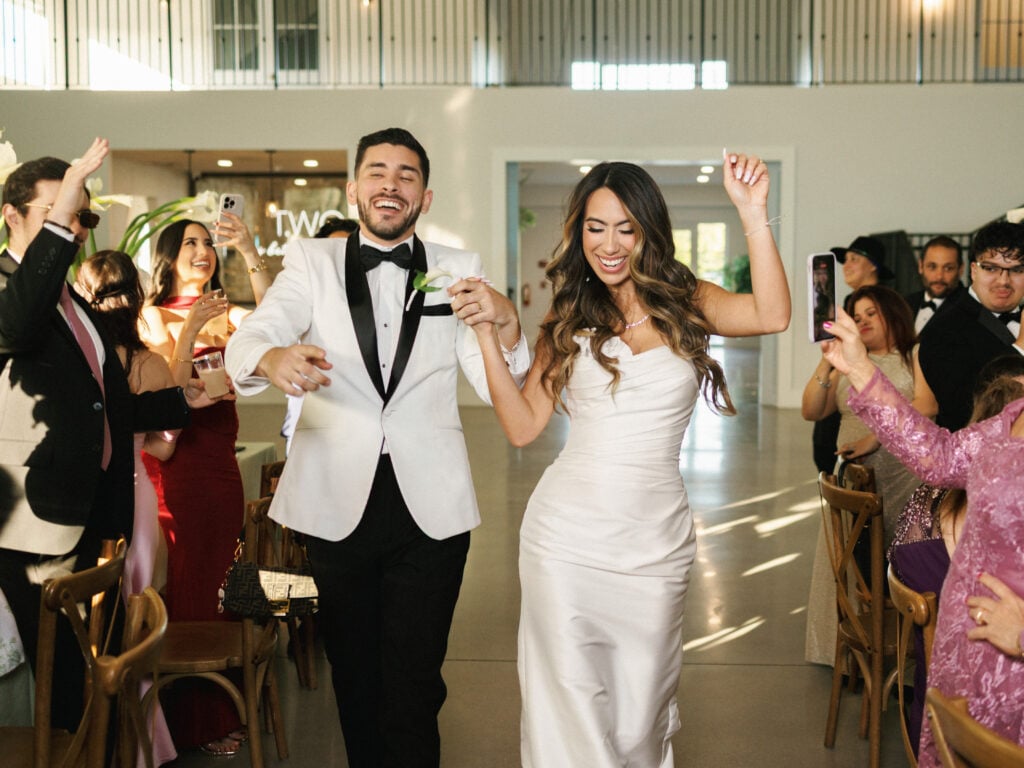
Saved wedding reception entrance ideas often look like a scroll of competing styles: a couple spinning through double doors, a wedding party streaming in to a pop chorus, two people crossing a room that has gone quiet to watch them. These ideas range from simple introductions to lively group entrances, with plenty of room to adapt each format to the couple’s preferences.
Announced Walk
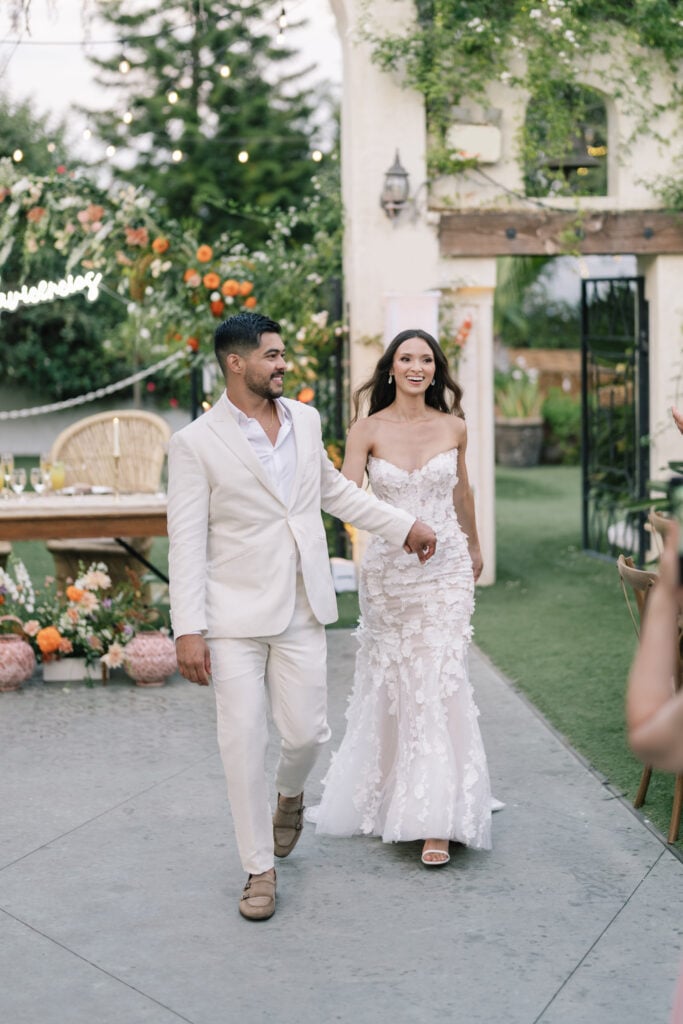
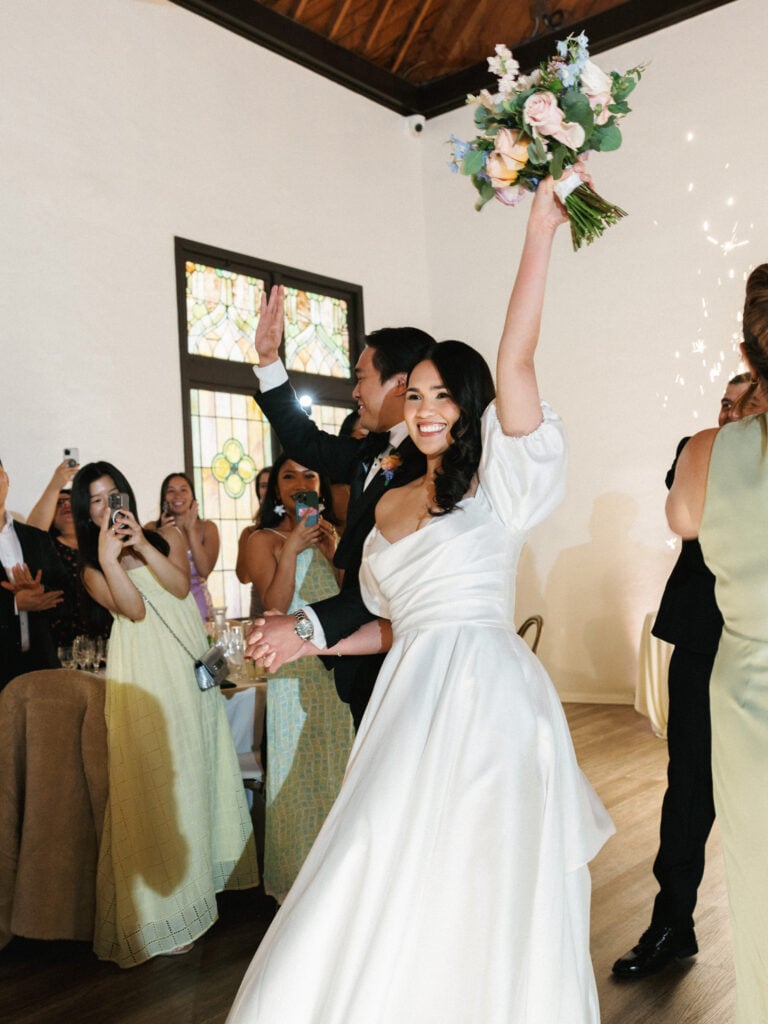
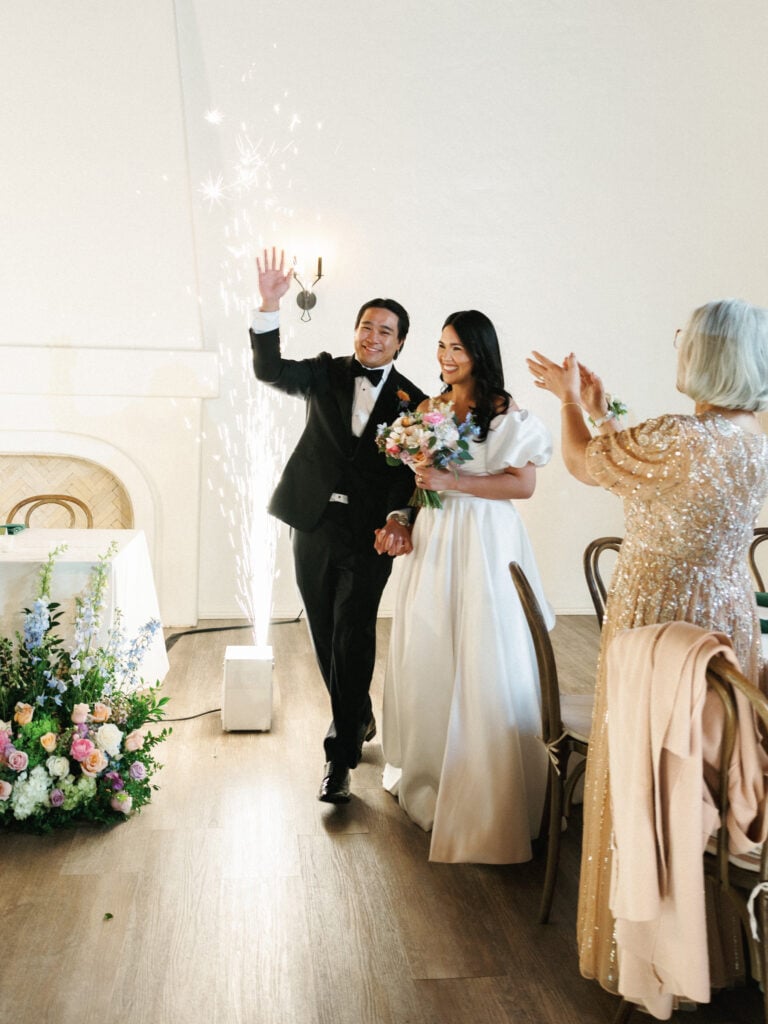
An announced walk keeps the entrance straightforward. The DJ, band leader, or a close friend with a microphone says the names, guests stand or applaud, and the couple walks to the dance floor or to their table. It takes roughly thirty seconds, asks for one decision about how the names are said, and keeps the opening of the reception calm. Couples who like a clear moment of welcome without much choreography tend to choose it.
Brief Dance
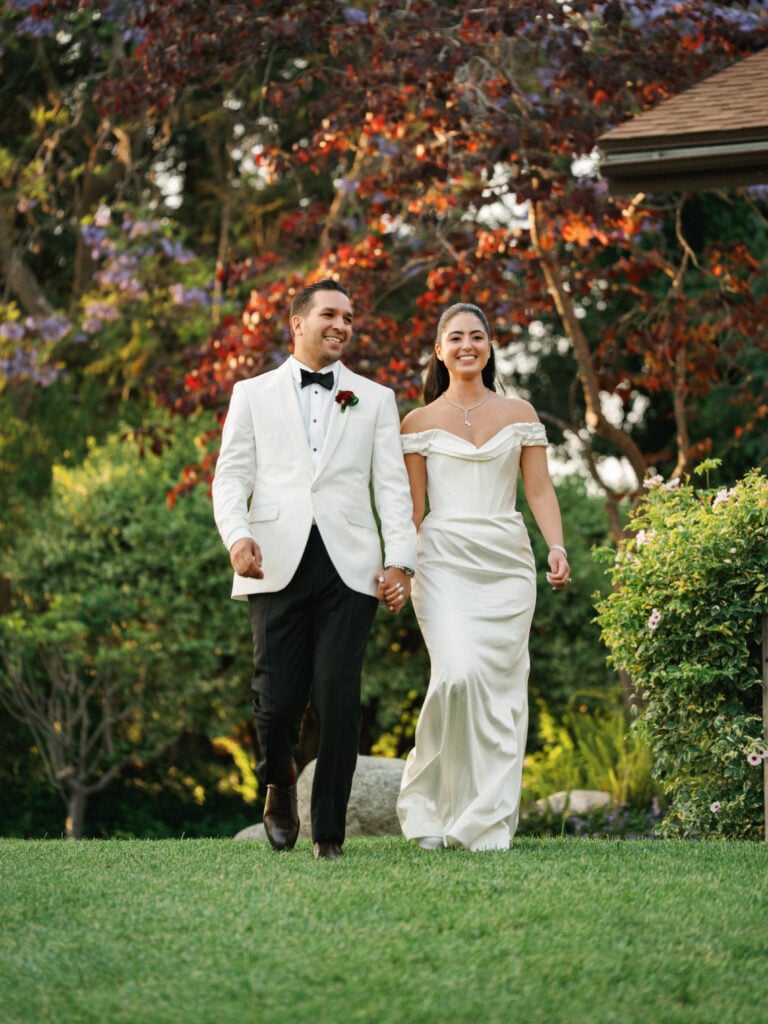
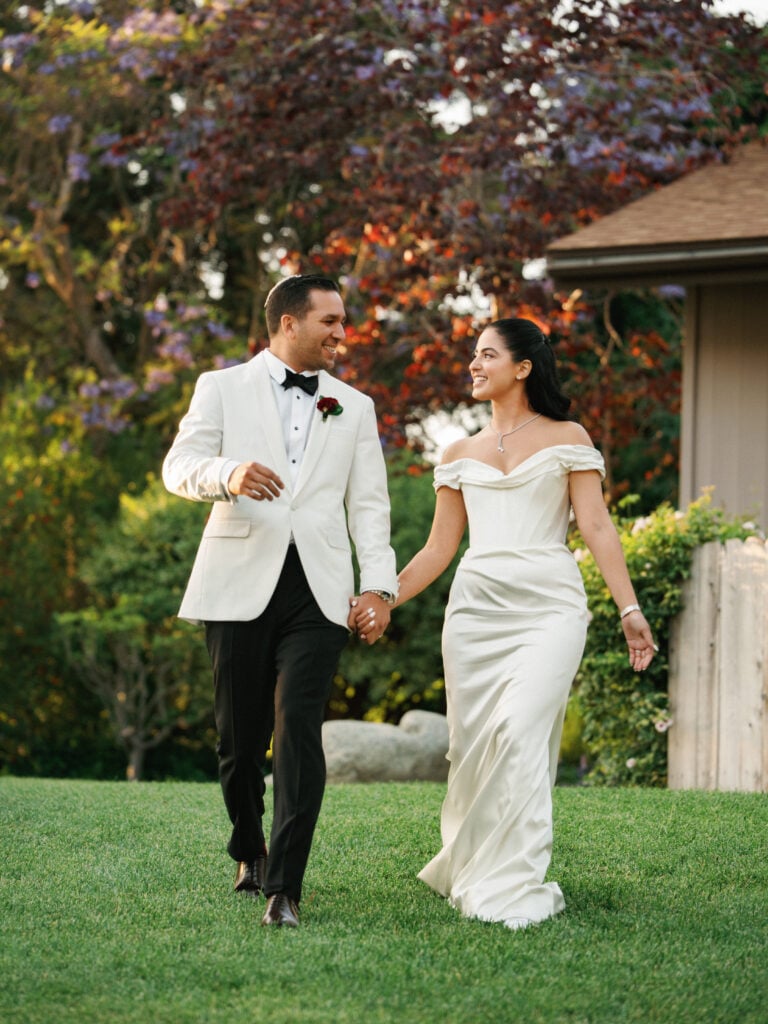
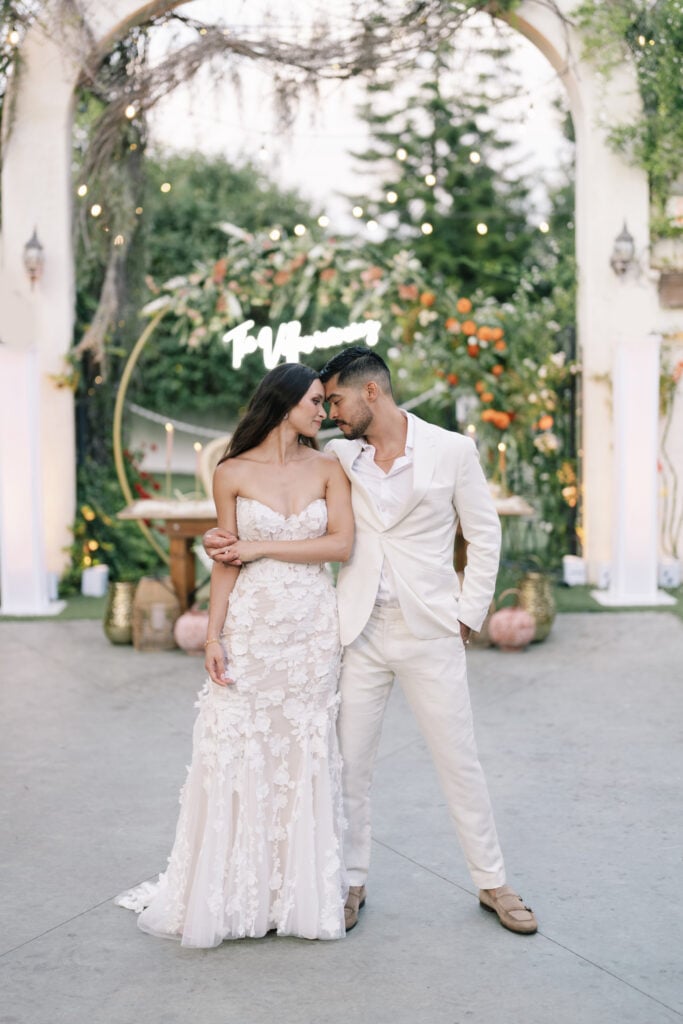
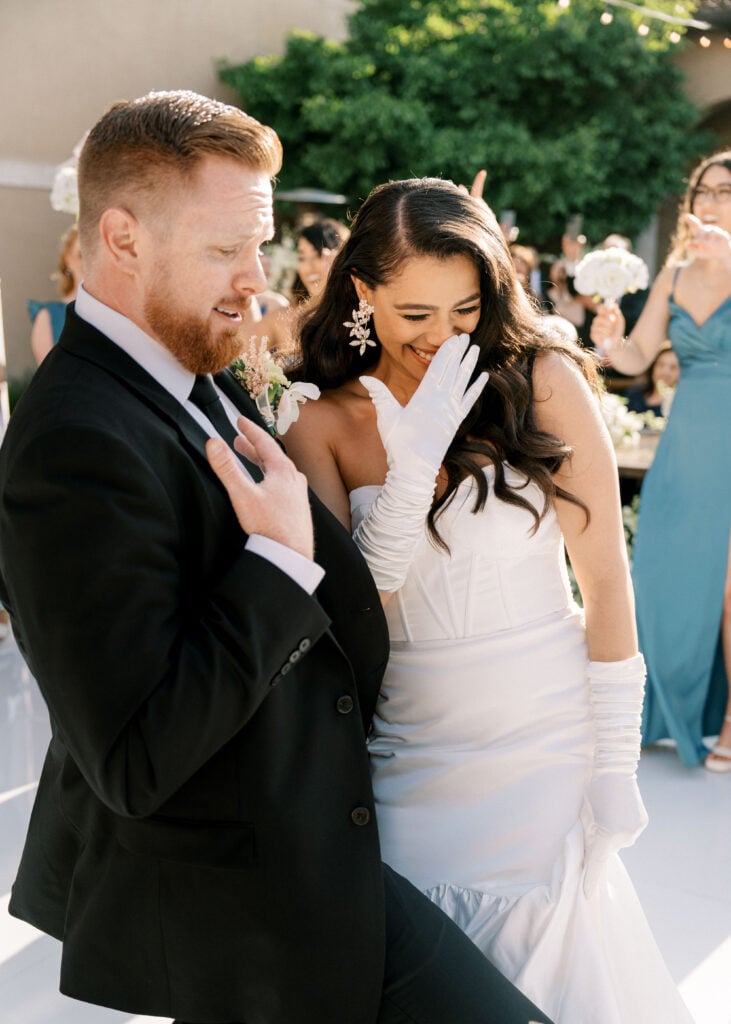
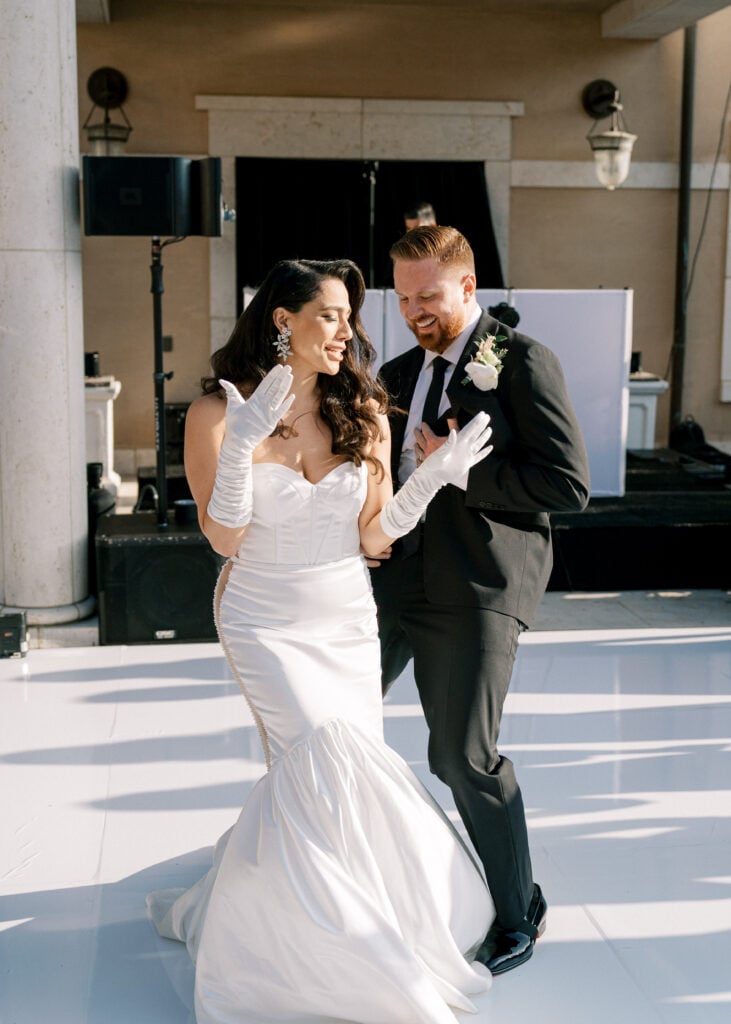
The brief dance adds a few steps at the center of the floor: a turn, a dip, a bar or two of something rehearsed in the living room. It suits couples who enjoy being a little playful in front of their guests, and it needs a clear patch of floor and about a minute of music.
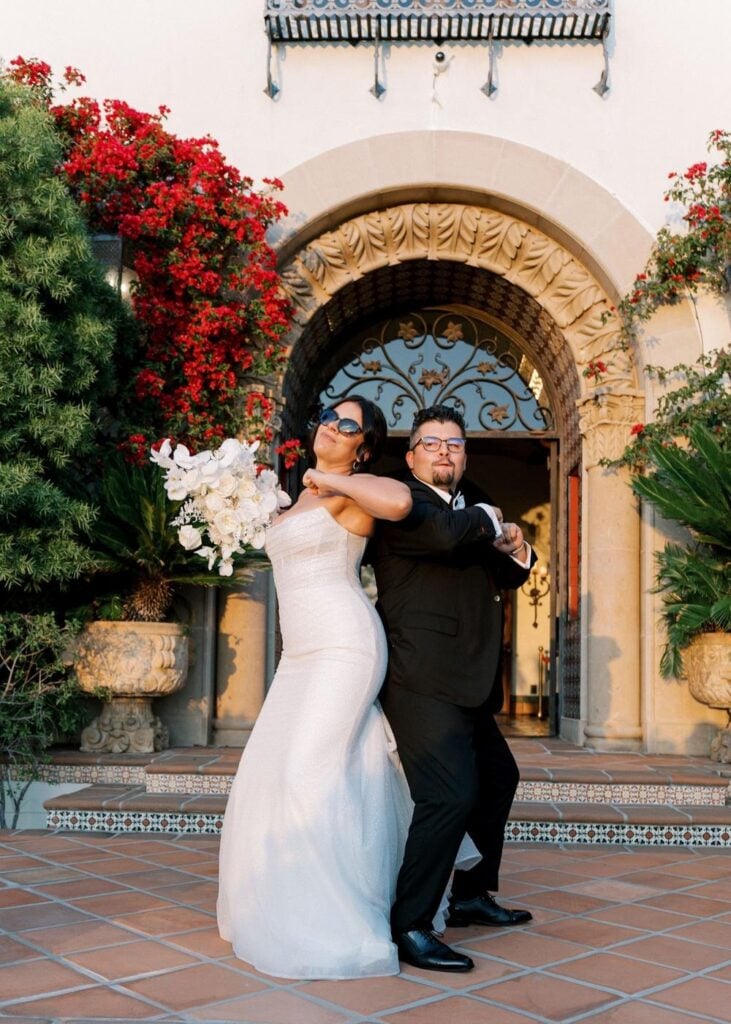
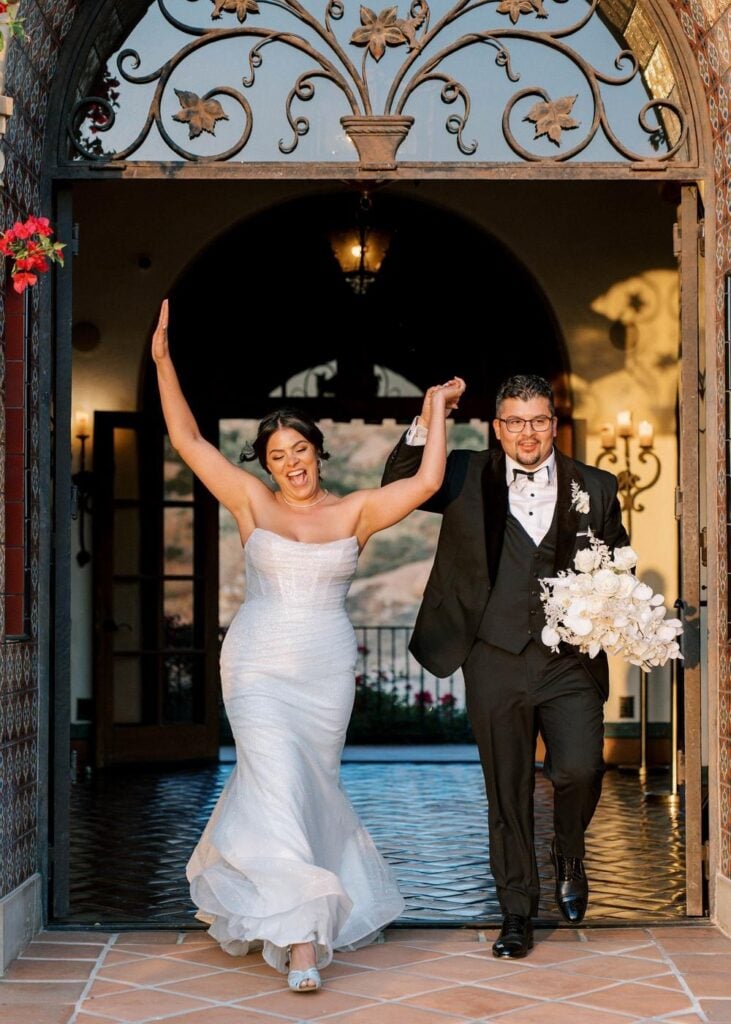
Group Entrance
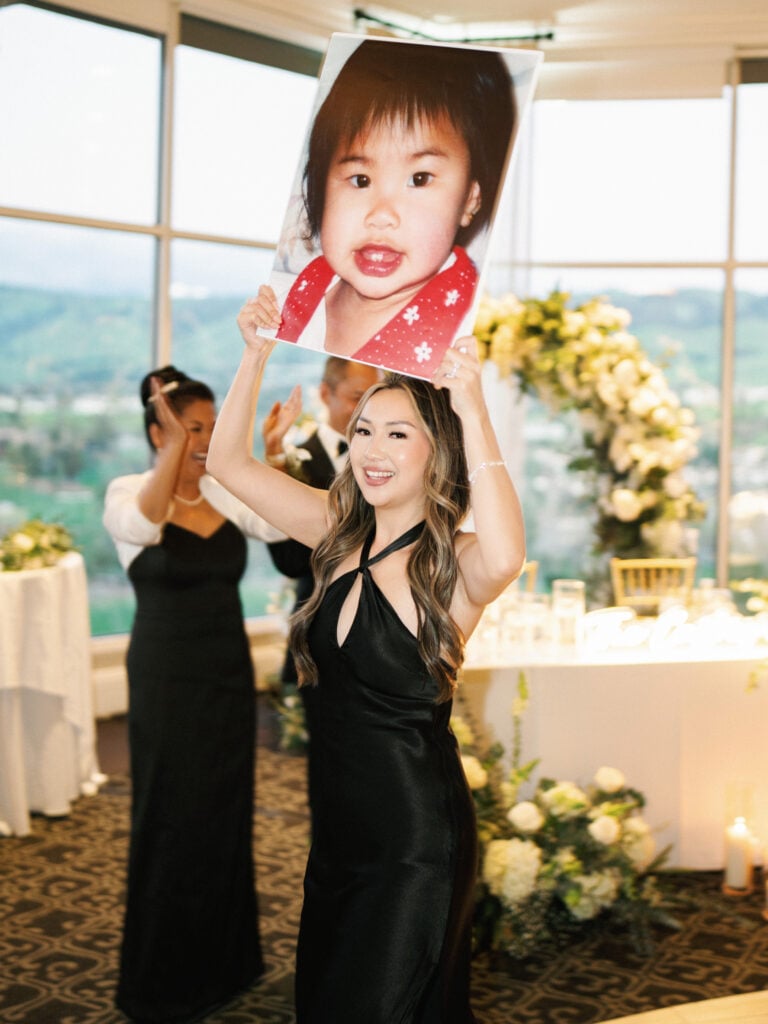
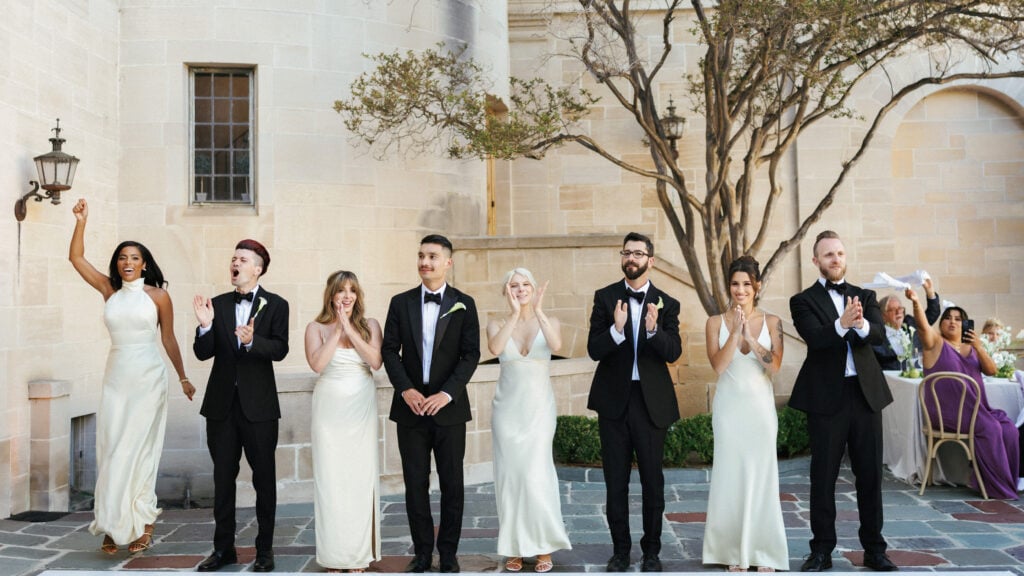
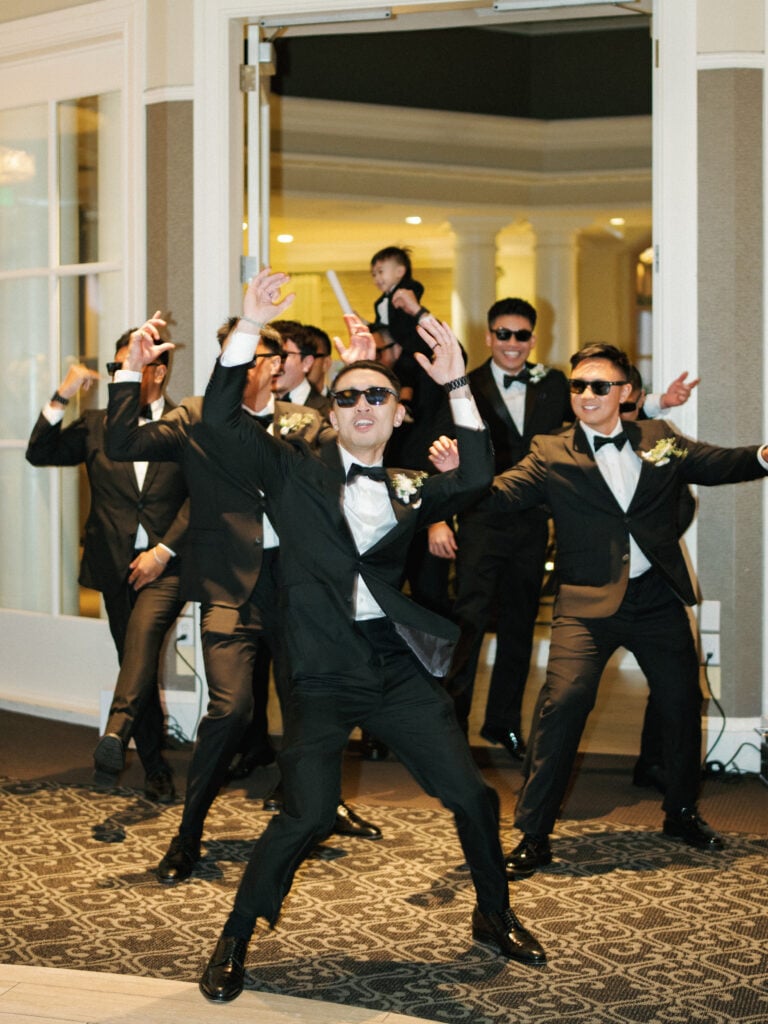
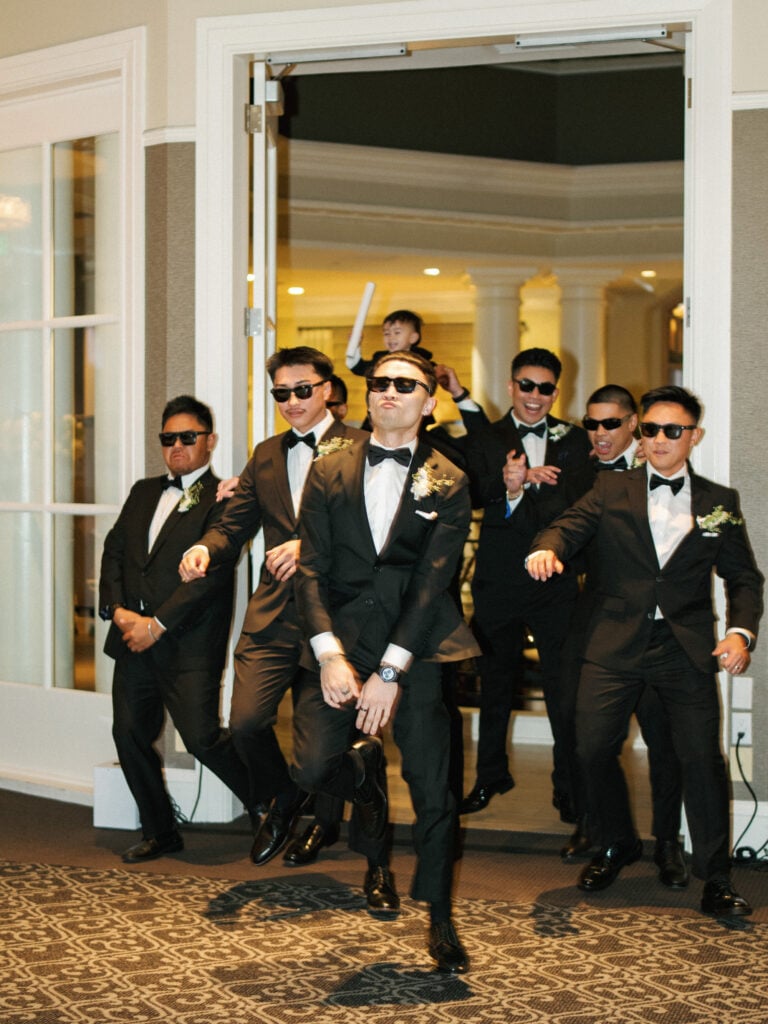
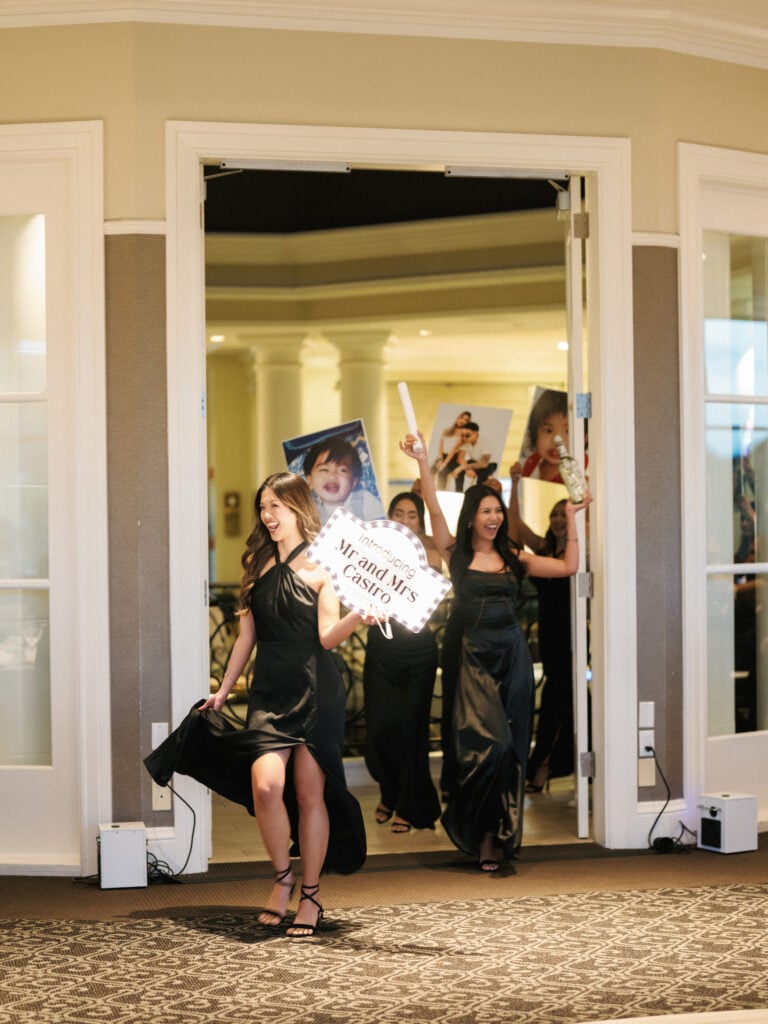
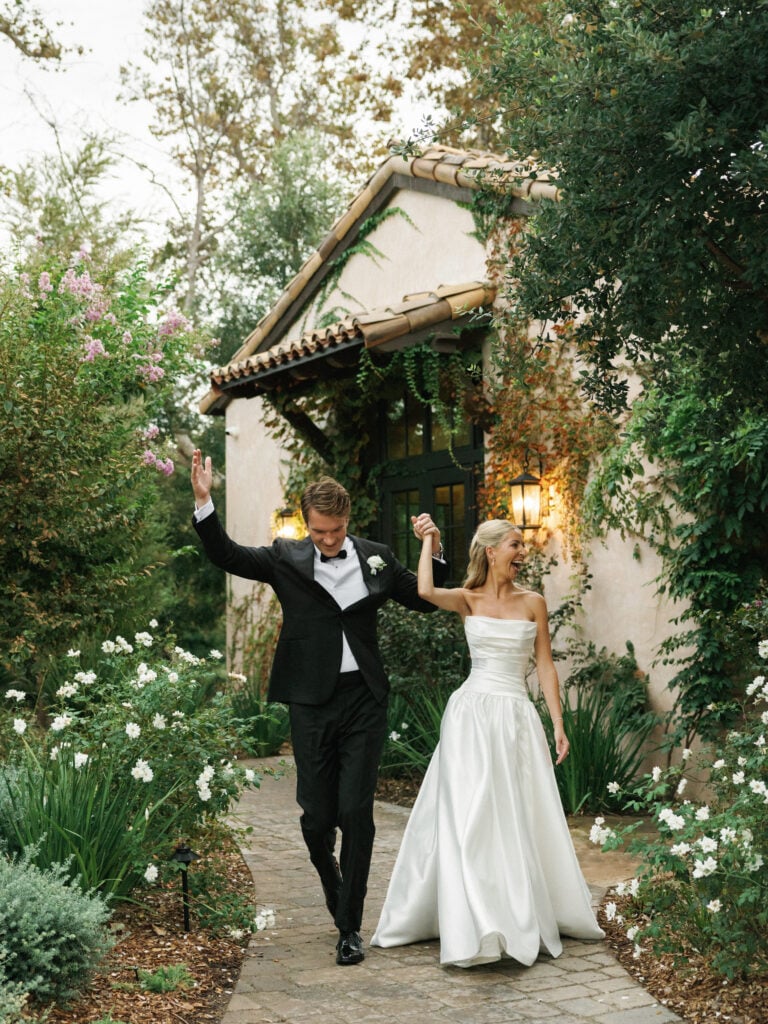
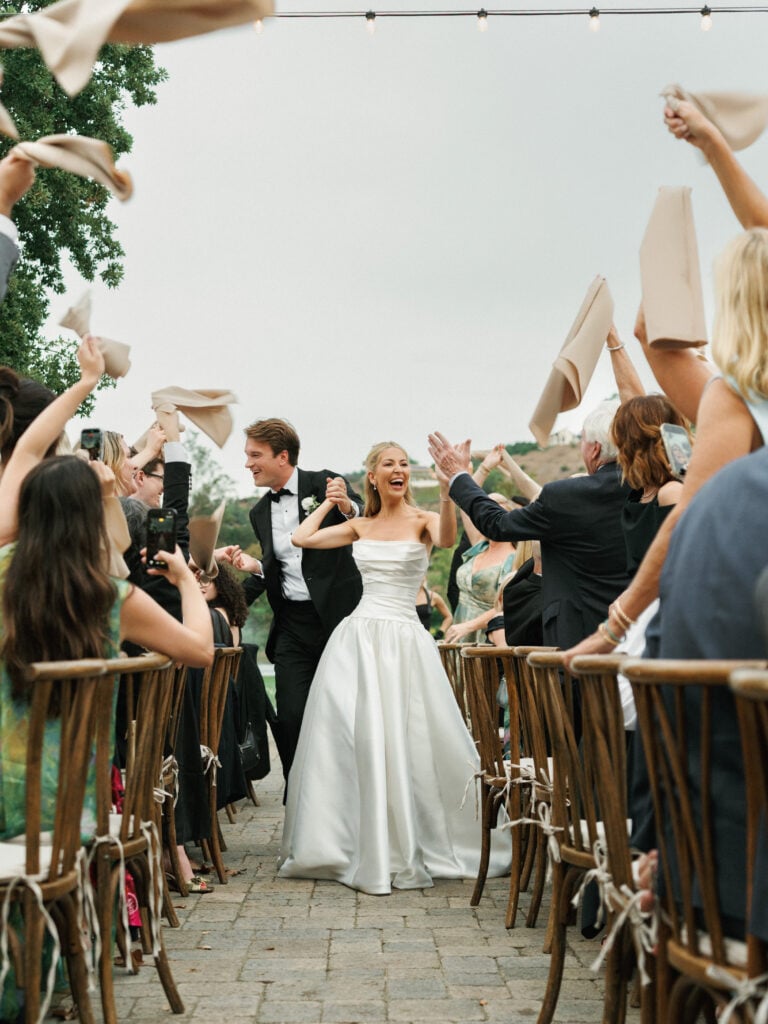
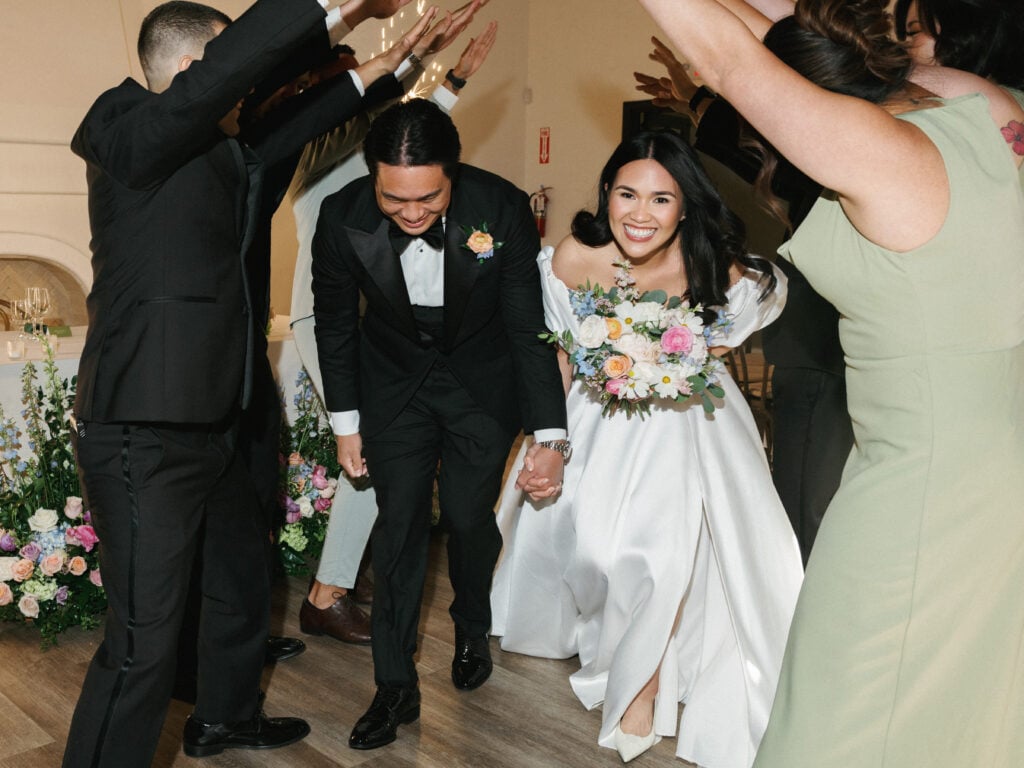
The group entrance brings the wedding party in, in pairs or all together, with the couple arriving last. It carries a good deal of energy into the room, and it depends on every attendant wanting to be part of it. Attendants who would prefer to be seated beforehand can take their seats, and the entrance still reads as complete with the people who join.
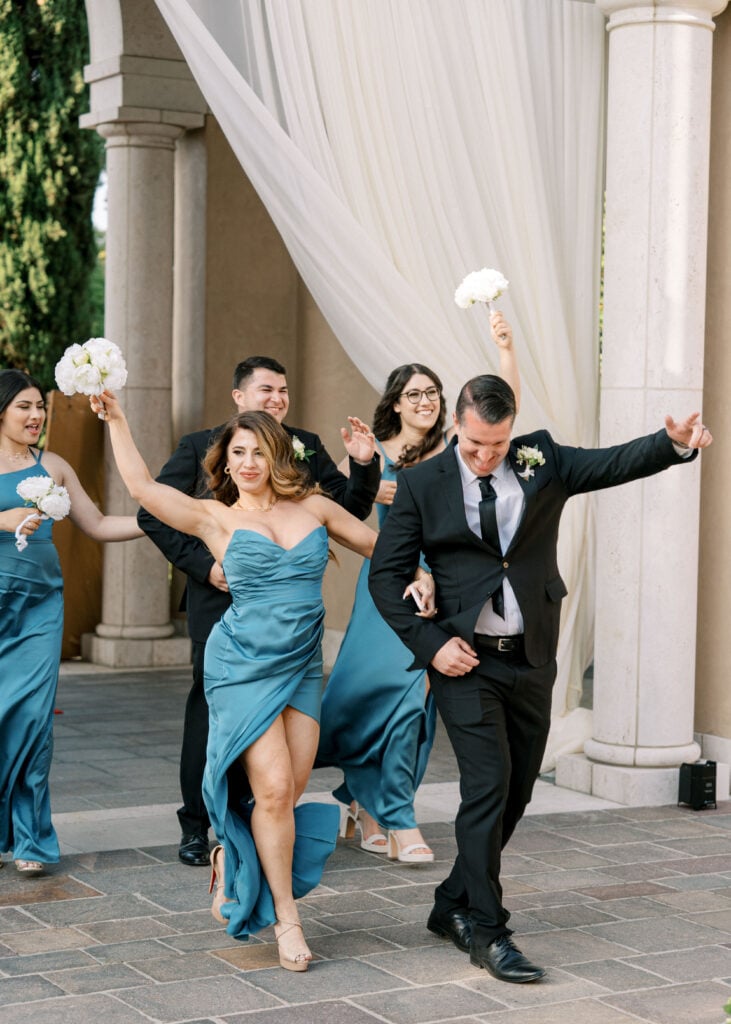
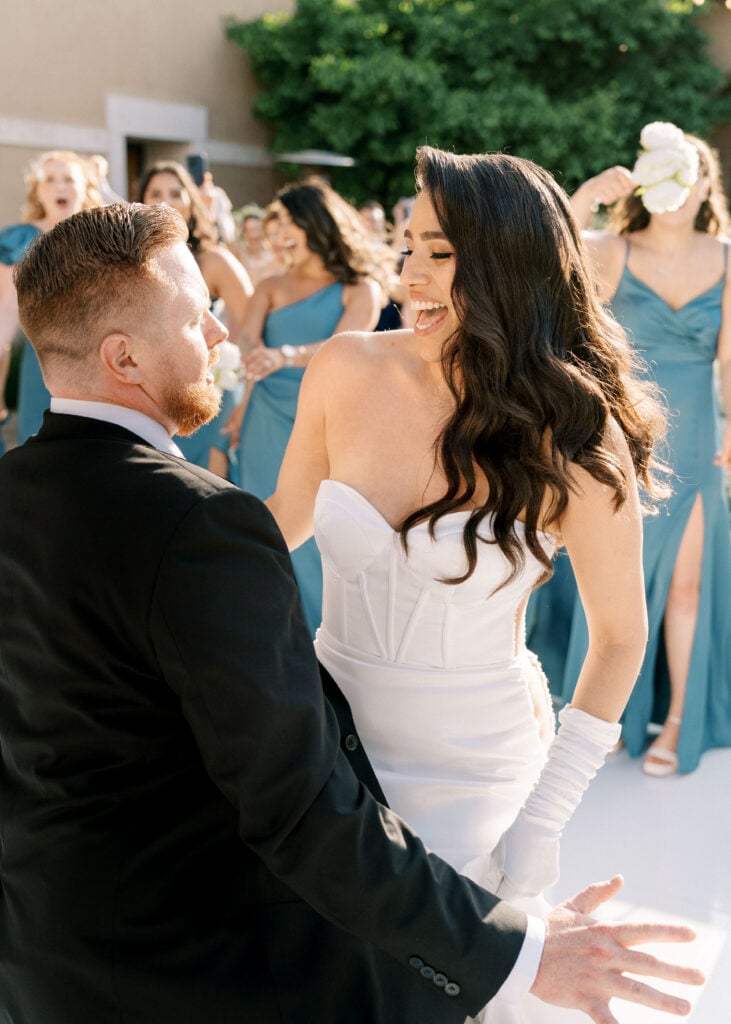
Quiet Arrival
Entering without a formal introduction suits receptions where guests are already mingling, such as a cocktail hour that flows into dinner. The couple joins the room instead of crossing it, greeting tables on the way to their own, and the first dance or a welcome follows when everyone is seated.
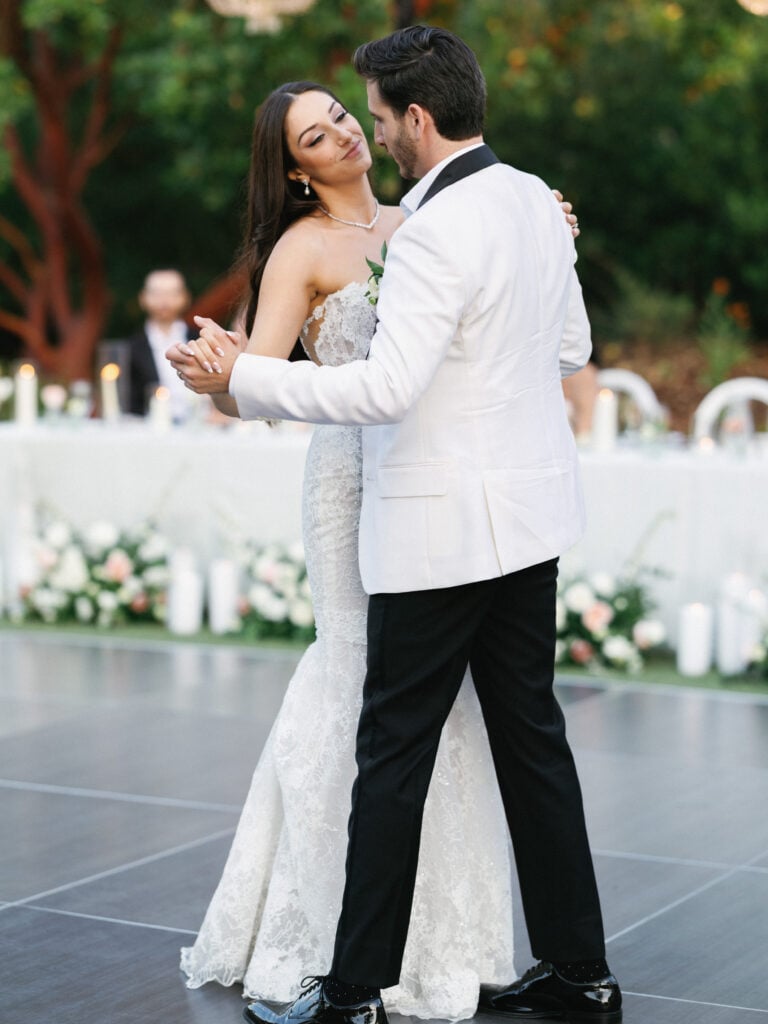
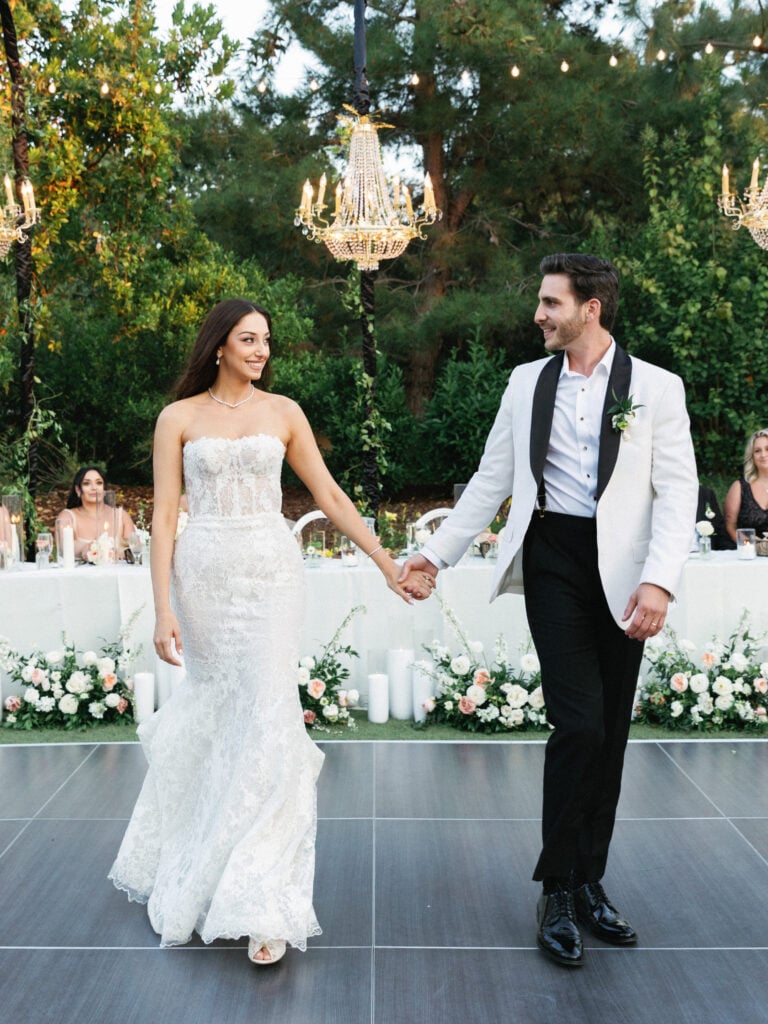
A Personalised Entrance
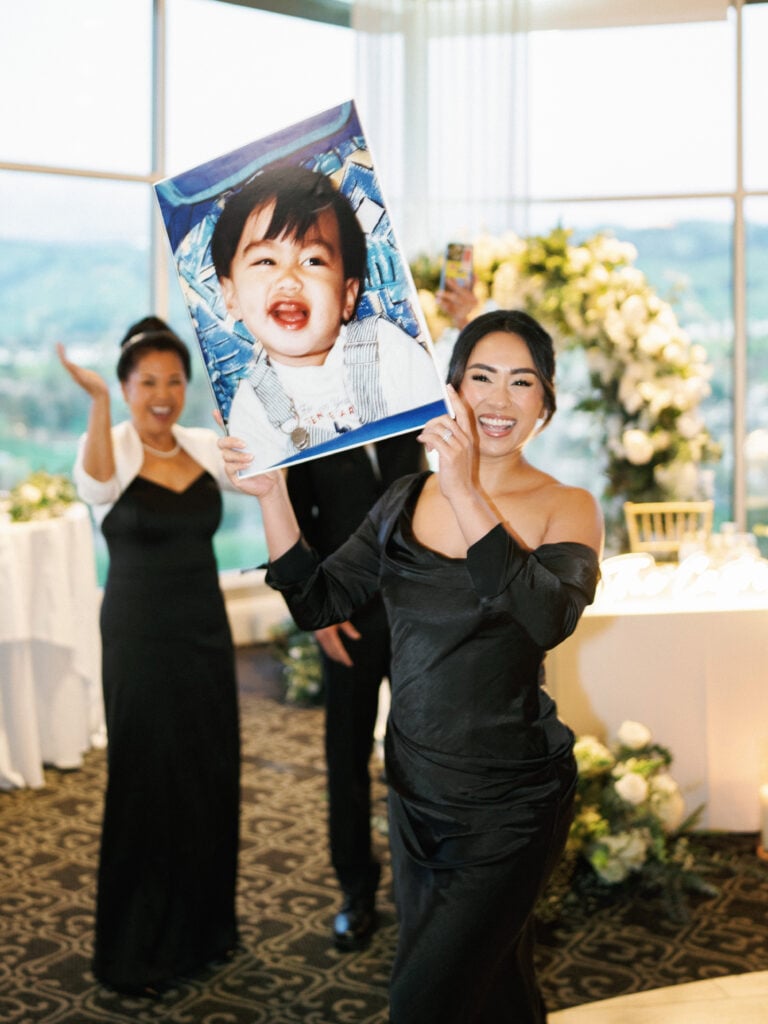
The four formats above are useful starting points, but they are not a fixed set of rules. Couples can combine elements, adapt familiar ideas, or create an entrance that reflects something personal to them. It might include a favourite song, a cultural tradition, a shared joke, a meaningful gesture, or an unexpected detail involving their guests. The format can be as simple or elaborate as they wish, provided it feels comfortable for everyone taking part and fits naturally into the reception.
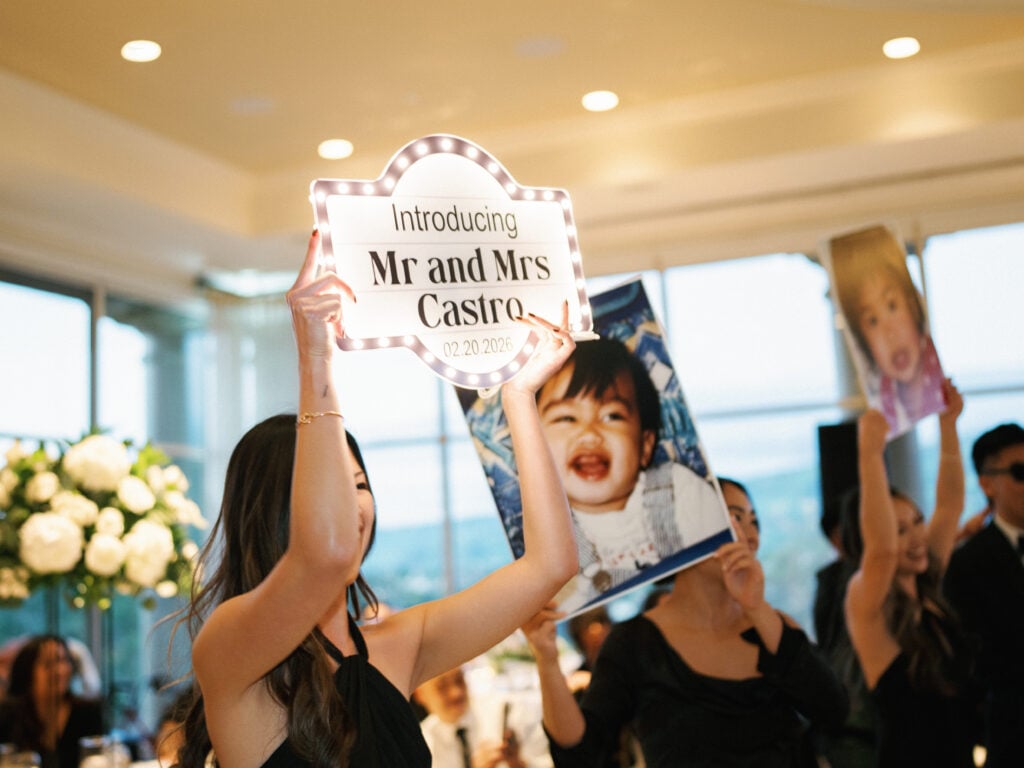
Comfort tends to decide between them. A couple who feel their shoulders tighten at the thought of a microphone often find the quiet arrival closer to themselves, and a couple who love a party often look forward to the group version for months. Many couples also take a few minutes behind the doors before any of it begins, alone or with the wedding party gathered around them, which gives attendants time to line up and gives the couple a breath between cocktail hour and the attention of the full room.
Expert Note
The doorway sets the light for the first steps. Doors that open from a bright lobby or an evening patio into a dimmer reception space tend to leave the couple backlit, and a dim corridor that opens into a lit room usually photographs more evenly. Asking the venue which doors the entrance will use, and what the light is like on both sides, lets the photo and film team choose camera positions and lighting before guests arrive.
Aster Films planning note
Names, Titles, and the People Who Enter
Some couples enter alone. Others enter after their attendants, or with parents and grandparents arriving first, or with children walking in ahead of everyone. Each arrangement suits a reception when everyone involved has said yes to it, and participation stays optional throughout: an attendant who prefers to be seated when the doors open simply is, and the introductions continue without a gap.
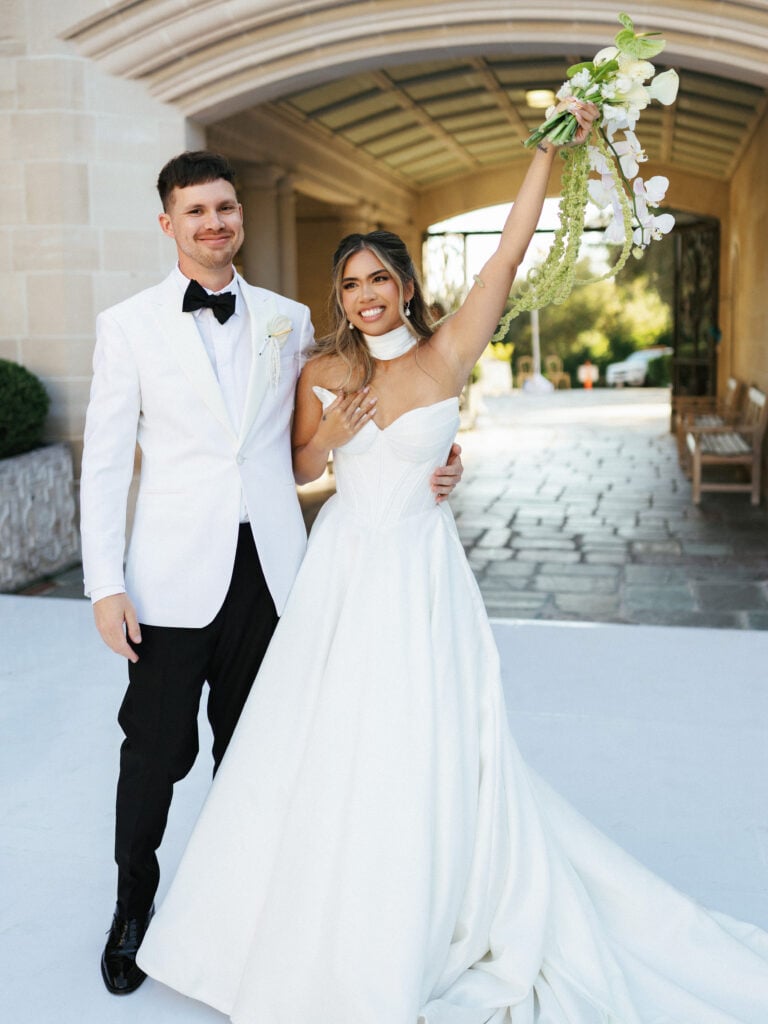
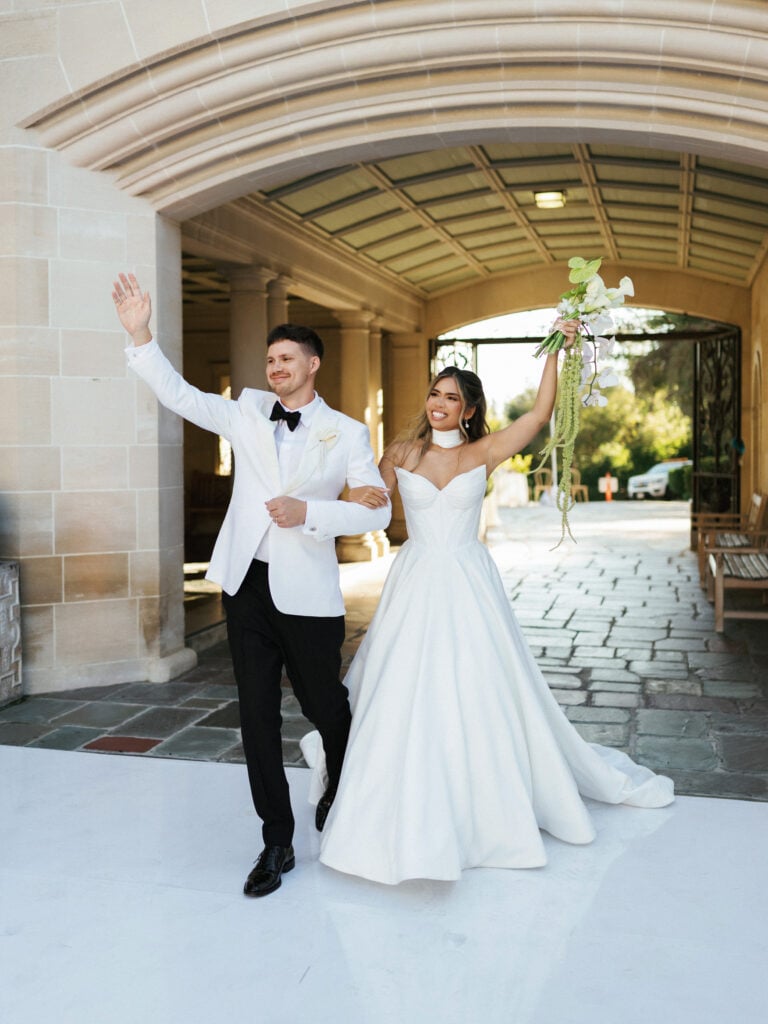
The reception entrance is a separate moment from the ceremony processional, and it needs no matching order. Pairings can change, partners of attendants can join, and the couple may enter with the people who spent the morning with them instead of the lineup from the aisle. A message to the group chat the week before, listing the order and who walks with whom, keeps everyone’s expectations the same.
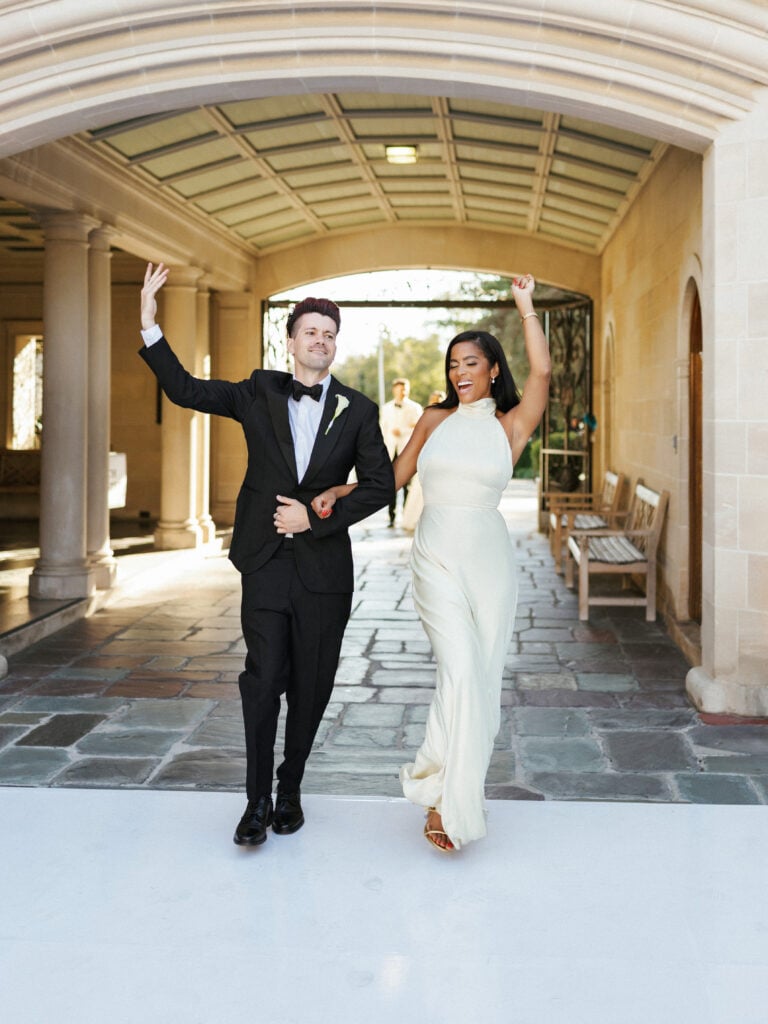
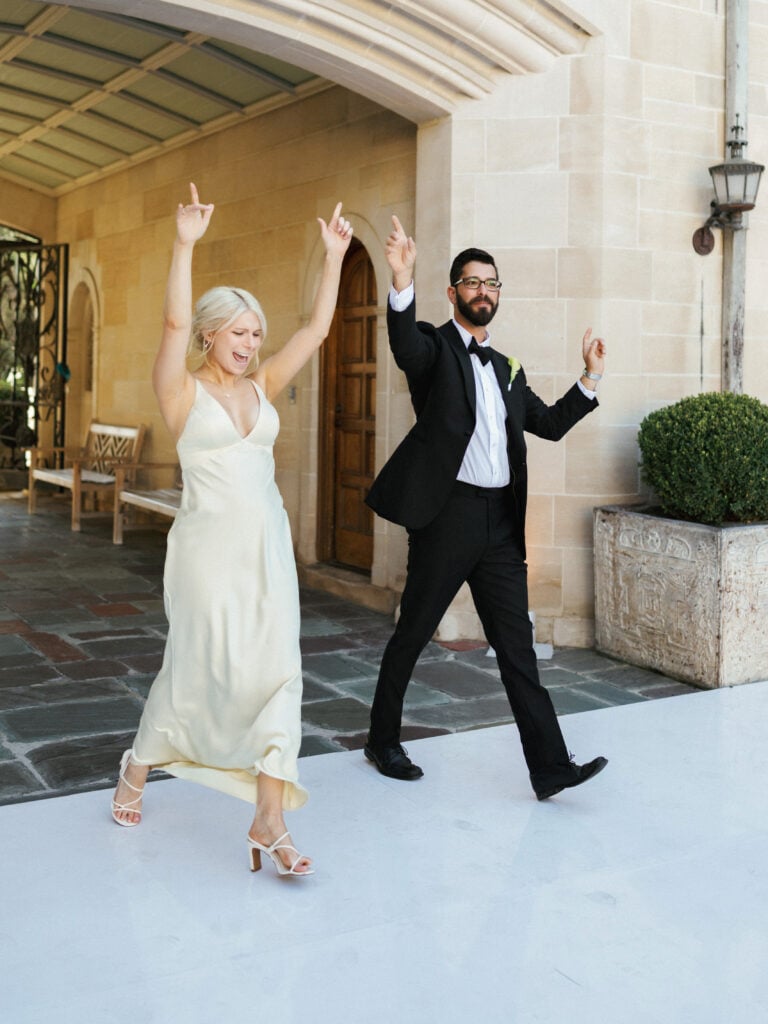
Names are where an announcer needs the clearest help. A short agreed list, handed over a few days before the wedding, covers three things: each name spelled the way it is pronounced, such as “Siobhan (shi-VAWN),” the title or form of address each person prefers, and the order in which people enter. Titles deserve a line of their own. “Mr. and Mrs.,” first names alone, “Dr.,” or a shared surname all sound different through a speaker, and couples often choose the one that sounds like them. The announcer, whether DJ, band leader, or a friend with a gift for pacing, reads from that list on the day, and the introductions finish in the order everyone expects.
Song Length and Where the Entrance Ends
Music follows the mood. An announced walk suits a song whose opening phrase is recognizable immediately, since the first ten seconds carry the entrance. A short dance needs a track with a clear beat from the first bar. A group entrance can run on one energetic track or on a series of brief introductions, each pair receiving a few seconds of its own song. One track is easier for the DJ to cue and for attendants to follow, and several short clips suit a small wedding party that enjoys the idea.
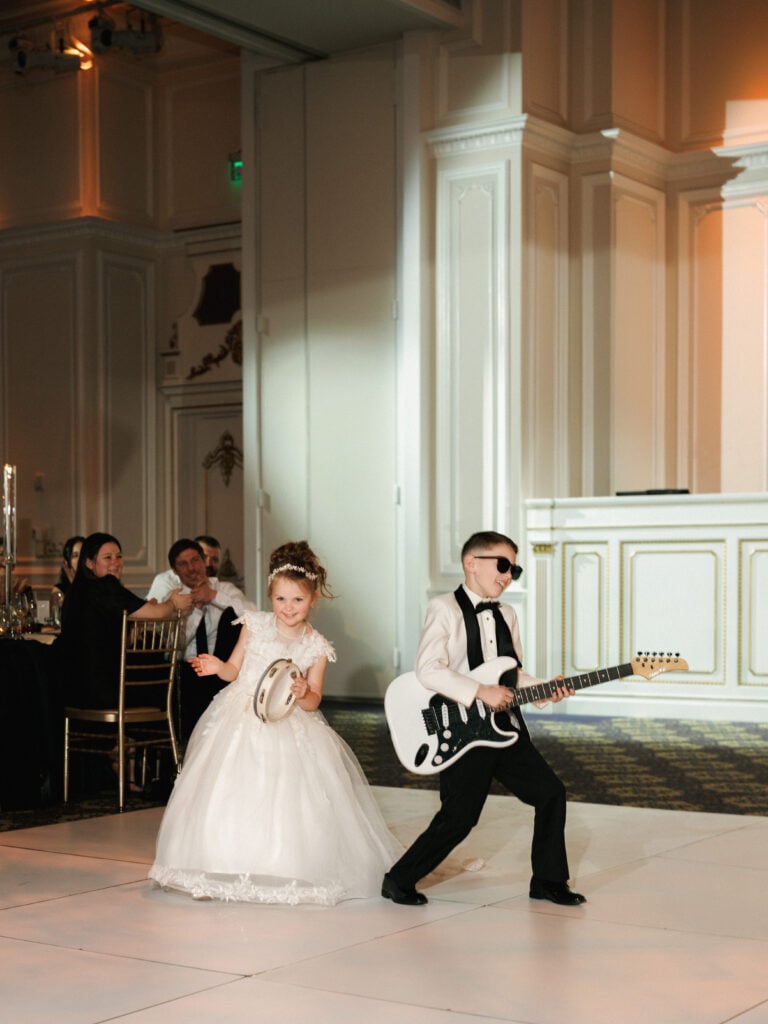
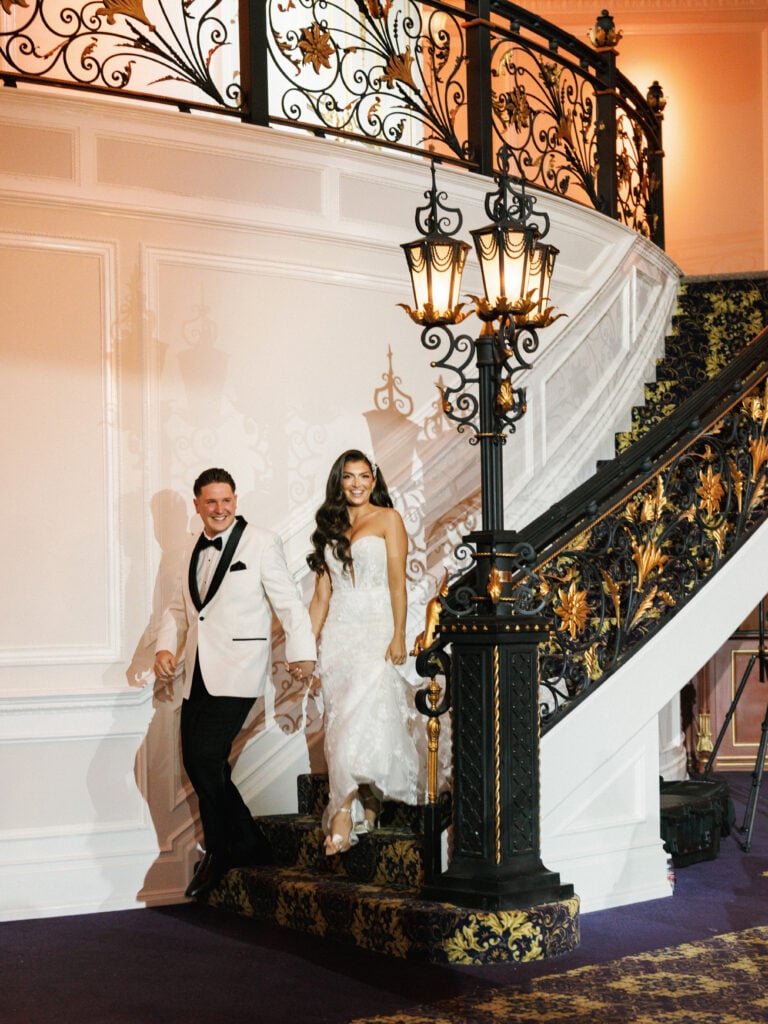
A recognizable cue is more useful than an elaborate performance. A song that makes the room smile in the first bar gives guests their signal to stand, and a few steps everyone remembers are enough for a group to look like a group. Songs with a long instrumental build leave the doors quiet as guests wait, so the DJ may start the track at the chorus or use an edited version. Couples who love the full song can save it for the first dance or the opening of the dance floor.
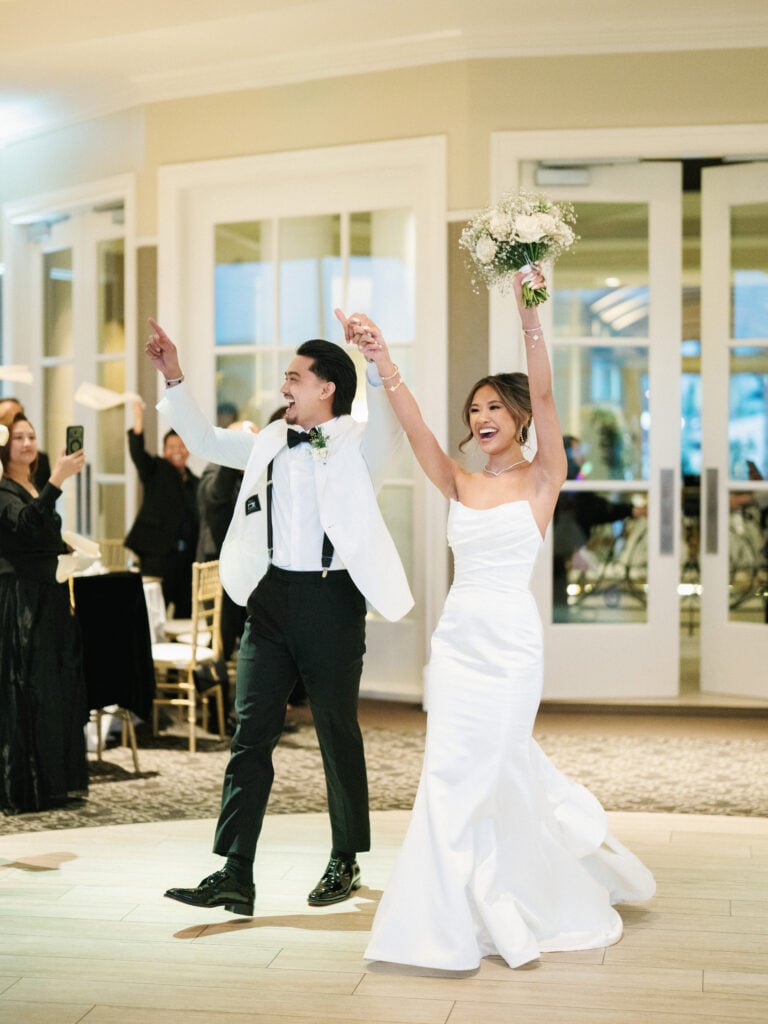
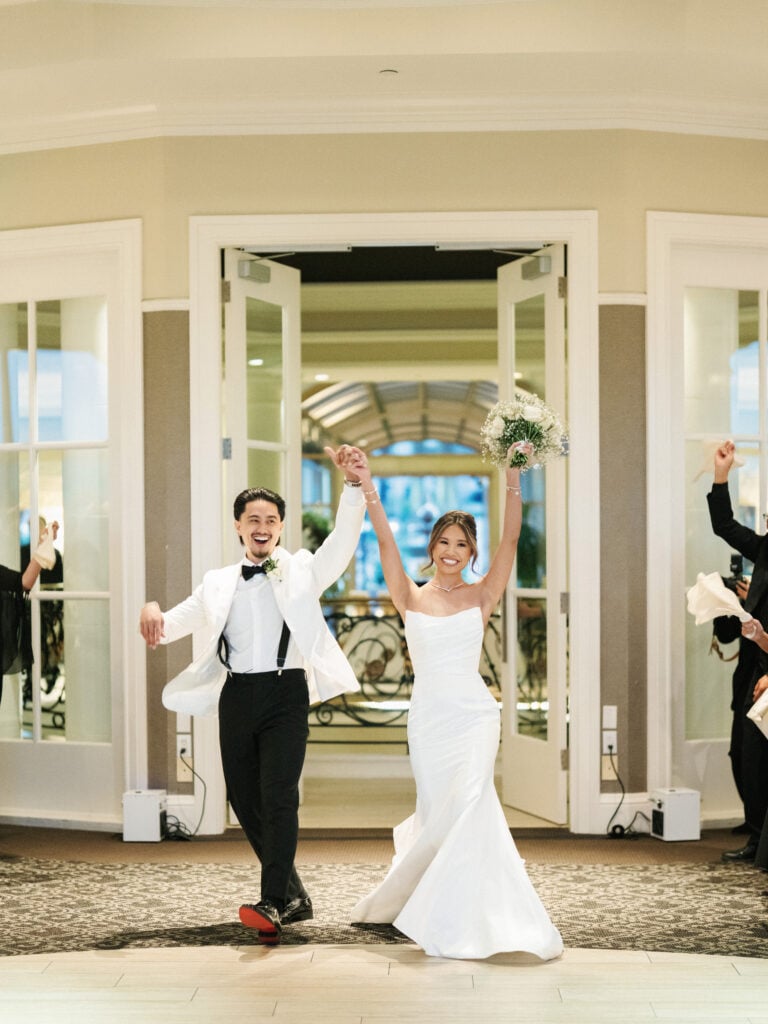
The entrance begins with the first name announced and ends when the couple reaches the dance floor or their table. A solo walk takes about half a minute, and a wedding party of ten introduced at ten to fifteen seconds per pair moves through in two to three minutes. Agreeing on the endpoint in advance tells the DJ where to fade the song, tells the group where to stop, and tells the film team where the sequence closes.
Expert Note
The names, the applause, and the entrance song reach the finished film through the audio feed from the DJ’s mixer or a recorder placed near the speakers. When the announcer uses a handheld microphone, mentioning who holds it and where the announcer will stand lets the film team place a recorder nearby, and the names stay audible over the music.
Aster Films planning note
The Route, the Doors, and the Cue
Four details are worth confirming with the venue and the planner: where the entrance begins, the route, the waiting area, and where it ends. Doors that open both ways, a step down into a ballroom, gravel between a patio and a tent, a long gown, a grandparent using a cane, an attendant in a walking boot: each deserves a look before the day, and the venue can often suggest an alternate door or a ramp. The waiting area is easiest when it sits out of the guests’ sightlines, with room for the group to gather in order and a way to hear the announcer through the doors.
The cue is a single moment shared by three groups: the DJ or band, the announcer, and the photo and film team. A cue such as “doors open on the first name” reaches everyone in the same form, and one named person at the doors, a planner, a venue coordinator, or a friend, gives the signal. With the cue known, the photo and film team can place one camera near the doorway for the first steps and another toward the destination, ready before the guests turn their heads.
A brief walk-through, a minute or two at the doors with the DJ, the announcer, and the person giving the cue before guests arrive, is often enough. It settles which door opens, where the group waits, and where the last person stops, and it does not need to grow into a rehearsal.
From the Entrance to the Next Moment
The activity that follows shapes how the entrance ends. Moving directly to the first dance suits an entrance that finishes at the center of the dance floor: the entrance song fades into the first dance song or stops, and the guests who are already standing form the circle. Taking seats for dinner suits an entrance that ends at the sweetheart table or head table, and the room settles as the first course is served. A welcome fits between the two, with the couple taking the microphone for a few words of thanks before a blessing or toast that the planner has placed in the timeline. Each version follows the reception sequence the couple has already chosen, and the photo and film team follows it too.
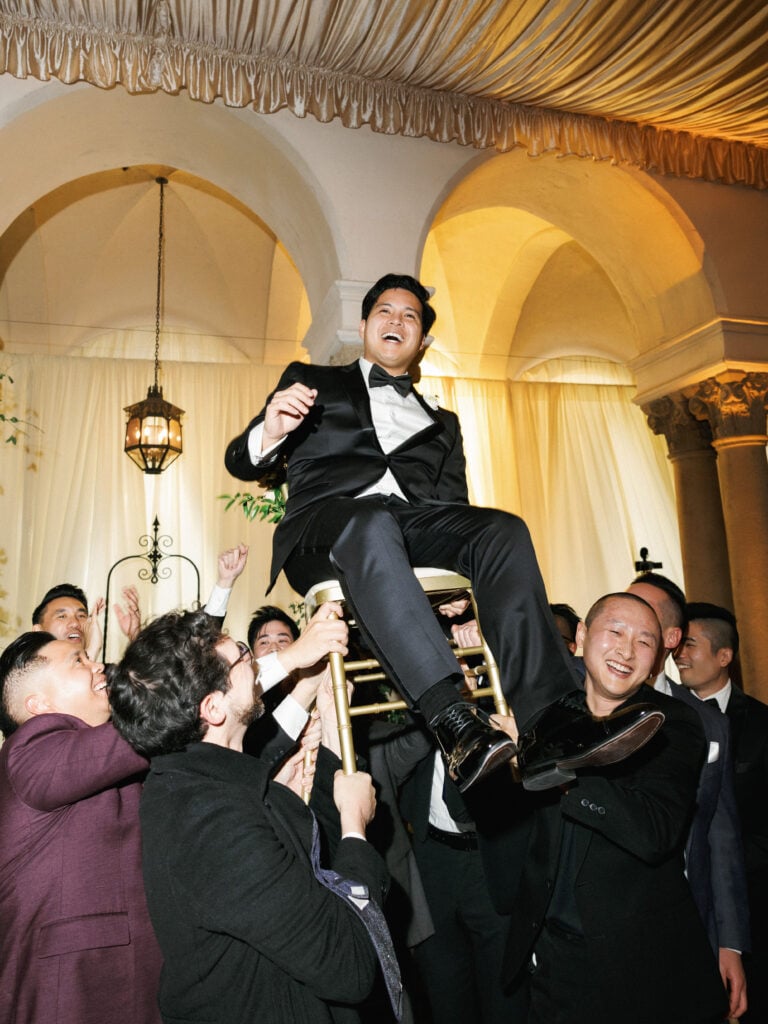
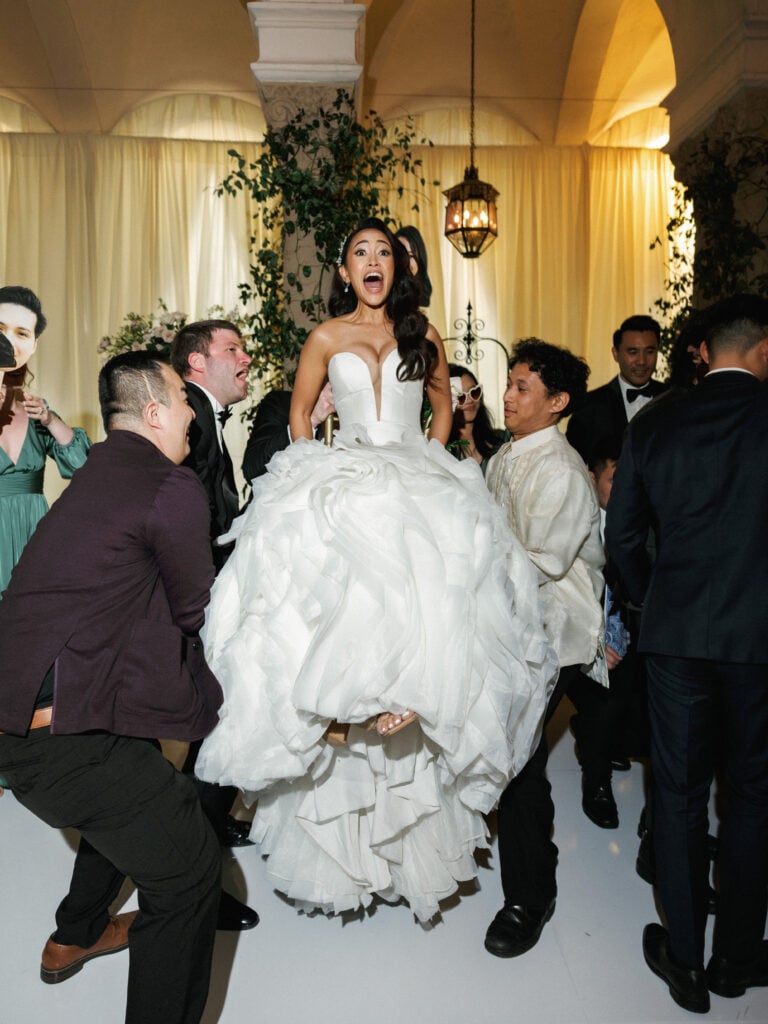
The destination matters for coverage as well. A dance floor cleared of chairs before the doors open gives the first dance room, and the light at a sweetheart table is worth a glance during the walk-through.
The plan fits in a short message: the people entering and their order, the names as they should be said, the song and where it begins, the cue for the doors, and the activity that follows. Sent to the DJ or band, the announcer, the planner, and the photo and film team, it gives everyone the same picture.
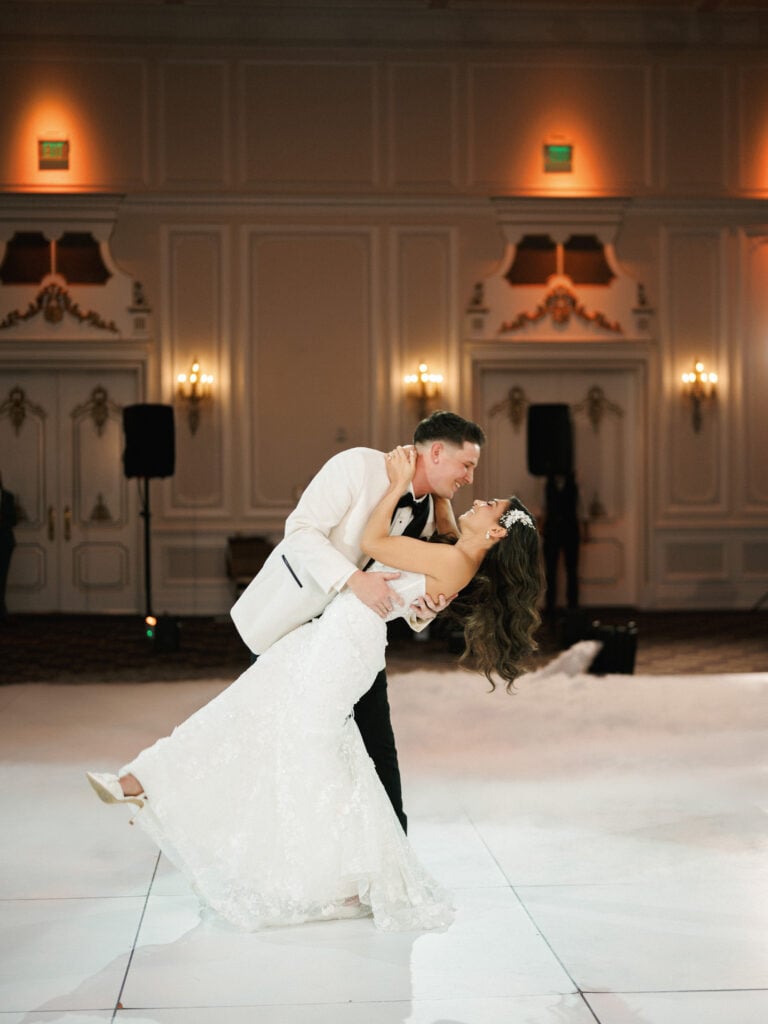
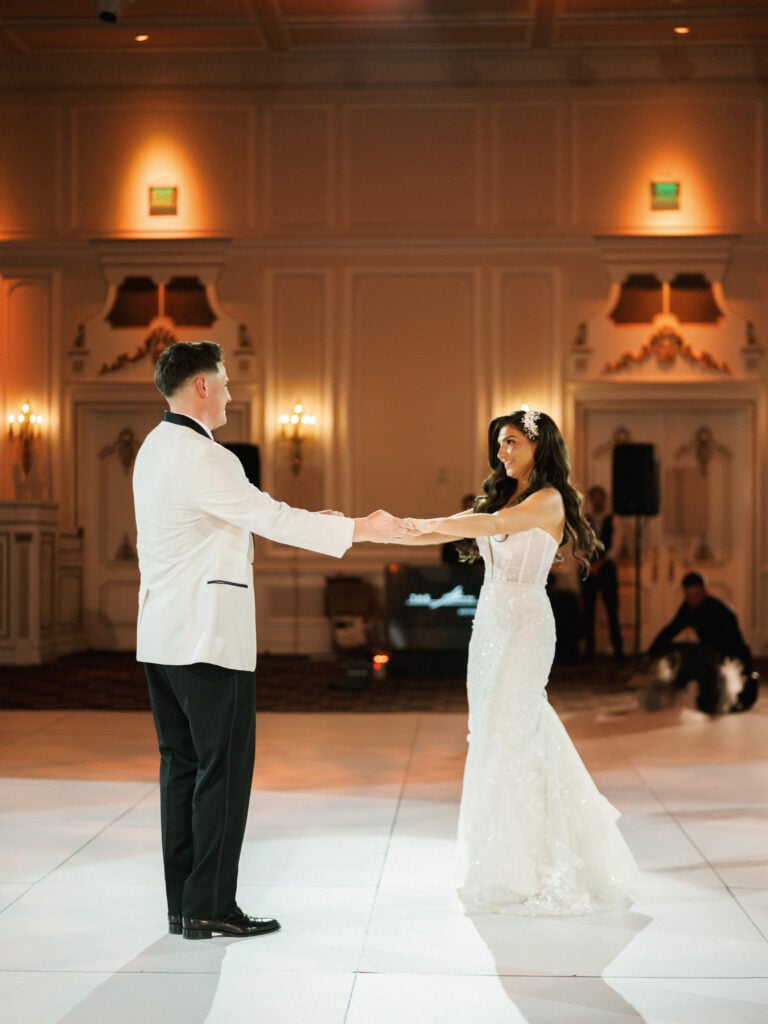
The plan also stays open to change. If the evening is running late, the couple can walk in together to a single song and continue straight to the table, and a group entrance can shrink to the couple and whoever wishes to join. If someone changes their mind on the day, the introductions simply continue without them.
Frequently asked questions
How should we handle an attendant who arrives late?
The entrance can begin with the people who are present. The announcer carries a list with a note on who to skip, and an attendant who arrives later joins the room quietly or receives a short introduction at the next natural pause, such as when the group moves to the dance floor.
Can children join our reception entrance?
Yes. Children can walk in ahead of the wedding party, beside the couple, or with a parent. A short route, a familiar adult waiting at the end, and a plan for where they sit afterward keep it comfortable, and younger children sometimes prefer to be carried or to enter with a parent. Asking them in the days before, and leaving room for a change, suits them well.
Can we introduce ourselves without announcing a shared surname?
Yes. The announcer can say first names alone, give each partner’s own surname, or use a phrase such as “the newlyweds.” The choice goes on the list handed to the announcer, with the pronunciation of each name beside it.
What if we decide on a simpler entrance on the wedding day?
A simpler entrance is a small change to a short plan. A message to the DJ or band, the announcer, and the planner on the day is enough, and the photo and film team adjusts its camera positions to the new version near the doors.
How long should a reception entrance last?
A solo walk takes about thirty seconds, and a group entrance with a wedding party of ten usually takes two to three minutes. The length depends on the size of the group, the distance from the doors to the dance floor, and how many introductions the announcer gives.
Should the wedding party enter in the same order as the ceremony processional?
No fixed order is expected. Many wedding parties rearrange pairings, add partners, or enter in an order that suits the music. The list handed to the announcer carries the order for the reception entrance.
CONTACT ASTER FILMS
Tell us about your wedding
Choose a convenient time and share the details of your celebration with our team.