Deciding Whether the Moment Earns a Spot
The wedding cake often receives the same deliberate attention as other visible parts of the reception. Couples choose its flavor, size, shape, decoration, and presentation, with the cake becoming part of the room’s visual setting as soon as it is brought out. The cutting often has a defined place in the reception alongside toasts, first dances, and other moments the couple has chosen to include.
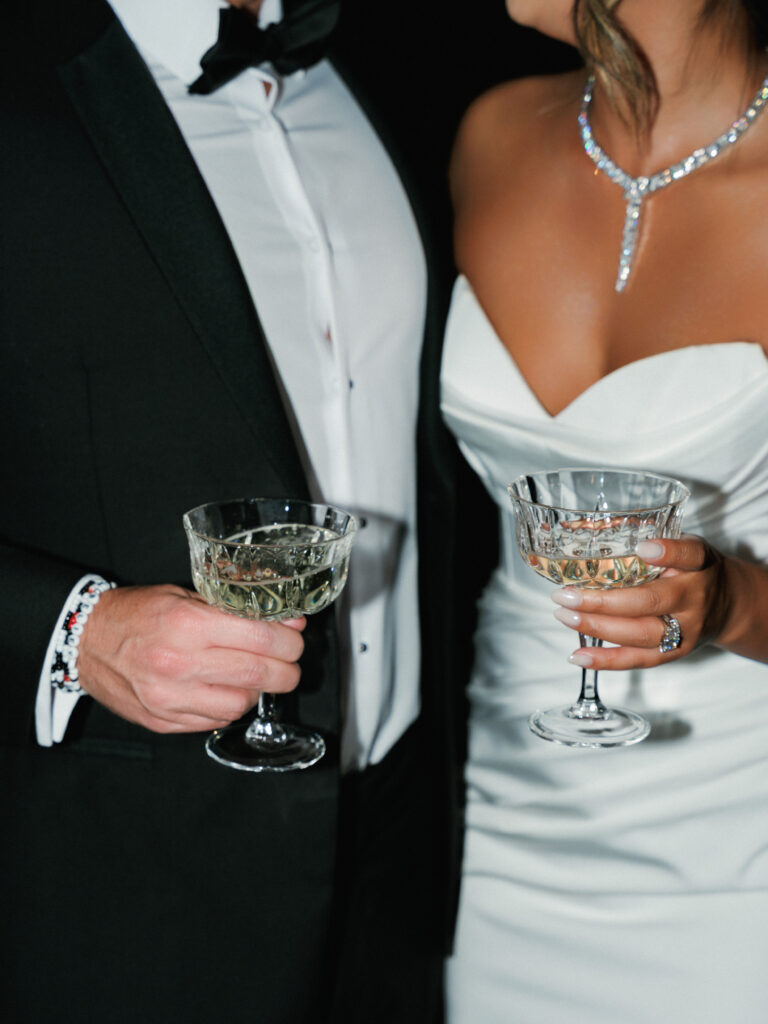
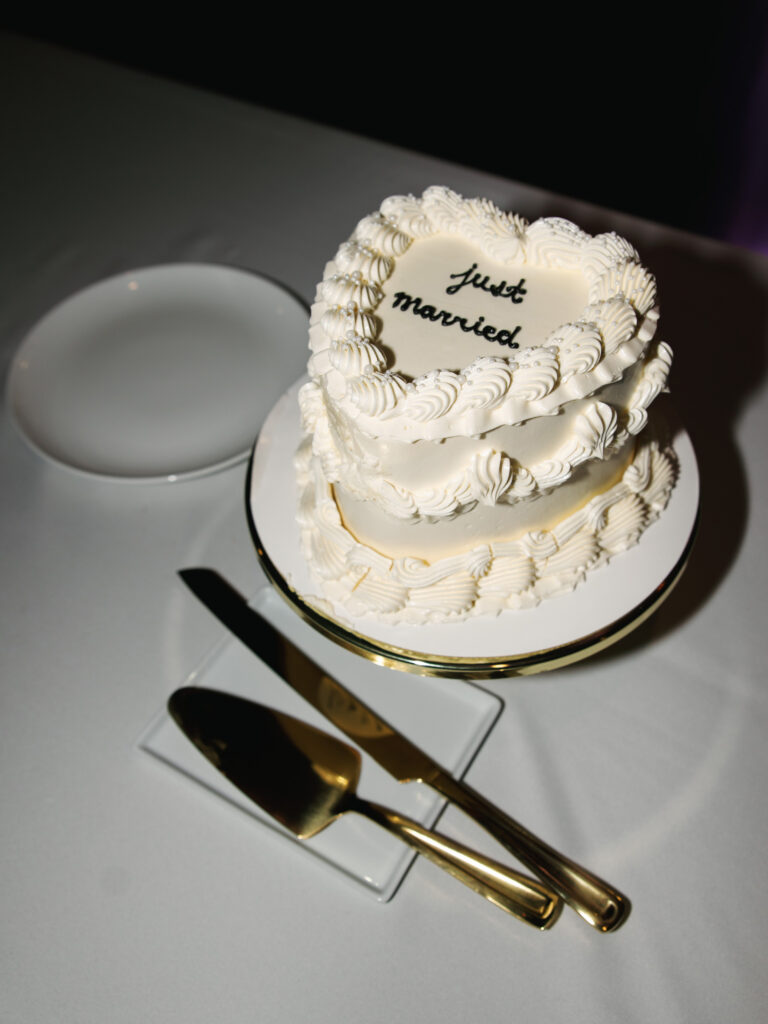
Some couples want the cake cutting photographed and filmed as part of that sequence. Others prefer the cake to remain part of dessert service, or choose to cut it privately before guests arrive. Deciding how the cake will be presented determines where the moment belongs in the reception, whether guests will be invited to watch, and how the photo and film team should prepare for it.
Stone Mountane Estates, Malibu, CA.
Placing It in the Reception Sequence
Cake cutting often follows the toasts, when guests are already gathered and their attention is directed toward the front of the room.
It can also come later in the reception, with the cake marking the transition into dessert and dancing.
The sequence works especially well when the DJ or band already has a natural point in the evening for a brief announcement.The catering schedule can set another part of the timing. After the couple cuts the cake, the catering team may need time to slice and plate it before dessert service begins.
When a large number of portions needs to be prepared, that service window can influence when the couple’s cake cutting takes place.
Confirming the sequence with the caterer keeps the dessert service moving and gives the photo and film team a definite moment to prepare for.
Choosing a Clean Background
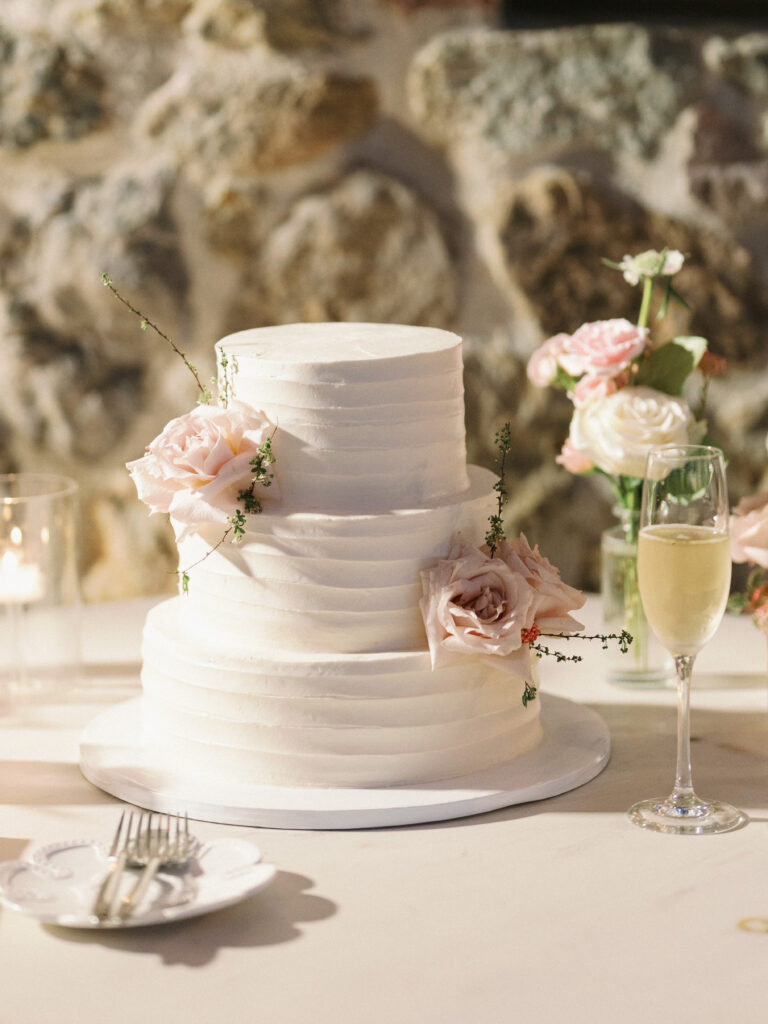
The cake table may already have a natural place within a carefully designed reception space, with the surrounding architecture, florals, and guest layout considered as part of the room.
The photo and film team then works with that setting, looking at the table from the angles available to the cameras and noting what falls behind the couple. At some venues, a small adjustment to the table’s orientation or position may be possible; at others, the existing layout is part of the overall design and the cameras simply work around it.
A plain wall, curtain, greenery, architectural detail, or floral installation can all work well behind the couple.
At a highly styled reception, the cake table may sit within a larger floral or architectural composition, with the room’s design becoming part of the photographs and film.
The camera positions available in the room determine how that setting appears in the final frames.For an outdoor cake cutting, the timing of the photographs and film can also be coordinated with the planner or couple in advance.
Shooting the cake and table shortly after they are set up, or scheduling the cake-cutting coverage for a defined point in the reception, gives the photo and film team a chance to account for changing sun, heat, wind, or other weather conditions that could affect the cake and the scene around it.
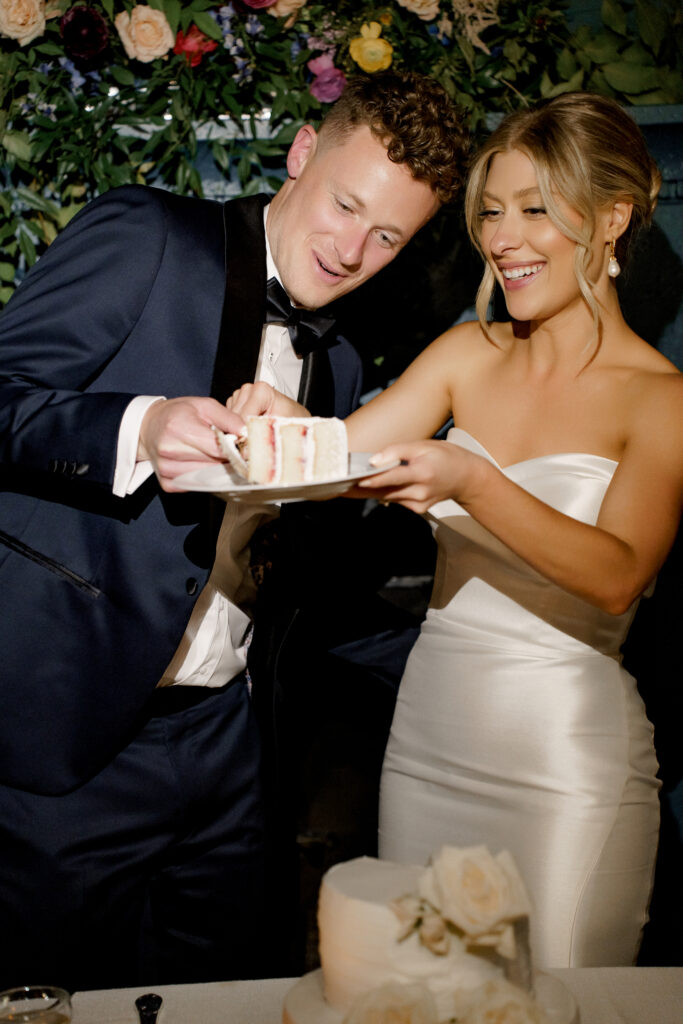
Legion of Honor Museum, San Francisco.
Planning Lighting and Camera Access
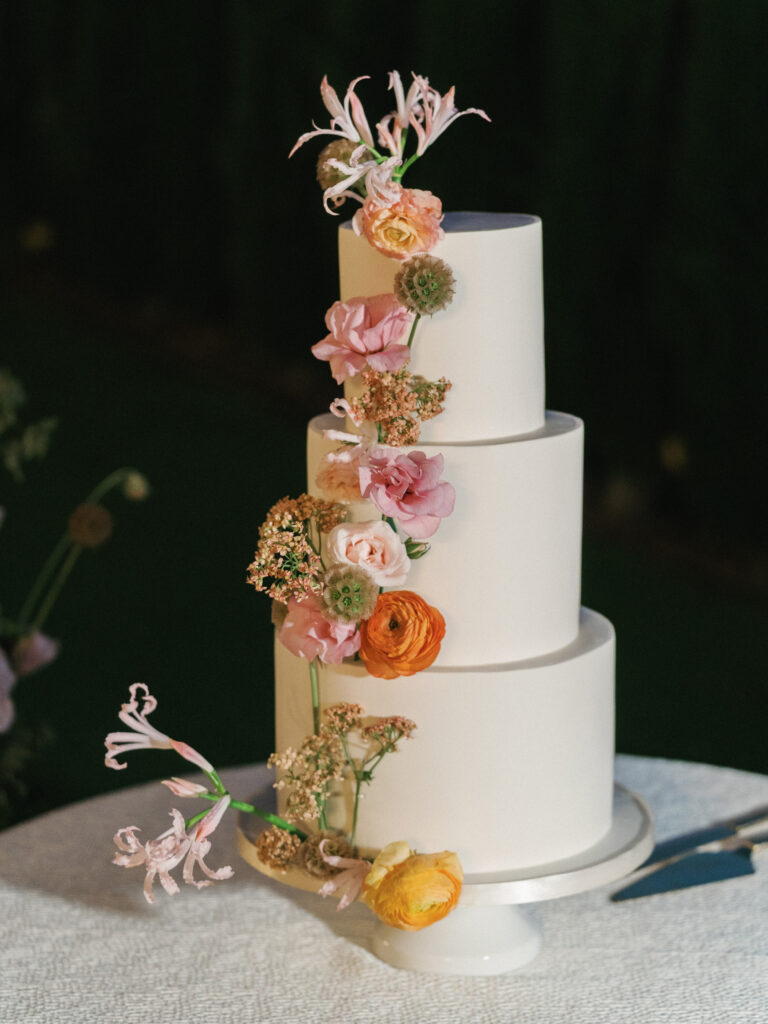
By the time cake cutting begins, reception lighting may already be dimmed for dinner or dancing. A small amount of light near the cake table keeps the cake and the couple visible in photographs and film, especially when the rest of the room has shifted into a darker evening setting. The same lighting setup also keeps the cake visible to guests when the DJ or band calls attention to the moment.
Once the announcement is made, guests naturally move toward the cake table, often with phones in hand. Having a clear camera position agreed on as part of the reception setup keeps the couple visible as guests gather, while a slight angle toward the room gives the photo and film team a view of the couple’s expressions, hands, and cake at the same time.
Stone Mountain Estates, Malibu, CA.
Cueing Guests Without Staging Them
A short announcement or coordinated cue brings the room’s attention toward the cake. Depending on the reception format, it may come from an emcee, wedding host, planner, venue team, or production staff.
The approximate timing can be shared with the photo and film team in advance, giving the cameras enough notice to reach their positions before guests begin moving toward the table.
Guests can then turn toward the cake, take out their phones, or continue watching from nearby without being asked to gather in a particular place.
The reactions around the cake become part of the coverage at this point. A friend laughing, a grandparent leaning toward the table, or someone recording the couple on a phone gives the sequence a sense of the reception around it. Those moments are best left to happen on their own, with the photo and film team positioned to catch them alongside the couple’s reactions.
Aldrich Mansion, Warwick, Rhode Island.
Keeping the Moment Natural
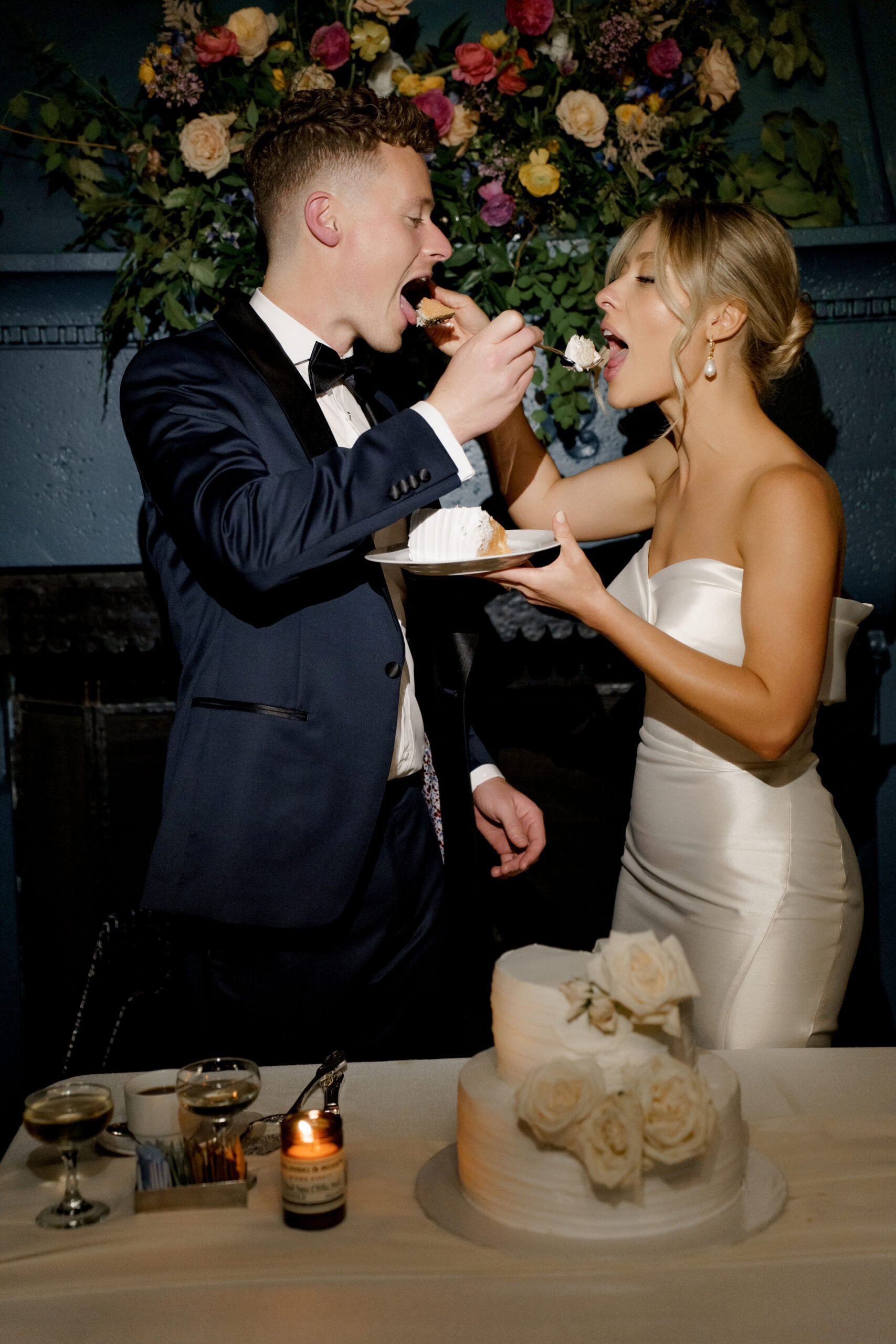
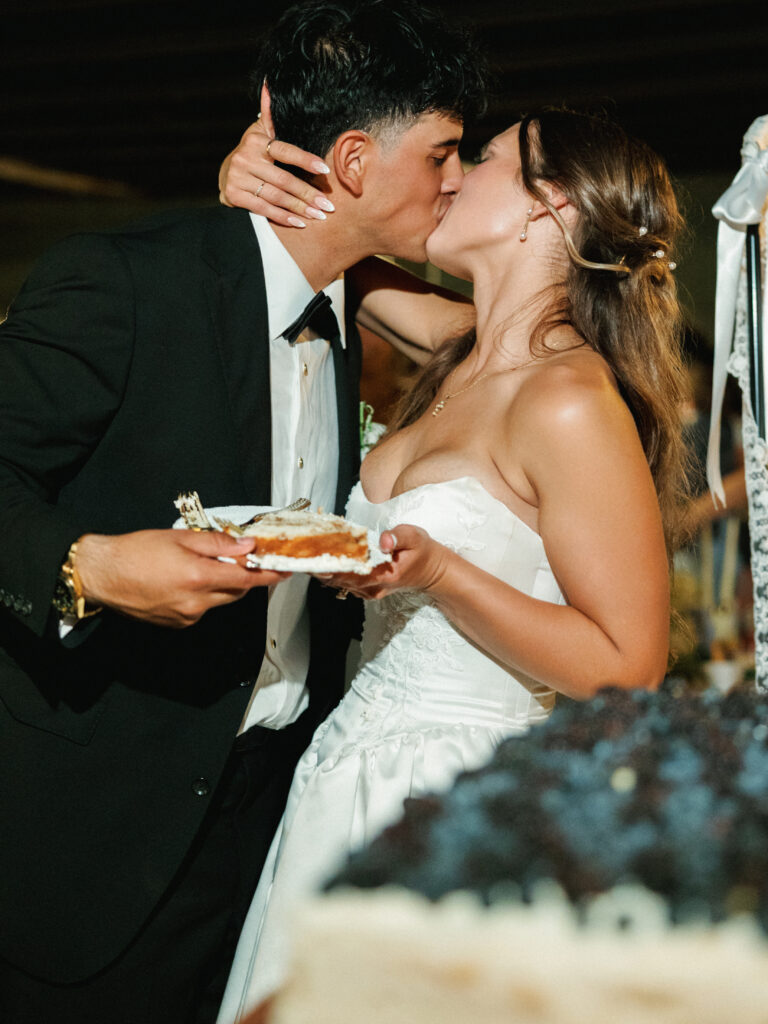
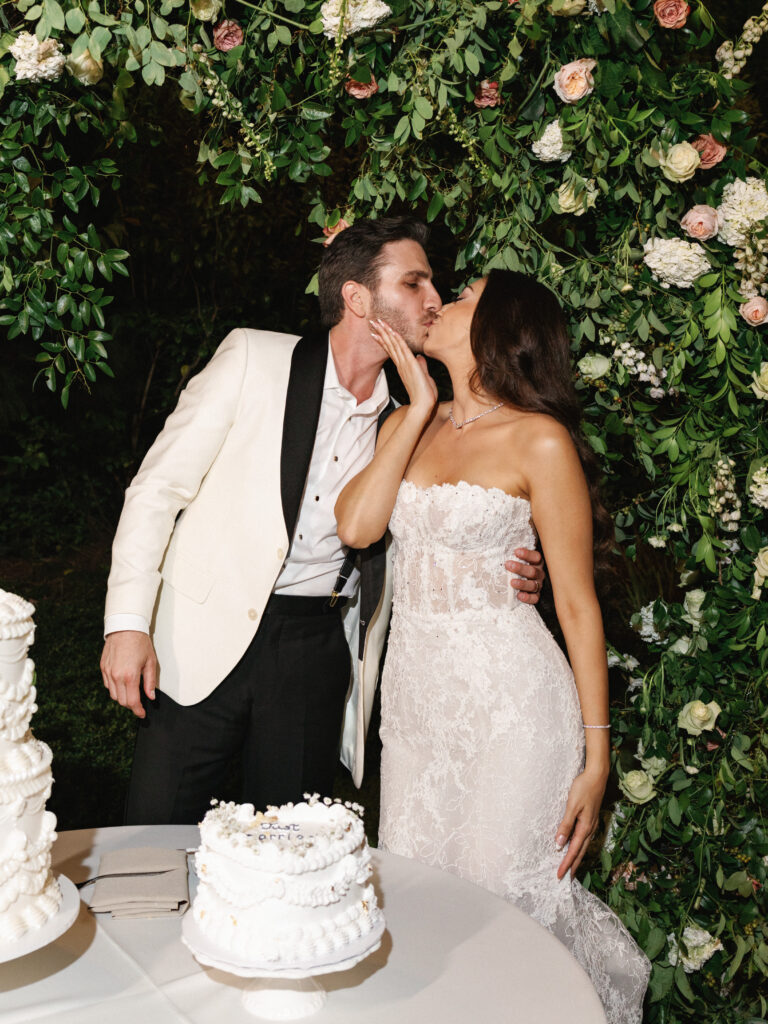
The actual cutting takes only a few seconds. Holding the knife in place for an extended photograph, repeating the cut, or waiting for another camera angle can make the sequence feel rehearsed. Cutting the cake, feeding each other a bite, and reacting to what happens in the moment gives the photo and film team enough to work with.
Whether the couple plans a gentle bite or a playful cake smash is worth deciding before the reception. A photographer and filmmaker who know a smash is coming can be ready for the reaction at the exact moment it happens. If the cake is meant to stay intact, that preference should be communicated in advance too.
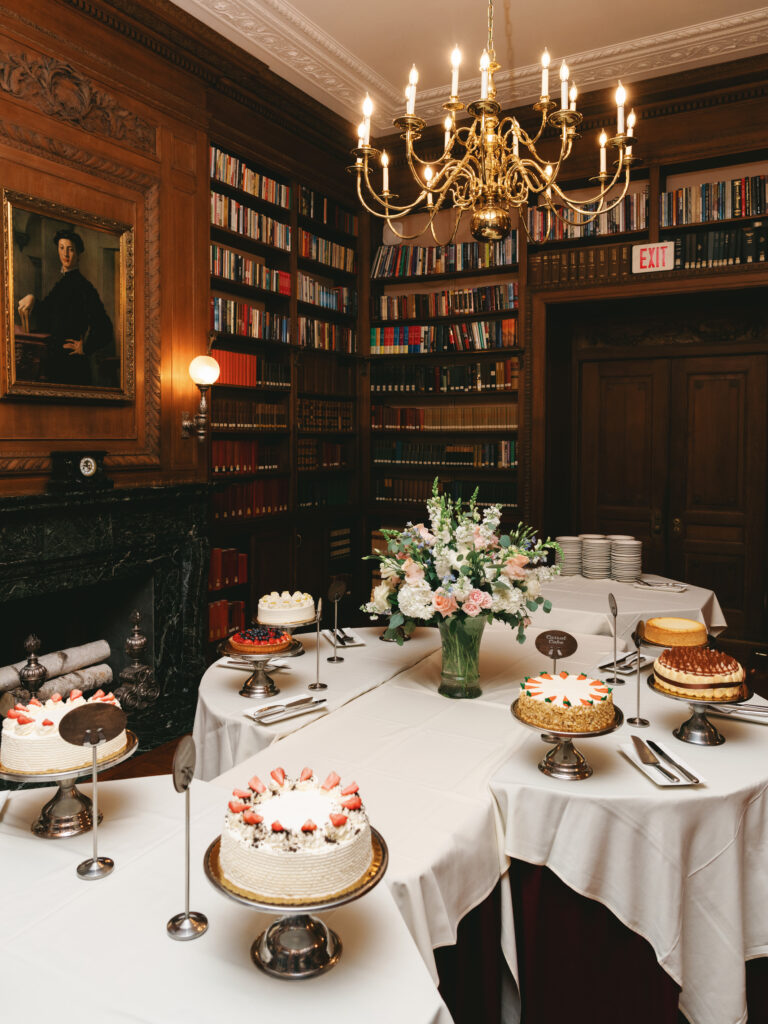
The cake is only one part of the frame. Beautiful serving pieces, table details, florals, and the reception setting can all become part of the photographs, alongside close portraits of the couple during the cutting. These details are part of what the photographer is looking for throughout the sequence, giving the gallery a fuller record of the setting and the couple’s reactions.
The Gardens at Los Robles. Thousand Oaks, CA.
Frequently asked questions
When should wedding cake cutting happen?
Cake cutting often follows the toasts or comes later as dessert and dancing begin. Catering service may require an earlier time if the cake needs to be cut and plated for guests, so the kitchen schedule should be considered when setting the reception timeline.
Do guests need to gather for the cake cutting?
A formal gathering is not necessary. A brief announcement or coordinated cue can direct guests’ attention toward the cake while they remain around the reception space. Some guests may move closer, take out their phones, or simply watch from their tables, giving the photo and film team a range of reactions to capture.
How long does the cake cutting photo moment take?
The cutting itself takes only a few seconds. The complete photo and film sequence often takes under two minutes, including the couple’s approach to the cake, the cut, a shared bite if planned, and a few reactions afterward. Most of the coordination happens before the cue, when the camera position, lighting, and timing are established.
What background suits cake cutting photos?
A clean area behind the couple keeps attention on the cake and the people around it. Plain architecture, draping, greenery, florals, or a carefully designed reception setting can all work well, depending on the venue. The photo and film team can assess the available angles during the reception setup and work with the existing design.
Should the couple pose for an extended cake cutting photo?
A short sequence of real actions gives the photo and film team enough time to work. Cutting the cake, sharing a bite, and reacting to each other can all be photographed and filmed without holding a pose for an extended period.