Where the Emotional Tone Takes Shape
You may already have a poem, passage or family reading in mind. The next decisions are who will read it, where it belongs in the ceremony and how it will sound aloud. Use the reader brief and 12-question checklist below to plan the timing and delivery. This is a planning guide, not a collection of poems.
A warm, lightly humorous passage can open the ceremony with ease. A quieter poem or piece of prose may suit the part of the service leading into the vows. Personal writing can bring an entirely different quality when the words come from someone who knows the couple well.
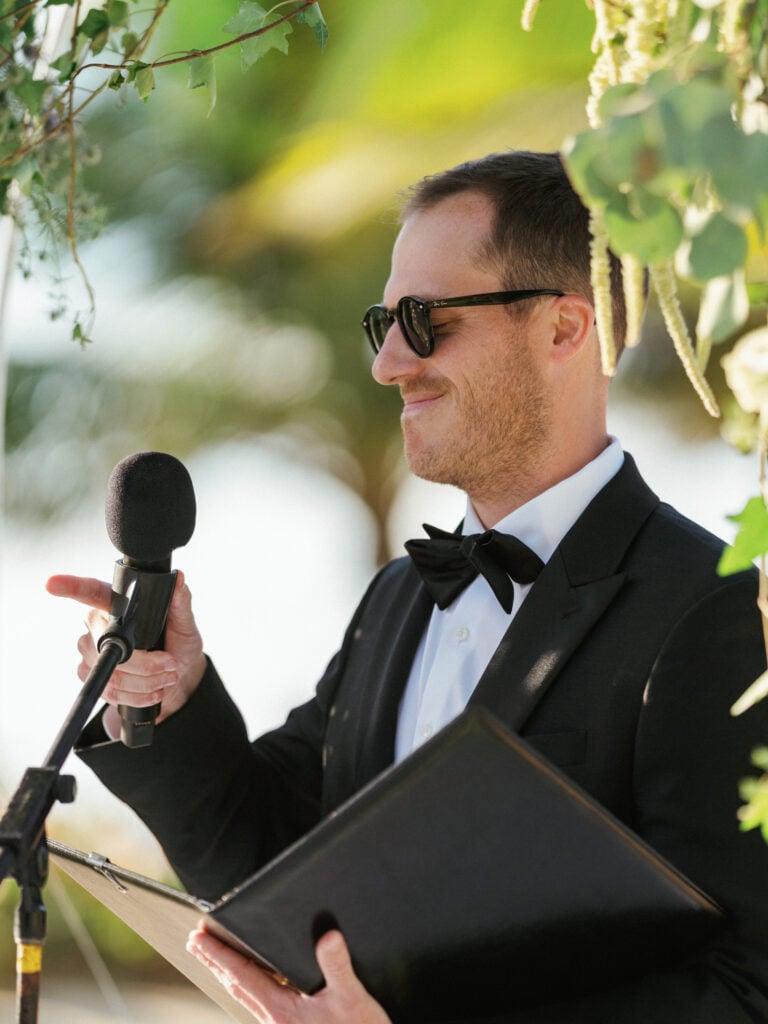
For example, a couple may have two readings they both like: a literary passage that speaks to their relationship and a short personal piece written by a close friend. If the ceremony is brief, the literary passage might be chosen for the opening while the personal piece is saved for the reception. With a longer ceremony, both can have a place, provided each adds something distinct to the sequence.
Expert Note
A reading can feel personal without being written specifically for the wedding. A passage connected to a shared memory, a place, or a person in the couple’s life often has a stronger connection to the room than a familiar text chosen simply because it is associated with weddings.
Aster Films planning note
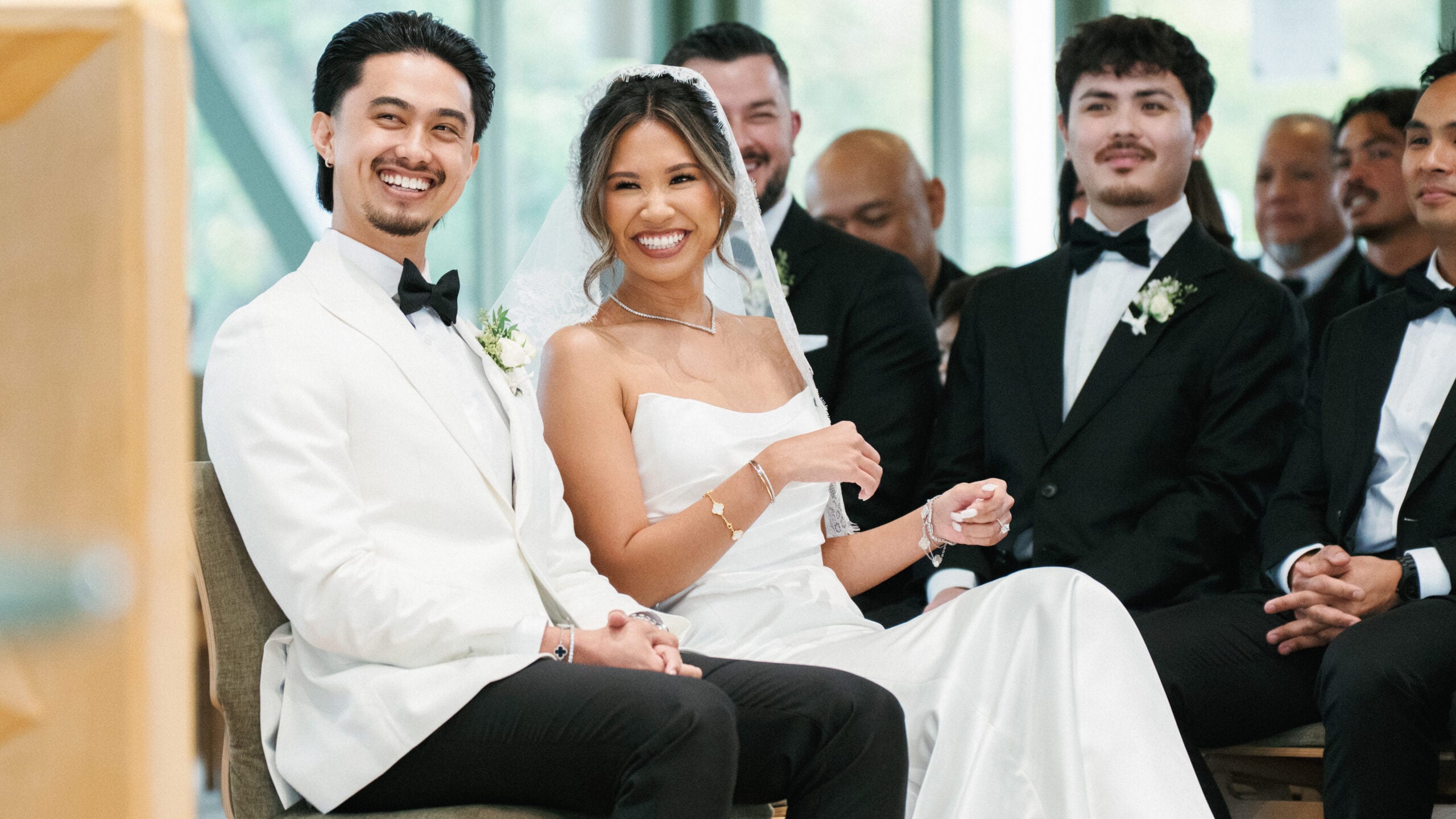
Reading Options by Ceremony Style
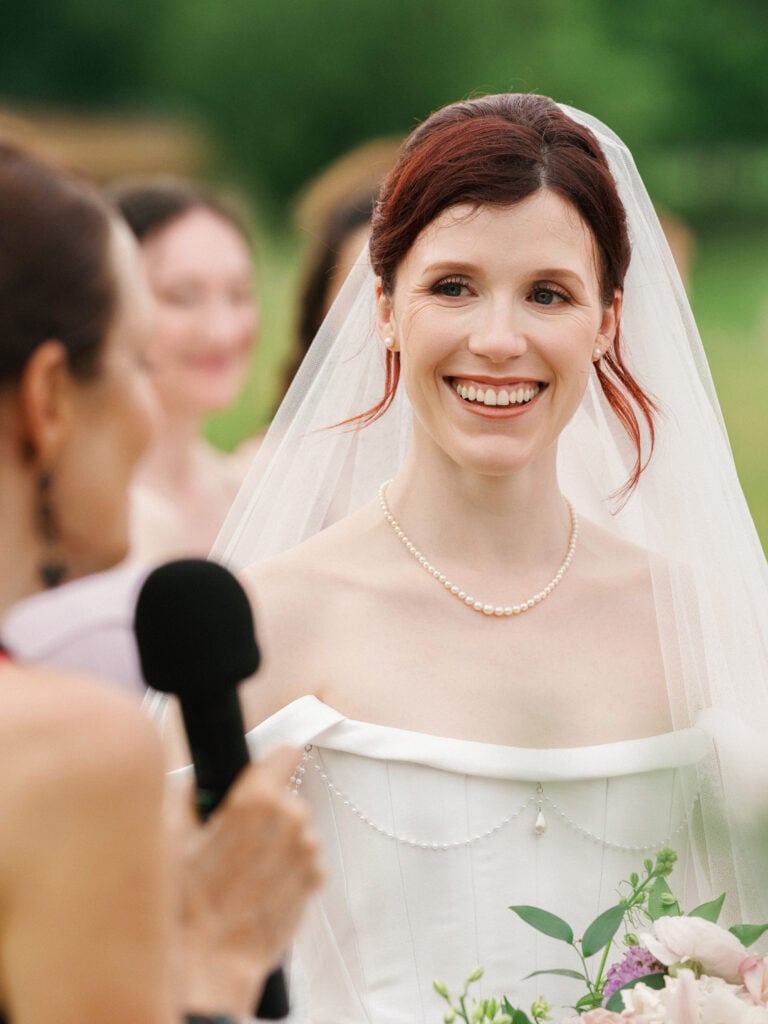
Secular ceremonies leave considerable room for choice. Couples may turn to poetry, novels, essays, song lyrics presented as spoken text, personal writing, or a passage written specifically for the ceremony. With that range available, choosing by tone can be more useful than searching for a particular type of text first. A couple may be looking for something tender, reflective, playful, philosophical, or quietly intimate before deciding where the words come from.
Religious ceremonies may include scripture or passages traditionally used within a particular faith. The appropriate selections and their placement can vary by denomination and officiant, so those details are worth confirming early.
A secular or literary reading may also have a place within some religious ceremonies, depending on the service and the person conducting it.
Literary readings bring the rhythm of established prose or poetry, while personal readings can speak directly to the people in the room. A parent might write a short reflection for the couple, a close friend might choose a passage connected to a shared history, or the couple might write something together.
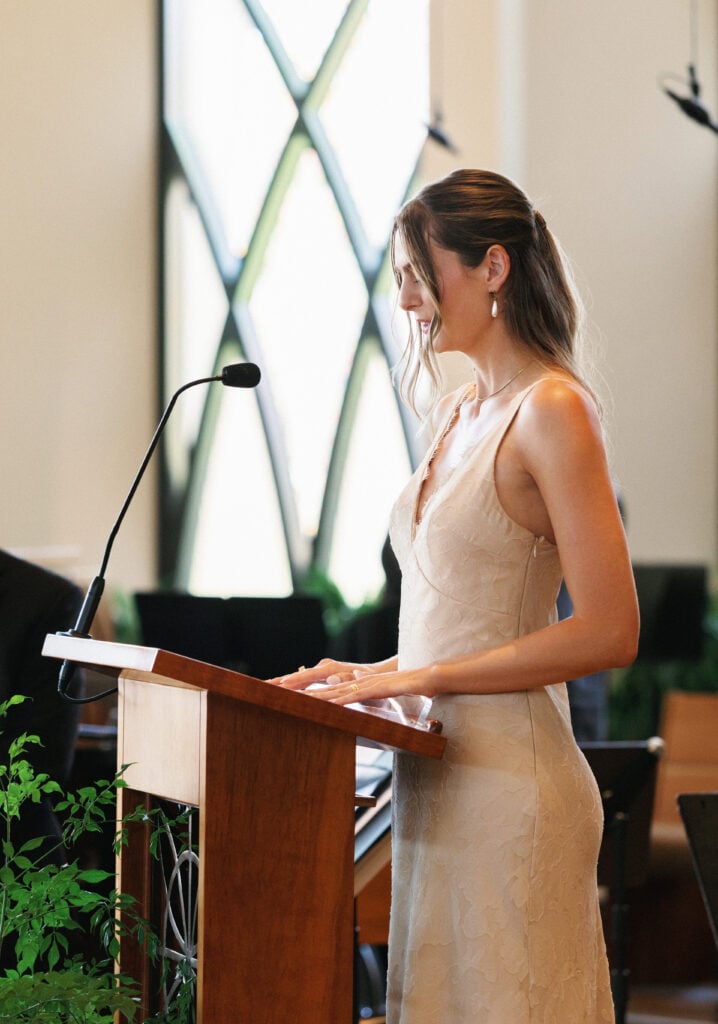
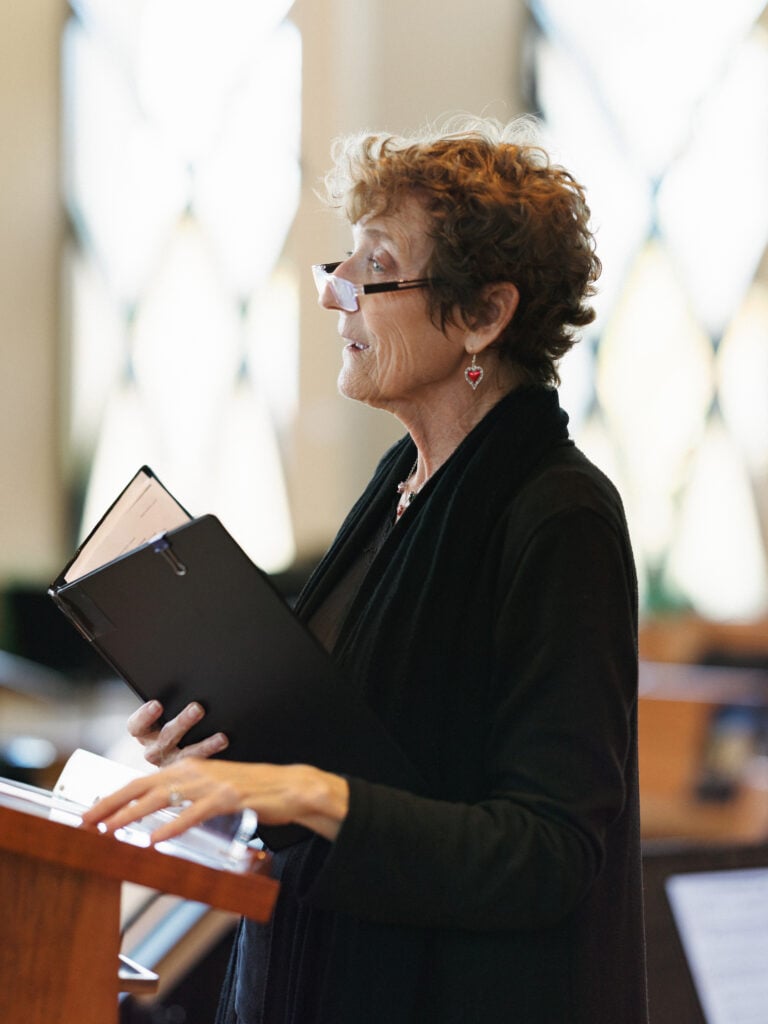
Different types of readings can sit comfortably within the same ceremony. A literary passage followed later by a short personal reflection can introduce another voice and a change in tone without making the sequence feel crowded.
How Many Readings to Include
Two readings suit many ceremony lengths, giving the service some variation in tone and voice without slowing the pace before the vows. A single reading works cleanly for shorter ceremonies or couples who want the focus to stay tightly on the vows themselves. Three or more readings can work for longer, more elaborate ceremonies, particularly when multiple family traditions are represented, but each additional reading adds time to the ceremony and extends the period guests spend listening before the vows.
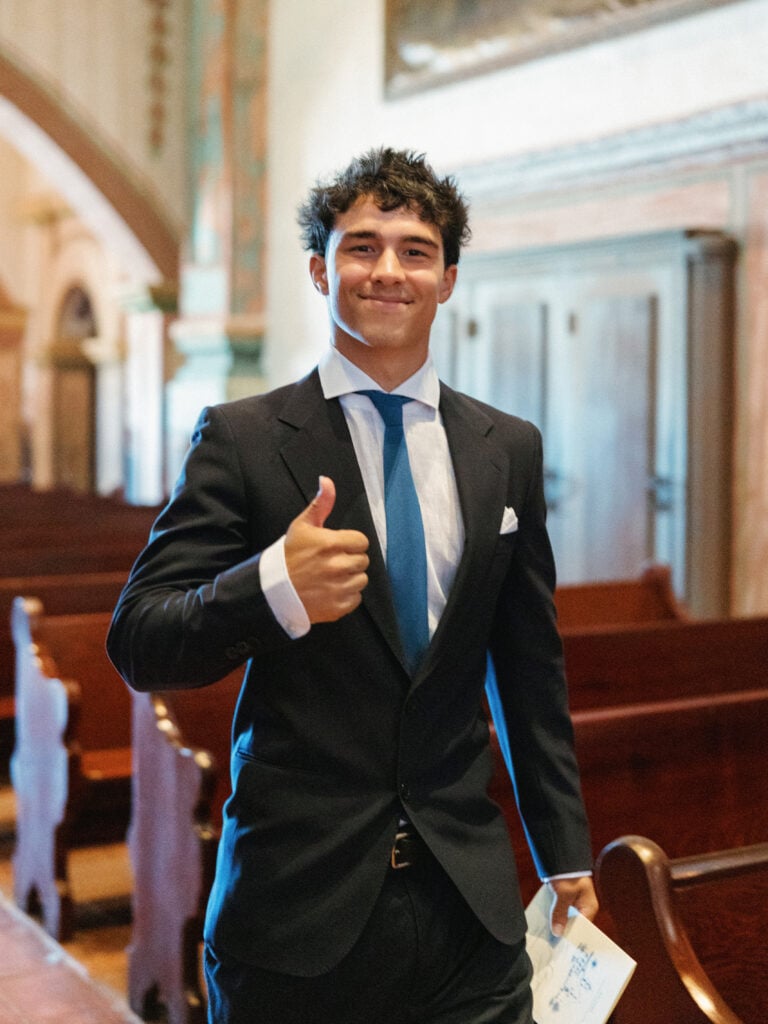
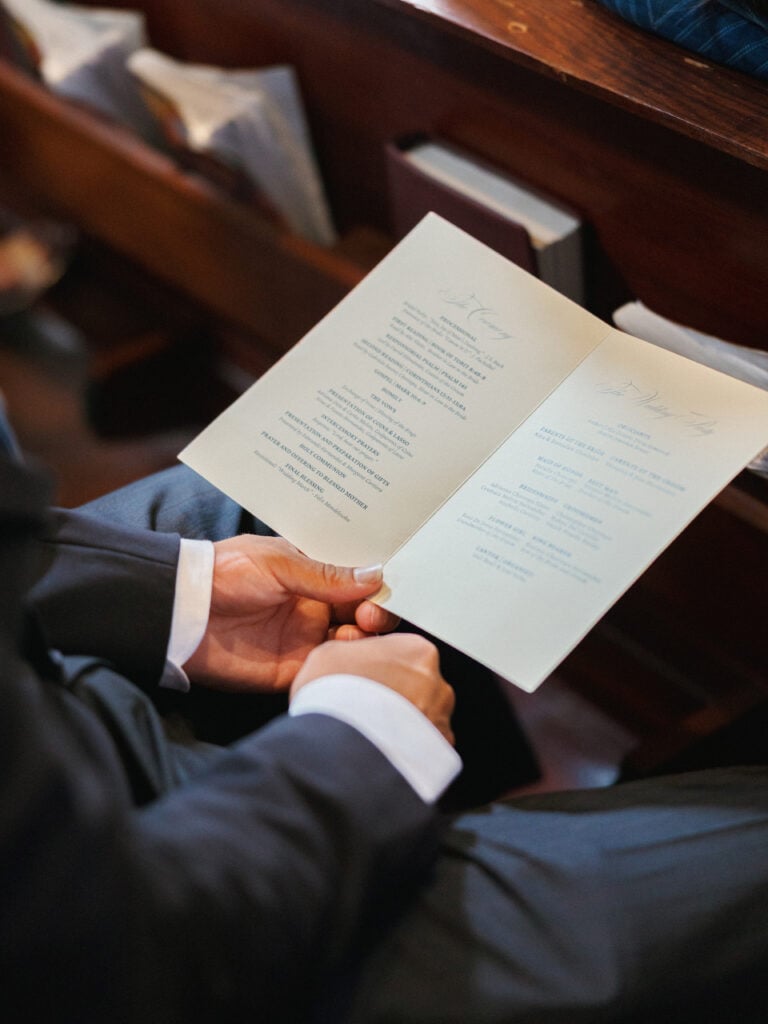
A typical reading runs two to three minutes at a comfortable, unhurried pace. A compact poem may take less time, while a full page of prose can run longer once it is read aloud. Building reading length into the ceremony timeline alongside the vows, ring exchange, music, and transitions keeps the full sequence realistic.
The actual reading time should be tested before the wedding. Silent reading gives little indication of how long a passage will take once pauses, breathing, microphone technique, and a nervous reader’s pace enter the picture. A timed practice read gives the planner and officiant a reliable figure for the final ceremony timeline.
The placement of each reading also matters. One may sit early in the ceremony, while another can appear closer to the vows or later in the service.
The sequence should allow each reading to have its own place without making the ceremony feel interrupted by too many separate speaking moments.
Who Should Read
Readers are usually chosen from the couple’s closest circle: a sibling, parent, close friend, mentor, or someone who has played a meaningful role in their lives. The connection can also come through the reading itself. A friend who introduced the couple to a particular book or a parent who has shared that poem with them may have a natural reason to take the microphone.
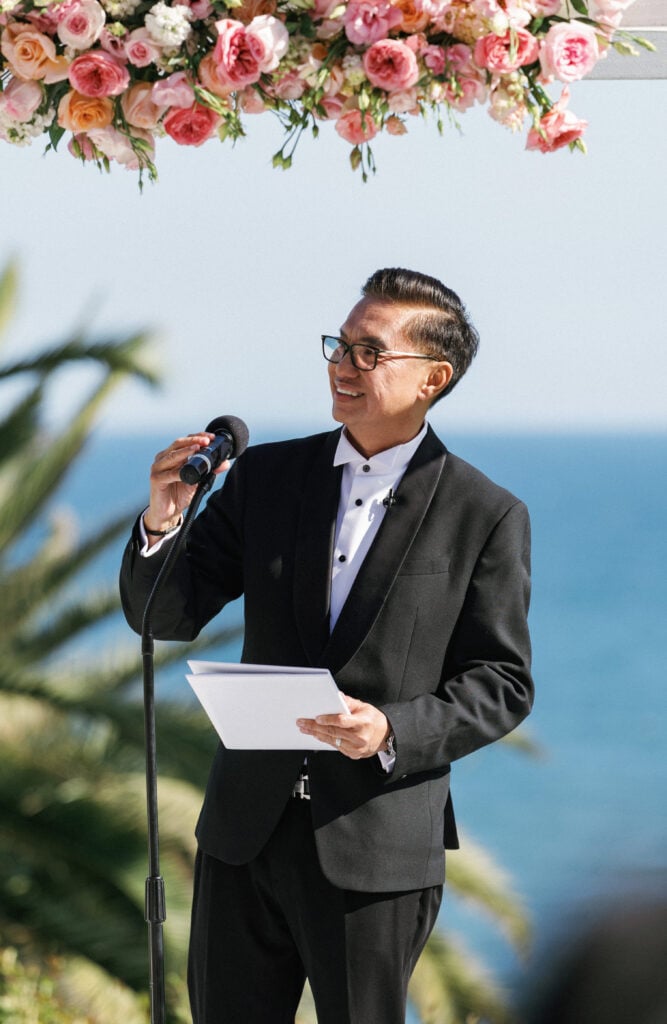
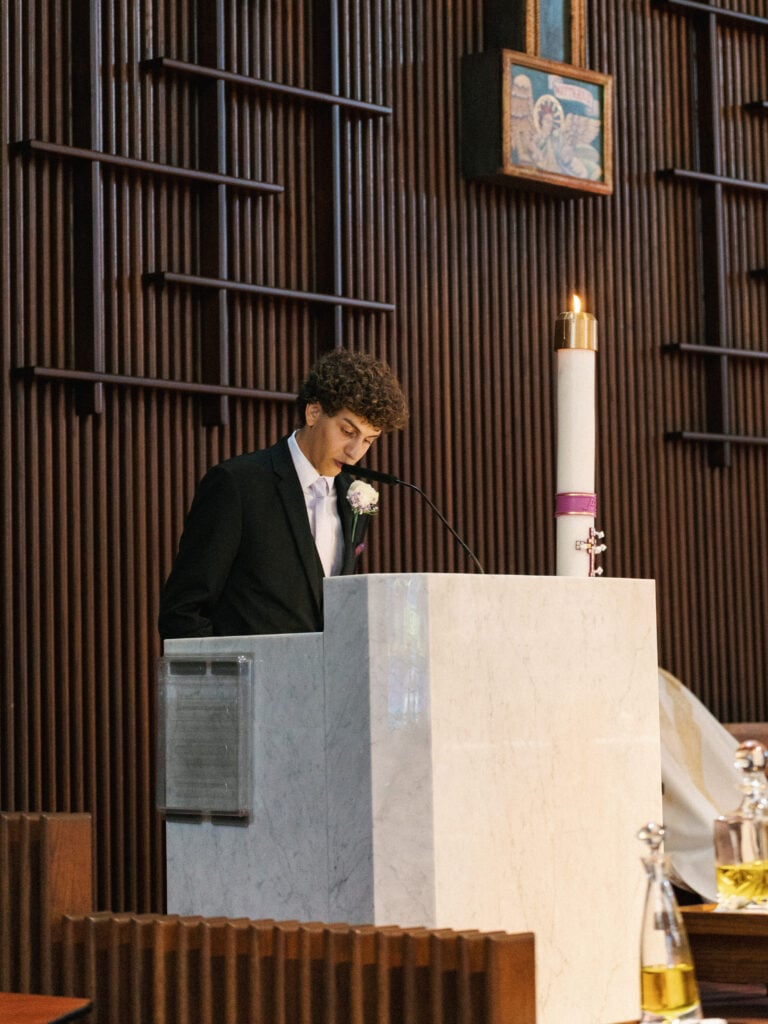
Several readers can also give different parts of the ceremony a distinct voice. One person might read before the vows, while another appears later with a shorter passage. If the ceremony includes readings from both families, assigning each person a clear place in the sequence helps the transitions feel considered.
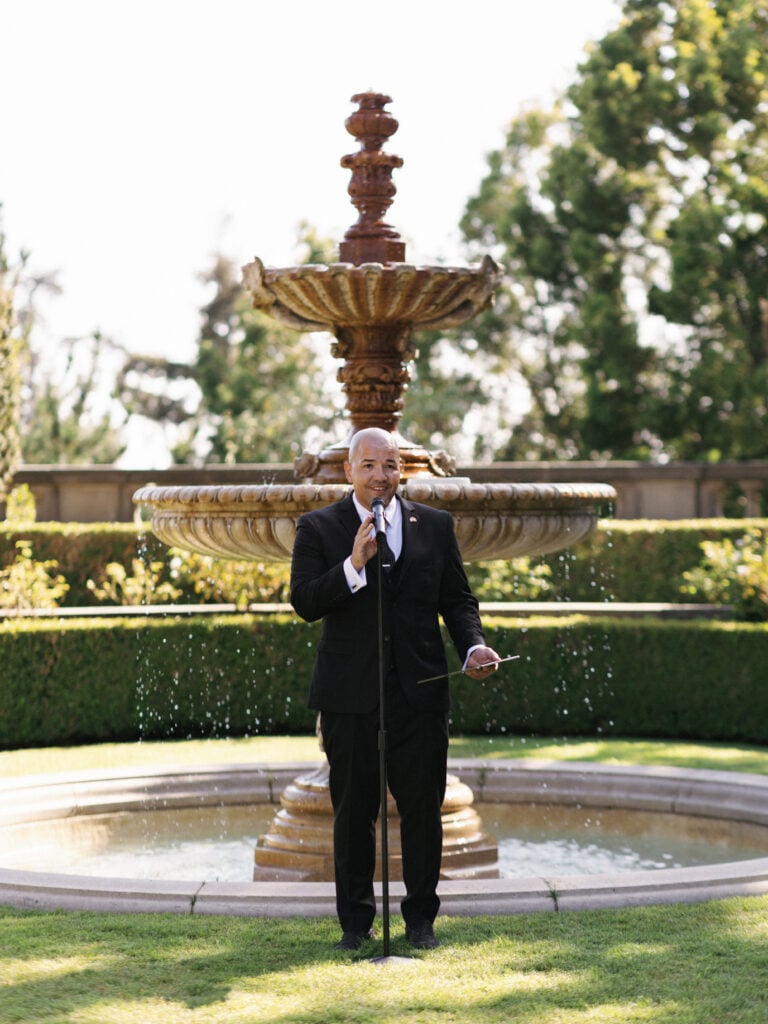
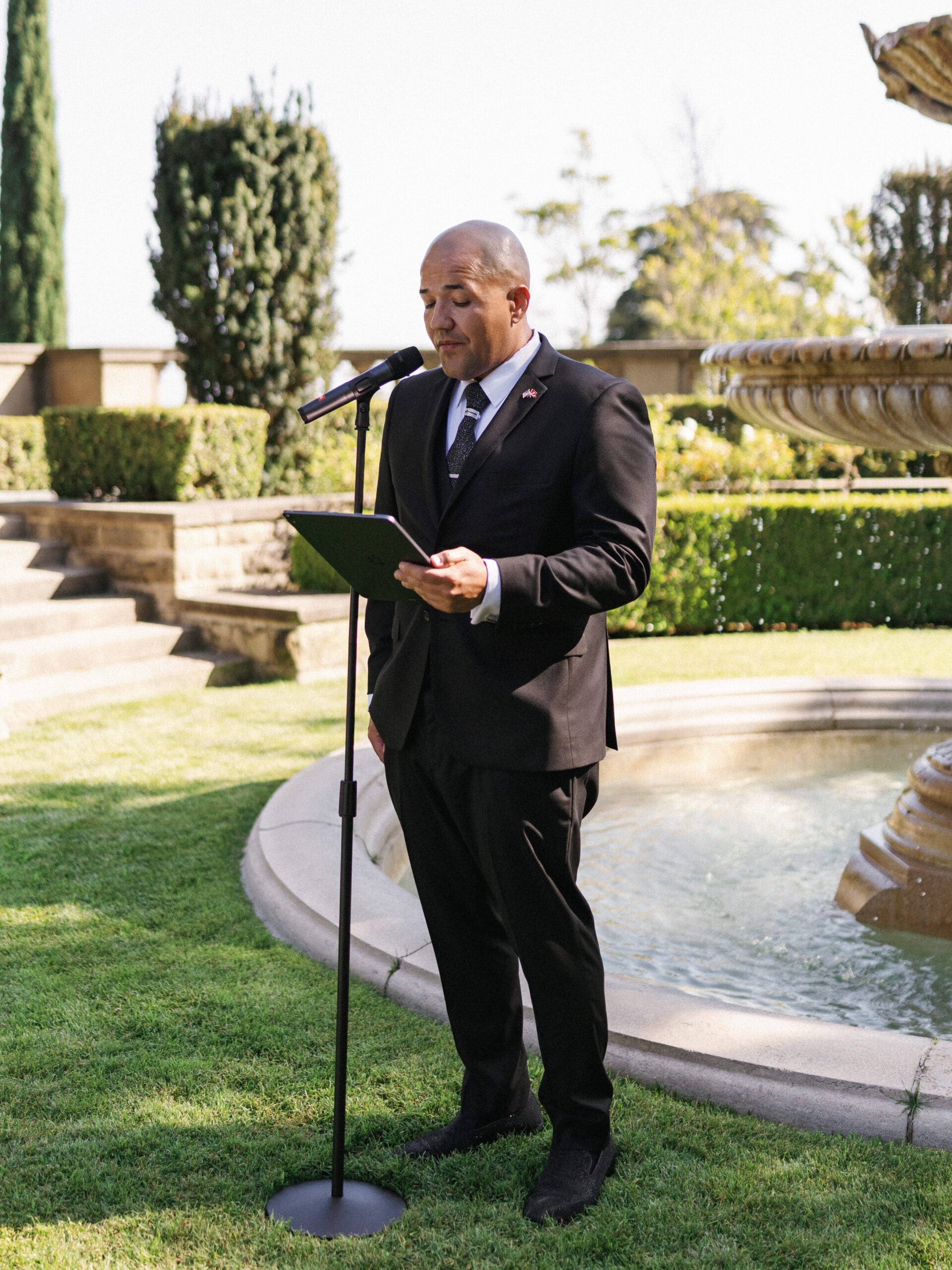
Public-speaking experience is helpful but not essential. A reader should have the final passage in advance, know the cue for approaching the microphone, and have an opportunity to read aloud before the ceremony. Even a short rehearsal can settle the pace and make the actual reading feel familiar.
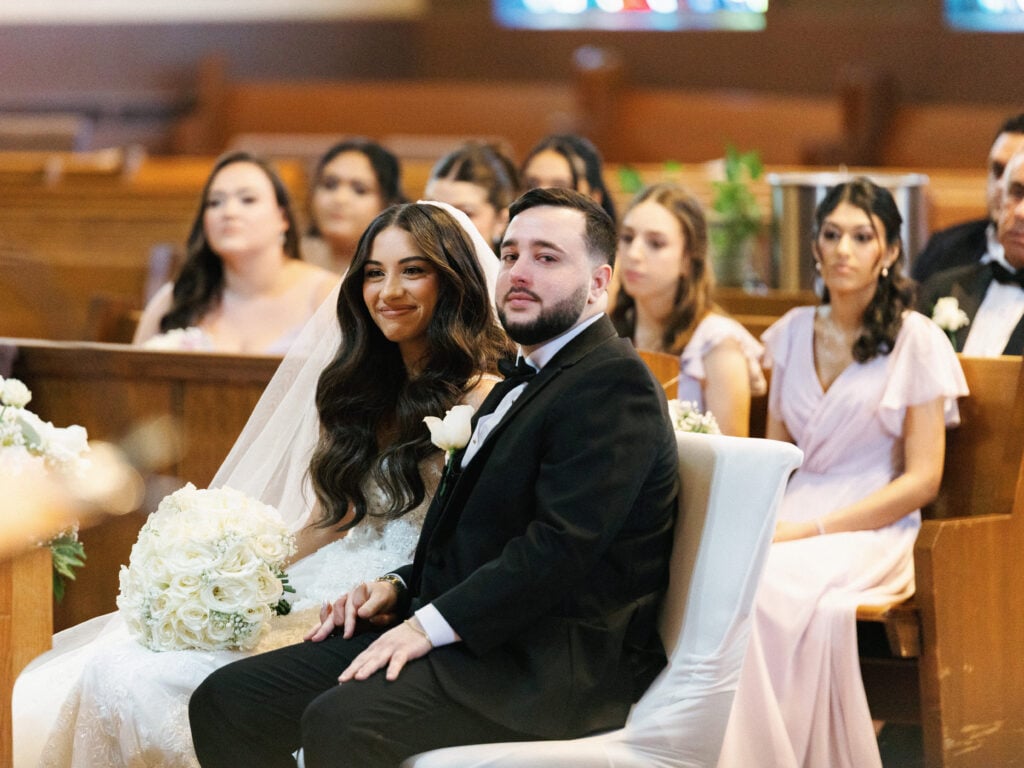
Explore recent wedding stories
Browse real celebrations photographed and filmed by Aster Films.
Coaching Readers for Pace and Microphones
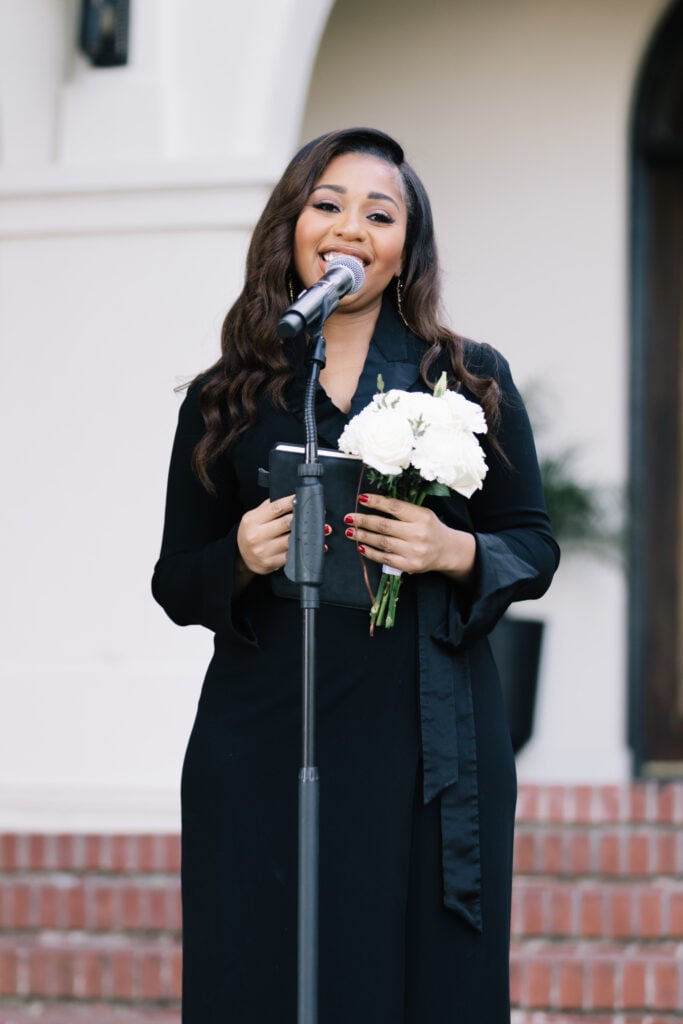
Most first-time readers need a little preparation, particularly with pace. Nervousness can make the opening lines move quickly, so reading the passage aloud in advance gives the reader a chance to settle into a comfortable speed and find natural places for pauses.
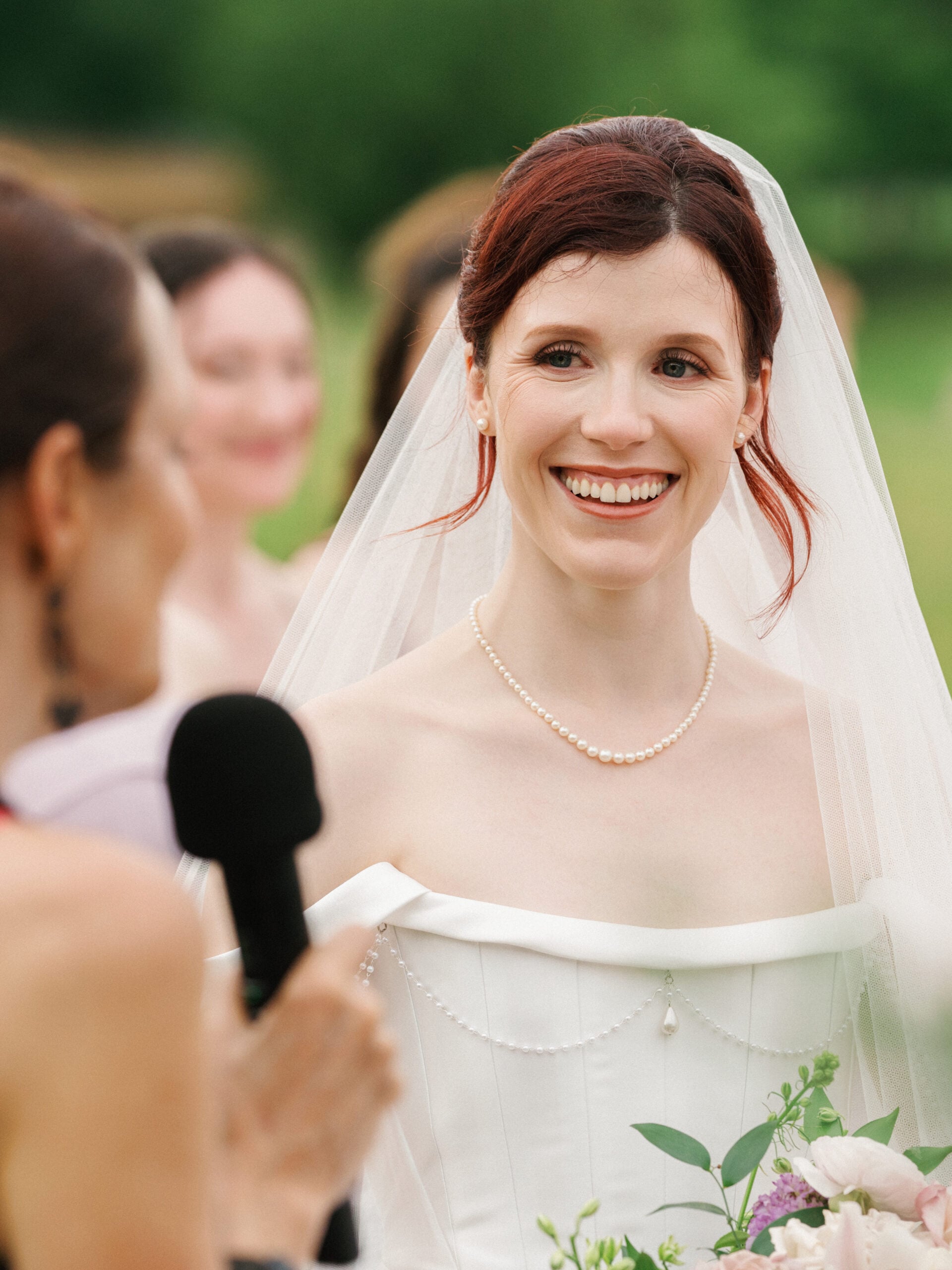
The microphone should be part of that preparation. The venue or sound provider can show the reader how to hold or position the microphone and where to stand. A short sound check before guests arrive can also catch issues with volume, positioning, or background noise.
The printed reading should be easy to follow at a glance, with legible type, comfortable line spacing, and page numbers. A printed copy also avoids the practical problems of relying on a phone during the ceremony, from a dimmed screen to an unexpected notification.
Expert Note
The first few lines deserve a little extra attention in rehearsal. Once a reader has settled into the pace, the rest of the passage usually follows more naturally.
Aster Films planning note
Permission and Attribution for Quoted Text
Published poems, novels, essays, and song lyrics may be protected by copyright. This usually matters when a reading is reproduced in a ceremony program, on a wedding website, in social content, or in a film, rather than simply read aloud during the ceremony.
If a reading will appear in written or recorded materials, it is worth checking any applicable copyright or attribution requirements ahead of time. The author’s name and title of the work should also be kept with the final ceremony details.
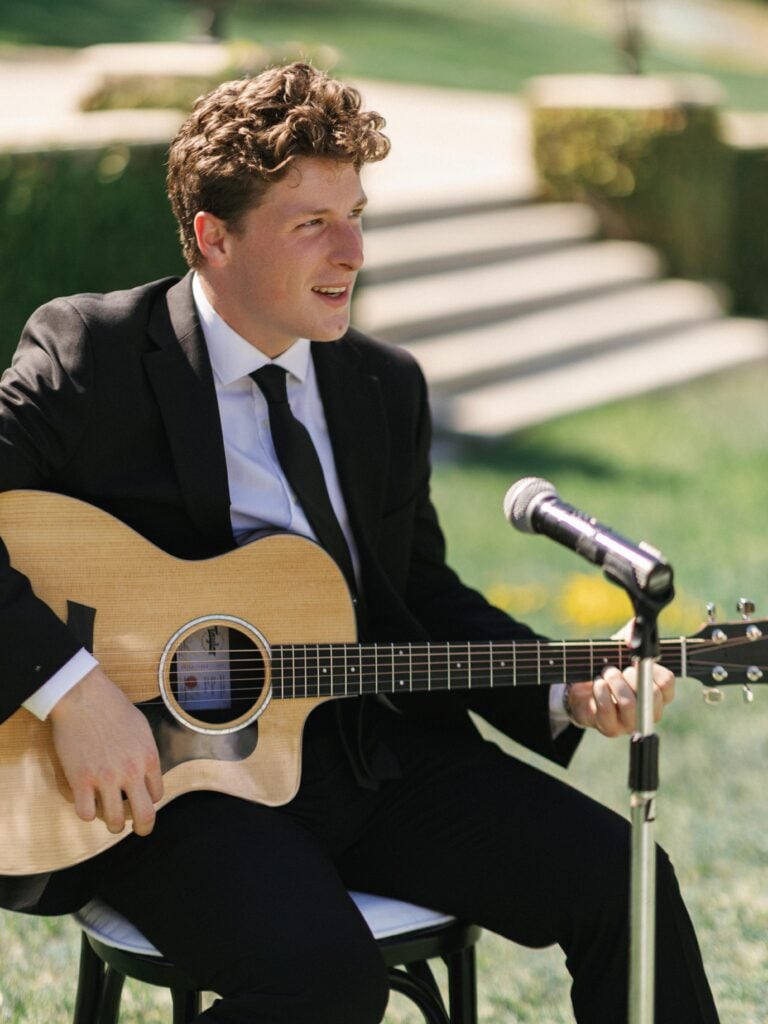
A Printable Reader Brief
A one-page reader brief keeps the practical details together and gives each reader a clear reference before the ceremony. It can include the reading title and author, approximate length, starting position, cue to approach, microphone instructions, where to go after reading, and any pacing or pronunciation notes specific to the passage.
The brief should be shared with the final reading two or three weeks before the wedding, giving the reader time to practice from the exact version that will be used. The planner or officiant can keep a master copy with the final ceremony order so every cue and transition can be checked during the rehearsal.
Expert Note
A precise cue can be as simple as, “The officiant will say your name and gesture toward the lectern.” Knowing exactly when to stand and where to go removes one of the small uncertainties that can make a prepared reader hesitate.
Aster Films planning note
The 12-Question Reading Checklist
Once the reading, reader, placement, and practical details have been considered, a final check can help catch anything that may have been overlooked.
Before confirming a reading, consider:
- Does the passage have a genuine connection to the relationship?
- Does its tone suit the point where it appears in the ceremony?
- Is the length appropriate for the planned ceremony timing?
- Has someone timed the passage during an actual spoken read-through?
- Does the person reading it have a meaningful connection to the couple or the text?
- Will the reader need additional rehearsal or coaching?
- Does the language sound natural when spoken aloud?
- If the passage is published, has attribution been confirmed?
- If the text will be reproduced in print or online, has permission been checked?
- Does the ceremony have enough variety in voices and speakers?
- Has the microphone arrangement been confirmed with the venue or sound provider?
- Has each reader received the final passage and practical brief in time to rehearse?
Frequently asked questions
Can we write our own wedding ceremony reading?
Yes. A reading written by the couple, a parent, or a close friend can have a particularly personal place in the ceremony. It can be a short reflection, a letter, a piece of prose, or something written specifically for the occasion.
How long should a wedding ceremony reading be?
Around two to three minutes is a useful range for many ceremonies. The actual length should be based on a spoken rehearsal, since pauses and reading pace can add time that is not apparent from the written passage.
How many readings should a wedding ceremony have?
One reading can suit a short ceremony, while two provide more variety without taking up too much of the service. Longer ceremonies may accommodate additional selections if they have a clear place within the overall order.
Where should readings go in a wedding ceremony?
A reading can appear near the beginning, between other ceremony elements, or closer to the vows and closing remarks. Its placement can follow the tone of the passage and the rhythm of the ceremony.
Who should read at a wedding ceremony?
Parents, siblings, close friends, mentors, and other people with a meaningful connection to the couple can all be readers. A meaningful relationship with the couple can make a reader a natural choice even without public-speaking experience, provided they have enough time to prepare.
What if the reader gets emotional?
A pause is perfectly acceptable. The officiant or planner can give the reader a moment to collect themselves, and a backup reader can be briefed in advance if the couple wants one available. The reading does not need to be rushed through an emotional moment.
Can religious and secular readings be combined?
In some ceremonies, yes. Religious ceremonies may have specific requirements for readings and their placement, so the officiant should confirm which selections can be included and where they belong in the service.
CONTACT ASTER FILMS
Tell us about your wedding
Choose a convenient time and share the details of your celebration with our team.